



A hybrid event isn’t just a physical conference with a webcam at the back of the room. It is a synchronised, high-stakes production where two distinct audiences must feel equally seen and heard. You likely know the specific anxiety of watching a venue’s upload speed fluctuate while your remote guest speakers wait in the digital wings. It’s a delicate balancing act that requires more than just standard gear. To truly succeed, you must master the technical requirements for hybrid events, transforming potential glitches into a seamless display of professional authority. This guide provides the blueprint for 2026, offering a deep dive into the audio, visual, and streaming infrastructure needed for a flawless Australian broadcast. We’ll explore how to orchestrate your LED video walls, pro audio, and redundant data lines to ensure every attendee, whether in Melbourne or streaming from London, enjoys a front-row experience. From securing rock-solid connectivity to balancing the run of house for two different worlds, we’ll show you how to execute your vision with absolute precision.
Key Takeaways
- Understand the essential technical requirements for hybrid events, including how to calculate upload speeds for 4K streams and why internet redundancy is non-negotiable for a professional broadcast.
- Learn how multi-camera arrays and studio-grade lighting elevate your production from a basic livestream to a prestigious, cinematic experience for remote attendees.
- Discover the role of the Technical Director as the conductor of your production, synchronising complex live and virtual cues for a seamless run of house.
- Shift your strategy toward a dual-delivery model that prioritises engagement for both audiences, ensuring your virtual guests don’t feel like an afterthought.
- Explore the benefits of partnering with an invisible expert to manage the logistical grind, allowing you to focus on the prestige of your event’s final result.
Defining Technical Requirements for Hybrid Events in 2026
The technical requirements for hybrid events have shifted from simple connectivity to total synchronicity. In 2026, a hybrid event is defined as a dual-delivery model. It’s a high-stakes environment where the physical room and the digital space exist in a perfectly mirrored state. You aren’t just hosting a meeting; you’re directing a broadcast. This requires a technical engine capable of serving two distinct audiences simultaneously, ensuring that your virtual attendees don’t feel like they are merely watching a recording of someone else’s experience. They deserve the same prestige and intimacy as those sitting in the front row.
To achieve this, your production must rest on four essential pillars: high-fidelity audio, cinematic visuals, rock-solid connectivity, and meaningful interactivity. The evolution of hybrid technology now allows for ultra-low-latency streaming and AI-driven production tools that can automate camera tracking or provide real-time captions. These advancements mean the “Two Audience” challenge is no longer a hurdle, but an opportunity to showcase your brand’s commitment to excellence. By mastering the technical requirements for hybrid events, you transform a complex logistical puzzle into a seamless, professional showcase.
Hybrid vs. Virtual: Why Technical Needs Differ
Managing a hybrid event is significantly more complex than a purely virtual one. You must balance in-room sound reinforcement with a separate, dedicated mix for the broadcast. What sounds perfect through a professional audio system in a ballroom might sound hollow or echoey on a remote attendee’s headset if not handled by a skilled technician. Similarly, your visual content must be versatile. A presentation designed for a massive 20-metre LED video wall needs to remain legible and impactful when viewed on a 13-inch laptop or a mobile device. A unified technical direction is the only way to bridge this gap, ensuring both experiences feel intentional and polished.
The Core Components of a Hybrid Tech Stack
A professional-grade hybrid stack follows a clear path: Capture, Process, and Deliver. This involves more than just equipment; it’s about the sophisticated routing of signals.
- Capture: Multi-camera arrays and studio-grade microphones to gather high-quality data.
- Process: Digital switchers and mixers that allow for real-time editing and layering of content.
- Deliver: High-bandwidth encoders that push the final product to your chosen streaming platform.
We are seeing a major shift toward NDI and Dante protocols, which allow for flexible, software-based signal routing through a venue’s network. This is why “off-the-shelf” consumer solutions often fail in corporate environments; they simply lack the stability and customisation required for high-stakes execution.
The Visual and Audio Core: Synchronising the Experience
Visuals and audio aren’t just utilities. They are the bridge between your two audiences. In a hybrid environment, your on-site production must be high-impact, while your digital broadcast must feel cinematic. A single, static camera at the back of the room is no longer enough to hold attention. To meet the modern technical requirements for hybrid events, you need a multi-camera array that captures the energy of the room. By switching between wide shots, tight close-ups, and audience reactions, you create a dynamic narrative that keeps remote attendees engaged. This level of production transforms a passive viewing experience into an active, immersive one.
Lighting plays a dual role that many organisers overlook. You must balance the “look and feel” for the physical room with the specific “exposure and colour” requirements for the lens. Traditional stage lighting that looks great to the naked eye can often wash out a presenter on a digital stream. A sophisticated lighting design ensures that your speakers look professional on-screen without compromising the atmosphere for those in the room. This meticulous attention to detail is what separates a makeshift meeting from a world-class production.
Audio Engineering for Dual Outputs
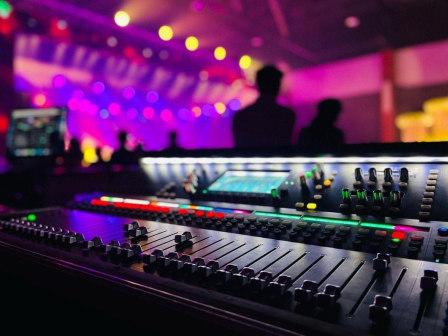
Audio is the invisible thread that holds your event together. If the video drops, you have a podcast; if the audio fails, the event is over. Managing hybrid sound requires a “Mix-Minus” technique. This sophisticated routing allows remote speakers to hear everything in the room except their own voice, preventing the distracting echoes that plague amateur broadcasts. When you invest in professional sound system hire, you’re securing the clarity needed for natural, low-latency conversation between live and virtual participants. It’s about ensuring every “mate” and “cheers” is heard with perfect fidelity, regardless of the listener’s location.
Visual Excellence: LED Walls and Broadcast Quality
The choice between projection and LED video walls is a critical technical decision. In 2026, high-resolution LED walls are the preferred choice for hybrid events. They offer superior brightness and contrast, ensuring your content remains vibrant even in well-lit rooms. Crucially, they must be configured with the correct pixel pitch to avoid moiré patterns on camera. Professional vision switchers then layer this content with Lower Thirds and Picture-in-Picture graphics, creating a polished broadcast that mirrors a television production. If you are unsure which configuration suits your venue, speaking with a technical director during the planning phase can save significant stress on show day.
Connectivity and Streaming: The Invisible Infrastructure
Connectivity is the lifeblood of your broadcast. While audio and visuals are what the audience sees, the internet is the invisible engine that carries your message to the world. If this engine stalls, the prestige of your event evaporates instantly. This makes robust connectivity one of the most critical technical requirements for hybrid events. You cannot simply hope the venue’s Wi-Fi holds up; you need a dedicated, managed pipeline that belongs solely to your production team. It’s the difference between a shaky Zoom call and a professional, broadcast-grade experience.
Calculating bandwidth is a matter of precision, not guesswork. For a crisp 1080p stream, we recommend a minimum dedicated upload speed of 15 Mbps. If you’re pushing for 4K excellence, that requirement jumps to at least 40 Mbps. These numbers represent the “safety ceiling” needed to account for bitrate fluctuations. Choosing between hardware and software encoding also defines your stability. While software solutions offer incredible flexibility, hardware encoders provide a dedicated, fan-cooled environment designed for one job: pushing data without the risk of a system crash. This is the “Redundancy Rule” in action. A single internet connection is a single point of failure, which is why we always build a secondary path into our tech stack.
Bonded Internet and Local Redundancy
In the Melbourne CBD or Sydney’s busy corridors, network congestion is a real threat to your stream. We solve this through 5G bonding, which combines multiple cellular signals into a single, high-speed connection. It acts as a powerful fail-safe against local NBN dropouts. For regional Australian events, Starlink has become a viable secondary option, providing a literal lifeline from the sky when traditional infrastructure is lacking. To ensure these systems are correctly configured for high-stakes broadcasts, accredited installers like DJC Engineering Pty Ltd provide the networking and WiFi expertise needed for a stable connection. We also implement a dedicated production VLAN. This isolates your event traffic from guest Wi-Fi, ensuring a thousand attendees on their phones don’t accidentally throttle your broadcast signal.
Security and Scalability for Corporate AGMs
Technical Direction: Managing the ‘Run of House’
Even the most sophisticated gear is useless without a steady hand at the wheel. The Technical Director (TD) acts as the conductor of your hybrid orchestra, synchronising every camera cut, audio cue, and digital overlay to ensure the experience is seamless. This orchestration is one of the most vital technical requirements for hybrid events, as it bridges the physical and digital worlds in real-time. A TD manages the “Run of House,” making split-second decisions that keep the production on track while you focus on your guests. They are the invisible engine driving the success of your broadcast.
Precision starts with a meticulously scripted Run Sheet. This document is the bible of your production, detailing every transition for both the live stage and the virtual platform. During the event, the team uses a dedicated “Showcall” channel. This is where the TD gives quiet, decisive instructions to camera operators, audio engineers, and vision switchers. It’s a high-pressure environment that requires absolute focus. A seasoned crew thrives under this pressure, turning complex logistical movements into a cinematic flow that feels effortless to your audience.
The Human Element: Production Crew and Expertise
Delivering a world-class broadcast requires a specialised team. Opting for full service event production means you have experts handling every niche, from lighting shaders to stream monitors. We often recommend a Digital MC to act as the voice of the virtual audience. They bridge the gap by bringing online questions to the live stage, ensuring remote attendees feel like part of the conversation rather than just spectators. If a technical “hiccup” occurs, such as a remote speaker’s home internet lagging, a seasoned crew handles it instantly with pre-planned “holding” graphics or a quick pivot in the schedule.
Rehearsals and the Technical Walkthrough
You can’t leave success to chance. A comprehensive technical walkthrough is the absolute requirement for a glitch-free day. This involves:
- Remote Link Testing: Verifying the audio and video quality of every virtual presenter hours before the show starts.
- The Dry Run: Practising complex transitions between live speakers and pre-recorded video content to ensure perfect timing.
- Redundancy Verification: Checking that all failover systems, including the bonded 5G lines and backup encoders mentioned earlier, are active and ready for immediate use.
These rehearsals allow the team to iron out any kinks in the “Run of House” before the first guest arrives. It’s about building a foundation of absolute reliability so you can take the stage with total confidence. If you want to ensure your next production is handled with this level of precision, contact our technical direction team today to discuss your vision.
Partnering for Success: The NextGen AV Approach
Executing a flawless production involves more than just ticking boxes on a checklist. It requires a partner who understands that the technical requirements for hybrid events are constantly evolving. At NextGen AV, we position ourselves as your “Invisible Expert,” the engine behind the scenes that allows your brand to shine. With over 30 years of industry experience, we’ve seen the transition from simple analogue setups to the complex, multi-layered digital ecosystems of 2026. Our approach is built on end-to-end management, ensuring that every detail, from the initial site visit to the final post-event data analysis, is handled with absolute precision.
We don’t believe in “one size fits all” solutions. Every venue has its own acoustic quirks and lighting challenges. Whether you’re hosting an intimate boardroom session or a massive national conference, we provide bespoke hardware solutions tailored to your specific environment. By customising your hybrid event services in Australia, we ensure your sound, light, and vision work in perfect harmony. This level of dedication transforms a standard meeting into a prestigious event that resonates with both your live and virtual audiences. It’s about moving past the logistical grind and focusing on the prestige of the final result.
Why a Production Partner Beats a DIY Approach
Attempting to manage a hybrid production in-house often leads to unnecessary stress and avoidable technical glitches. Think of a professional production crew as an insurance policy for your brand’s reputation. While generic tools might get you through a standard video call, they cannot match the aspirational atmosphere created by studio-grade gear and expert technical direction. By letting us handle the technical requirements for hybrid events, you free yourself to focus entirely on your message. We take personal pride in seamless execution, allowing you to take centre stage without a single worry about the “behind-the-scenes” mechanics.
Next Steps: Planning Your 2026 Hybrid Event
The secret to a successful production is early engagement. Starting the conversation months in advance allows us to conduct thorough site inspections and develop comprehensive technical riders. These steps are the foundation of a glitch-free show day. We’ll work with you to map out every requirement, ensuring that redundancy is built-in and every transition is rehearsed to perfection. Our team thrives under pressure, making us a formidable technical force and a collaborative ally for your next project. Don’t leave your next high-stakes event to chance. Organise a consultation with NextGen AV for your next hybrid event.
Master Your Next Hybrid Production
The standard for hybrid events has evolved into a dual-production model that demands absolute synchronicity between the physical and digital worlds. Successfully navigating the technical requirements for hybrid events means moving beyond basic setups to embrace professional-grade infrastructure that serves two distinct audiences with equal prestige. By prioritising redundant connectivity, cinematic visuals, and crystal-clear audio, you ensure your message isn’t just heard; it’s truly experienced. This level of execution requires a partner who understands the high stakes of live broadcasting and the artistry of a seamless run sheet.
NextGen AV brings over 30 years of industry experience to your project, offering specialists in LED video walls and professional audio to guarantee a flawless result. Our end-to-end technical direction removes the logistical burden from your shoulders, allowing you to focus on the impact of your presentation while we manage the invisible engine behind the scenes. Your next event is an opportunity to showcase your brand’s commitment to excellence. Enquire now for bespoke hybrid event production in Melbourne and take the first step toward a stress-free, professional broadcast. We look forward to bringing your vision to life.
Frequently Asked Questions
What is the minimum internet speed required for a high-quality hybrid event?
High-quality hybrid events require a minimum dedicated upload speed of 15 Mbps for a 1080p broadcast and 40 Mbps for 4K excellence. These figures represent a safety ceiling that accounts for bitrate fluctuations during the live stream. It’s vital to remember that these technical requirements for hybrid events must be met with a dedicated line, not shared venue Wi-Fi, to ensure a rock-solid connection for your remote audience.
Do I need a separate audio mix for my virtual and in-person audiences?
You absolutely need a separate audio mix to provide a professional experience for both groups. In-room speakers require sound reinforcement, while the virtual audience needs a direct feed that excludes their own return audio to prevent echoes. Using a Mix-Minus technique allows your remote guests to hear the room clearly without the distraction of hearing themselves on a delay, ensuring the conversation feels natural and polished.
How many cameras do I need for a professional hybrid conference?
A professional production typically requires a minimum of three cameras to maintain high engagement levels. A wide shot captures the scale of the stage, a tight shot focuses on the presenter’s expressions, and a third camera captures audience reactions or panel discussions. This multi-cam array allows your Technical Director to switch between views, creating a cinematic narrative that keeps remote attendees from losing interest throughout the day.
What is the difference between a virtual event platform and a streaming service?
A streaming service is the engine that delivers video content, while a virtual event platform is the digital venue where your audience interacts. Think of the streaming service as the broadcast pipe and the platform as the lobby, breakout rooms, and networking lounge. Integrating high-quality video into a robust platform is essential for meeting the complex technical requirements for hybrid events and providing a seamless attendee journey.
Can I use Zoom for a high-end corporate hybrid event?
You can use Zoom, but high-end corporate events usually require it to be integrated into a professional broadcast workflow. Rather than using a standard laptop webcam, we feed professional camera signals and studio-grade audio into the meeting via dedicated hardware encoders. This elevates the visual quality and stability, ensuring your event projects a sense of professional authority and prestige that a standard video call cannot match.
What happens if the internet goes down during my live stream?
If your primary internet connection fails, a professional setup should instantly pivot to a redundant backup. We utilise 5G bonding and secondary fibre lines to ensure your broadcast stays live without the audience ever noticing a flicker. This fail-safe approach is a non-negotiable part of high-stakes event planning, protecting your brand from the embarrassment of a technical blackout during a critical presentation.
How do I manage Q&A sessions so both audiences can participate?
Managing a unified Q&A requires a digital emcee and a synchronised audio return system. A dedicated moderator filters questions from the virtual chat, while roving microphones capture in-room queries. By feeding the remote audio through the professional sound system in the venue, you ensure that both audiences can hear each other clearly, creating a truly collaborative and inclusive atmosphere that values every participant.
What is the role of a Technical Director in a hybrid event?
The Technical Director acts as the orchestrator who manages the entire Run of House. They are responsible for switching camera shots, triggering graphics, and ensuring every audio cue is executed with precision. Their role is to handle the technical grind behind the scenes, allowing you to focus on your message while they maintain the momentum and professional polish of the live production.
Discover Valuable Insights
Unlock Expert Tips and Advice
Our blog is packed with valuable information to help you stay ahead. Whether you’re looking for expert advice, industry trends, or practical tips, you’ll find everything you need. Reach out today to learn more or get in touch with us for personalised support!