



From in-person events to virtual events, Australia – and the world – has been through it all. Organisers are constantly weighing live event production against virtual events in Australia, thinking about audience size, engagement, and budget.
So how do you decide which format works best? In this article, we’ll explore live vs virtual events, share insights from event production Melbourne experts, and look at strategies to make your next event a success.
The Evolution of Event Formats in Australia
Since 2020, the nature of in-person and virtual events in Australia has shifted dramatically. In 2024, about 60% of events were in-person, 35% were virtual, and 15% were hybrid. In 2025, things are moving even faster, and Australian businesses are constantly asking which format will resonate most with their audience.
Live event production brings energy and face-to-face engagement, virtual events offer wider reach, convenience, and accessibility, and hybrid event solutions combine the best of both worlds. The choice depends on your goals, audience, and the kind of experience you want people to walk away with.
Live Event Production: Traditional Excellence Redefined
Llive event production still holds a special place in Australia. Event organisers continue to invest in event production because face-to-face interaction drives engagement in ways digital platforms can’t fully replicate.
Immersive Audience Experience and Networking
The magic of live event production lies in the audience experience. Attendees can network spontaneously and exchange ideas. Professional lighting, sound, and staging make every moment immersive, whether it’s a corporate seminar or a product launch.
For Australian organisers, creating memorable, human connections is often the primary goal, and live events give audiences a reason to engage fully. That energy is something that virtual platforms struggle to match, no matter how many funny filters and interactive features they come up with.
Advanced AV Technology in Live Productions
A live, in-person event doesn’t mean that there is no technology involved. In fact, it’s often the opposite. Event technology makes in-person events more engaging and interactive. That’s why event organisers in Melbourne opt for event display solutions like LED walls, professional audio systems, and interactive displays to create experiences that make attendees feel seen and heard.
Using advanced AV in your live event production can also allow for hybrid events. This way, you can combine both event types and reach a wider audience, making your event more convenient for those who can’t attend in person. This bridges the gap between live event production and virtual events in Australia.
Virtual Event Technology and Production
We’ve all suffered through a virtual event that felt like a bad conference call. Making a virtual event work is about applying the core principles of good live event production to a digital space.
Broadcast-Quality Production Standards
For virtual events to truly connect, they need to look and sound fantastic. We’re talking multiple camera angles that cut smoothly, a proper lighting setup, and slick graphics. This level of live event production makes people feel like they’re watching something important.
Partnering with a skilled event production Melbourne crew who gets this is key. They handle the complex event streaming services and the behind-the-scenes tech so your message gets across without a glitch. It’s a massive part of the live vs virtual events decision.
Interactive Features and Audience Engagement
The biggest advantage of virtual events is the data-rich toolkit for interaction. Static webinars are out. We use live polling, curated Q&A sessions, and structured breakout rooms to facilitate real connection.
Gamification elements like leaderboards and digital scavenger hunts are brilliant event engagement strategies. These features provide something physical events can’t: instant analytics. You can see exactly who is engaged and what content resonates, which allows for real-time adjustments.
Comparative Analysis: Cost, Reach, and ROI
Choosing between a live and virtual event often boils down to three hard numbers: cost, reach, and the return you get on both. The right live vs virtual events decision hinges on which format best aligns your goals with your budget and your audience’s needs.
Budget Considerations and Cost Structures
A traditional live event production budget is dominated by big-ticket items: a venue hire, catering, staff, and significant travel and accommodation for both your team and potential speakers. The cost per attendee is generally fixed and high.
In contrast, spending for virtual events is much lower. You allocate funds towards a robust virtual event platform, maybe a professional event production Melbourne team to execute the broadcast, and technology packages. The main advantage here is scalability. Adding another hundred attendees online is often a marginal cost increase, dramatically lowering the cost per person and changing the entire ROI calculation.
Audience Reach and Accessibility Factors
The reach of a physical live event production is inherently limited by geography and capacity. Anyone outside the host city faces a barrier to entry. Virtual events smash through these walls, offering a genuine global reach.
This format is also a champion of accessibility. It eliminates physical navigation challenges for disabled attendees and allows participation for those in remote areas or who are unable to travel. Content available on-demand across time zones means your message works while you sleep, extending its lifespan and value far beyond a single day.
Engagement Metrics and Success Measurement
Figuring out if your event worked means looking at two different scorecards. The metrics for a live event production and virtual events tell different stories, but both are crucial for understanding your audience.
Live Event Engagement Indicators
Success in a physical space is often felt before it’s measured. We look at hard numbers like attendance rates against invites and the volume of new connections made. We gather feedback through satisfaction surveys. But the real gold for this live event production style is in the qualitative stuff.
It’s the energy in the room during a keynote, the number of business cards exchanged, and the strength of the relationships forged over coffee. Measuring that emotional connection and brand experience is nuanced, but it’s a powerful driver for long-term loyalty and a key differentiator in the live vs virtual events debate.
Virtual Event Analytics and Data Collection
Virtual events provide a transparency that physical ones can’t match. The analytics are incredibly detailed. We know exactly who registered, how long they watched, which content they consumed, and their interaction rates with polls and Q&As.
This is precise data on audience behaviour, giving us immediate insights into what resonated and what didn’t. This powerful feedback loop allows for agile adjustments during the event itself and creates a clear pathway for follow-up, making the ROI highly measurable and rich with insight.
Technology Requirements and Production Complexity
Pulling off any event is a technical ballet, but the stage and equipment are completely different. Whether you’re managing a complex live event production or a sophisticated virtual event, the tech demands often require expert handling.
Live Event AV Infrastructure Needs
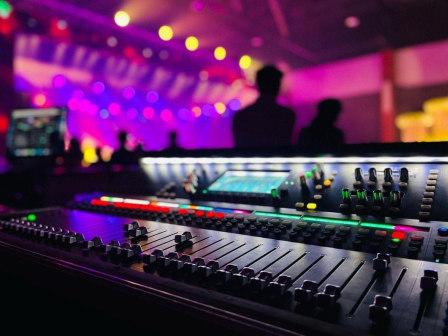
A physical event runs on its own ecosystem of gear. We’re talking about professional line array sound systems that fill a room without feedback, intelligent lighting rigs to set the mood, and multi-camera video production to capture the action.
If you need help, an event production Melbourne crew can provide the essential on-site technical support and equipment backup. Often, hiring the right event production team is the bedrock of professional live event production, because when you’re live, you don’t want to risk anything.
Virtual Event Technical Setup
The tech for virtual events is less about big hardware and more about infrastructure and integration. The foundation is a powerful, hardwired internet connection with dedicated upload speed for flawless event streaming services. You need broadcast-quality cameras, professional audio interfaces, and good lighting.
But the real complexity lies in the software: integrating your presentation slides, video clips, and live speakers within the chosen platform. Ideally, you should have dedicated technical support standing by to troubleshoot issues for remote attendees in real-time.
Decision Framework for Australian Event Planners
There is no one-size-fits-all answer. The best choice between a live event production and a virtual events strategy comes down to asking two fundamental questions: what is your core goal, and who is your audience?
Choosing Based on Event Objectives
Start by defining what success looks like. Is this a high-stakes product launch that needs excitement? A physical live event production often delivers superior ROI through its energy. In contrast, a virtual event offers clear strategic advantages in cost and accessibility. For deep networking, live is typically king. For widespread information dissemination, virtual may be best. Understanding what you want is the first step in the live vs virtual events decision.
Audience Demographics and Preferences
Your audience’s preferences are just as critical as your objectives. A younger, tech-savvy demographic might engage more with a dynamic virtual event. A traditional industry association might value the deep connection of an in-person gathering.
You must also consider geography. Is your audience concentrated in one city, or are they spread across the continent or globe? Logistical factors like travel time and costs for your attendees will heavily influence the right format, which often makes virtual events simply more practical.
The Future of Event Production in Australia
The debate is shifting from live vs virtual events to a smarter blend of both. The key Australian event trends now focus on integrated, multi-format strategies and hybrid event solutions. This approach leverages the energy of a live event production with the broad reach of virtual events in Australia.
Successful execution requires a production partner fluent in both formats. At NextGenAV, we specialise in crafting these tailored experiences, whether it’s live event production or virtual events. Get in touch with us today.
Discover Valuable Insights
Unlock Expert Tips and Advice
Our blog is packed with valuable information to help you stay ahead. Whether you’re looking for expert advice, industry trends, or practical tips, you’ll find everything you need. Reach out today to learn more or get in touch with us for personalised support!