
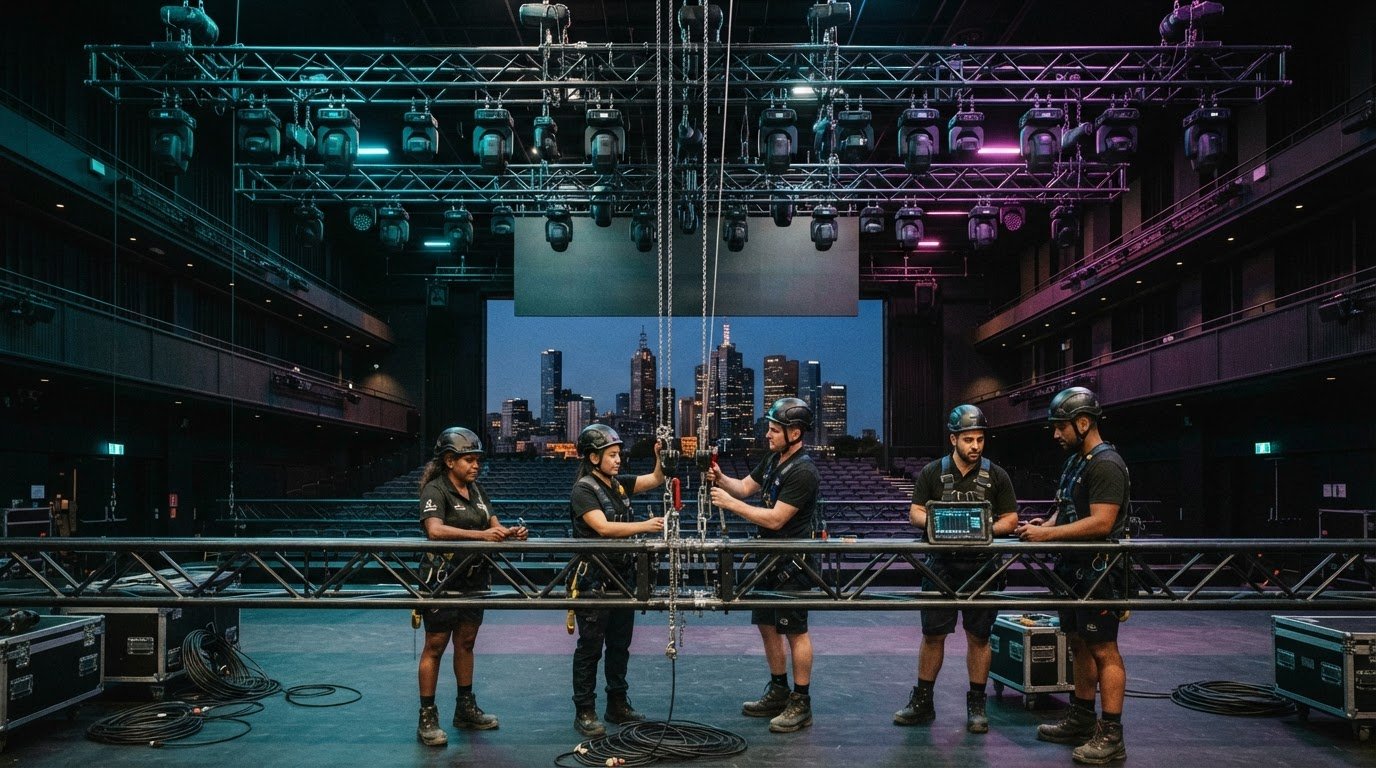
The right rigging partner turns a creative concept into safe overhead architecture. For Melbourne event organisers, that means more than suspending lights or LED walls: equipment loads, venue requirements, qualified crew and bump-in sequencing all need to work together. This guide to stage rigging services melbourne event teams can rely on explains how careful planning supports both the production and the people beneath it.
You can create a striking stage while keeping structural safety, venue approvals and specialised rigging requirements in view. Certain rigging tasks require a High-Risk Work Licence under Victoria’s Occupational Health and Safety Regulations 2017, overseen by WorkSafe Victoria. NextGen AV’s Melbourne-based team brings more than 30 years of industry experience, coordinating rigging, LED walls and lighting through technical direction as part of one integrated production.
Here, you’ll learn how to plan flown elements, prepare safety documentation and navigate venue requirements while keeping creative design and compliance aligned. From the initial concept to the final checks, precision behind the scenes helps your event take centre stage with confidence.
Key Takeaways
- See how event rigging supports structural planning and the visual impact of your Melbourne production.
- Learn how trusses, motors and hardware work together to suspend event elements with precision.
- Understand how load calculations, relevant standards and engineering input contribute to a considered rigging plan.
- Use venue information and early coordination with in-house teams to prepare for a smoother bump-in.
- Explore how stage rigging services melbourne can integrate rigging with lighting, LED walls and technical direction.
The Critical Role of Stage Rigging in Melbourne Event Production
Professional stage rigging is more than suspending speakers above an audience. It is the planned positioning and support of event equipment, designed around the venue, the production brief and the people using the space. A flown lighting fixture, audio system or LED wall needs suitable support, considered placement and coordinated installation. Those decisions shape what the audience sees and hears while helping the production team work safely behind the scenes.
Rigging is also the invisible architecture of a compelling event. Trussing can define a stage, frame a screen or support layered lighting positions. Carefully placed flown elements add depth and focus. For example, an LED wall can form the visual centrepiece, with lighting positioned to complement its content rather than obscure it. The rigging plan links these creative choices to practical constraints, including the venue’s infrastructure and how loads are distributed.
The same principles apply across theatrical, arena and corporate productions. Entertainment Rigging Principles provides background on the discipline. At a Melbourne conference or gala, careful suspension and coordination help create a polished audience experience. NextGen AV brings rigging, LED walls and lighting together through technical direction, so the production feels like one considered design rather than a series of separate installations.
Safety and Compliance: The Non-Negotiables
In Victoria, event organisers need to manage contractor practices and make sure relevant requirements are addressed. WorkSafe Victoria enforces the Occupational Health and Safety Regulations 2017, under which certain rigging tasks require a High-Risk Work Licence. There is a difference between hanging an item and engineered rigging: the latter considers how equipment is supported, positioned and secured within the overall plan. Qualified riggers bring the training and practical judgement needed to carry out their assigned work carefully.
Creative Freedom Through Flown Elements
Flown equipment can free up floor space, support audience movement and keep sightlines clearer. Suspending audio or visual elements can also help the team position them around the stage design, instead of placing stands and equipment where they interrupt the room. Layered trussing can support distinct lighting zones and visual frames, creating an immersive setting without crowding the stage. The design must still suit the venue and its rigging points.
Precise coordination makes a complex production feel effortless to guests. NextGen AV’s Melbourne team integrates rigging with LED wall specialists and lighting designers, aligning technical requirements with the intended look and audience experience. With stage rigging services melbourne productions can rely on, the creative vision has a carefully planned structure behind it, from the overhead design to the finished room.
Essential Rigging Components: Truss, Motors, and Hardware
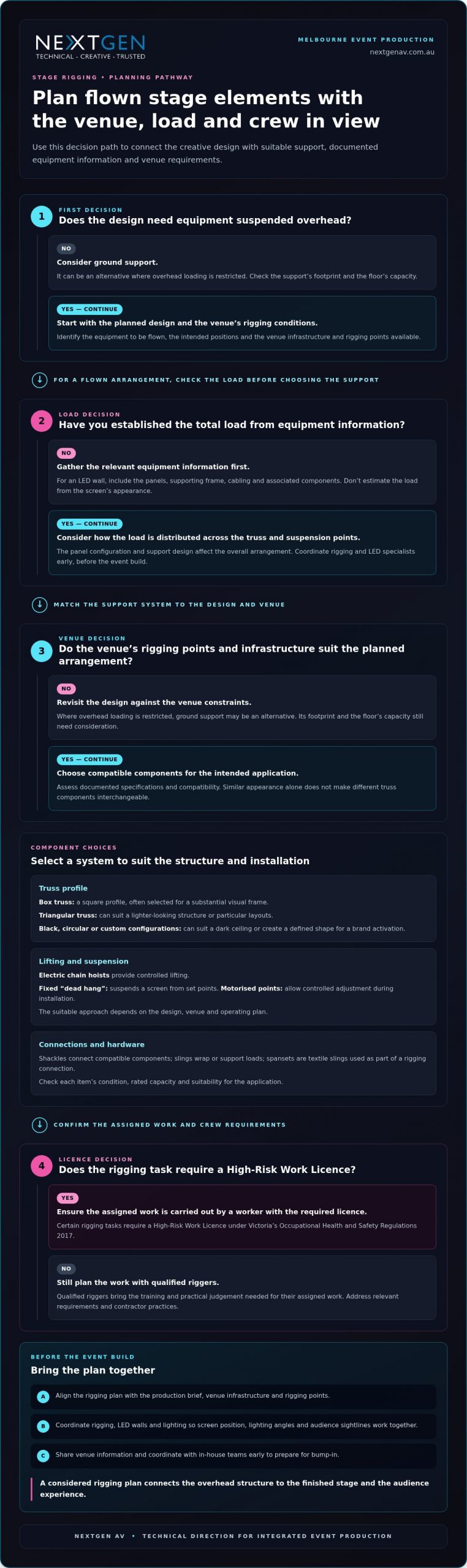
Truss, lifting equipment and connecting hardware form a support system, not a collection of interchangeable parts. Aluminium trussing creates a framework for lighting, audio and visual elements. Motors or fixed suspension points position that framework above the event floor. Each component needs to suit the intended design, the equipment it supports and the venue’s rigging conditions.
Truss profiles vary in shape and application. Box truss has a square profile and is often selected when a design calls for a substantial visual frame. Triangular truss can suit lighter-looking structures or particular layouts. Black truss can recede against a dark ceiling, while circular or custom configurations create a defined shape for a brand activation. Global and Eurotruss systems should be assessed using their documented specifications and component compatibility. Similar appearance alone does not make components interchangeable.
Trussing and Lifting Systems
Electric chain hoists provide controlled lifting, while the motor arrangement affects how a structure is raised and held in position. A fixed “dead hang” suspends a screen from set points; motorised points allow controlled adjustment during installation. The suitable approach depends on the design, venue and operating plan. Ground support can be an alternative where overhead loading is restricted, but its footprint and the floor’s capacity still need consideration.
Shackles connect compatible components, slings wrap or support loads, and spansets are textile slings used as part of a rigging connection. Check their condition, rated capacity and suitability for the application. The US reference OSHA Rigging Safety Standards addresses equipment in its jurisdiction. It does not replace Victorian requirements or project-specific engineering.
Planning for LED Video Walls
LED panels, their supporting frame, cabling and associated components all contribute to the suspended load. Establish the total using relevant equipment information, then consider how it is distributed across the truss and suspension points. Never estimate from the screen’s appearance: the panel configuration and support design affect the overall arrangement. A technical director can coordinate rigging and LED specialists early, aligning screen dimensions, sightlines and support requirements before the event build.
That integration matters in practice. A screen’s position affects truss layout, lighting angles and the audience’s view, so decisions made in isolation can undermine the finished stage. Explore how LED video walls for events fit into a production plan, then coordinate their support with the wider design. For stage rigging services melbourne organisers need to bring these elements together, NextGen AV’s technical direction connects structural planning with the audience-facing result.
Match Components to the Venue
Before selecting a system, map the equipment, intended positions and available support points. Where ceiling loading is limited, ground-supported structures may help shape the design, provided floor capacity and circulation space are considered. Early coordination lets the rigging plan support the creative brief without leaving critical decisions until bump-in.
Navigating Safety Standards and Load Calculations in Victoria
For a Melbourne event, safety planning becomes practical when the rigging design can be reviewed alongside the equipment schedule and venue information. AS 1418.17 is relevant to the design and use of lifting equipment. The technical team should identify which standards apply to the specific equipment and operation, rather than treating a reference to one standard as blanket approval. For a complex design, a structural engineer can assess the proposed arrangement and provide project-specific documentation.
Make sure design decisions are supported by clear information. Keep the current equipment schedule, venue details and rigging drawings together. If the screen size, lighting positions or production layout changes, pass the update to the technical director before issuing the plan for installation. This creates a traceable design process and gives the production team time to resolve issues before the build.
Load Calculations for Event Planners
Give your AV partner accurate equipment details, including models or specifications where available, quantities, planned positions and any movement during the event. Have the proposed loads at each support point assessed against the venue’s documented limits. For example, moving a screen from centre stage to one side can change how forces reach the supporting structure, even if the equipment list stays the same. Do not add items on site without a technical review.
Moving elements and outdoor installations need particular attention during design. The responsible technical team should account for how equipment will operate, assess site exposure and consider applicable wind conditions for temporary outdoor structures. The plan should set out how changes in conditions or production requirements will be handled, rather than relying on assumptions made during the initial design.
WorkSafe Victoria and Event Compliance
Build project records around the actual scope of work. Depending on the task and site, these may include a Job Safety Analysis, a Safe Work Method Statement where high-risk construction work applies, equipment inspection records and engineered drawings. Keep document versions clear, record design changes and make sure the crew has the current information. This document control connects planning decisions with on-site execution.
Address insurance arrangements through the event’s contracting and production planning. Define who is responsible for each part of the work, how changes are escalated and which records are shared with the venue. Clear ownership reduces uncertainty when multiple teams contribute to the build and gives organisers a reliable view of how the work will be managed.
Victoria University’s Event Production Management in Melbourne offers broader context on coordinating production components. For a rigging plan, the practical goal is to connect engineering review, accurate equipment information and controlled document updates. This helps the event design progress clearly from pre-production through to installation.
Planning Your Rigging Strategy: From Site Inspection to Bump-in
A rigging plan should take shape well before equipment arrives at the venue. A site inspection helps the technical team understand the room, access routes and production requirements, then build a plan around actual conditions. Melbourne venues vary widely: a purpose-built convention space such as MCEC and a heritage setting such as Melbourne Town Hall each have distinct layouts, access arrangements and operational considerations. Plan for the venue you have booked, not a generic room diagram.
During the inspection, map how equipment will travel from the loading area to the event space. Check loading dock access, lift dimensions, travel distances, storage areas and the routes crew will use during bump-in. These details can shape the installation sequence and affect how smoothly suppliers work together. Establish how the venue’s in-house technical team operates, including any exclusive rigging arrangements, then agree how the external production crew will coordinate with them.
Map the Venue Early
A useful site review records stage dimensions, access constraints, ceiling and support information supplied by the venue, and proposed positions for flown equipment. It should also capture practical details such as restricted corridors, shared loading areas and spaces that must stay clear for guests or venue operations. Keep approval responsibilities visible in the project schedule. Assign someone to track venue submissions and responses so design decisions do not stall while teams wait for information.
Coordinate the Production Plan
Pre-production drawings help the team visualise the rigging plot and identify clashes before installation. A 3D CAD view can bring truss positions, lighting, audio and LED screens together, making it easier to refine sightlines, cable routes and working space. Drawings should reflect the selected venue and current equipment plan. NextGen AV’s technical direction connects these elements, while clear version control helps every team work from the latest design.
Rigging is often among the first overhead work installed because lighting, audio and video elements may depend on it. It can also be among the last systems removed, after suspended equipment has been lowered and cleared. Build that sequence into the wider bump-in and bump-out schedule. Riggers, lighting crew and audio technicians should coordinate work zones, installation order and handovers, so one team’s progress does not block another’s access or create avoidable delays.
For outdoor or temporary structures, include the relevant approval pathway and supporting documentation in the project schedule. Requirements depend on the structure and site, so keep communication open with the venue and relevant approval contacts as plans develop. Stage rigging services melbourne event organisers can rely on should connect the site review, drawings, approvals and production schedule from the outset. This joined-up approach helps protect the creative vision from late changes and gives each crew member a clear role on site.
Bring your venue requirements and production concept together with NextGen AV’s Melbourne rigging and production team, coordinating technical details before bump-in.
Partnering with NextGen AV for Seamless Rigging and Production
Rigging works best when it is planned as part of the production, not added as a separate task after the stage design is settled. NextGen AV coordinates staging and rigging with lighting, professional audio and LED video walls, aligning technical decisions so every element supports the event’s intended look and audience experience. With extensive experience across Melbourne venues, the team brings practical knowledge to complex corporate productions and manages the details behind the scenes.
The “Invisible Expert” approach gives your production a clear technical lead while guests experience a confident, cohesive event rather than the logistics behind it. A technical director can connect the creative brief to the rigging plot, identify constraints early and coordinate the specialists responsible for each part of the build. That joined-up direction helps avoid clashes between the stage design, lighting positions and visual content.
One Coordinated Production Team
A single production partner can bring rigging, lighting and sound into the same planning conversation. That matters when a design includes flown fixtures, a large screen and a stage layout that needs to preserve sightlines. NextGen AV’s stage and lighting solutions connect structural decisions with the atmosphere you want to create, giving your brand a considered presence in the room.
Coordination also supports clearer decisions when venue conditions shape the design. If access, rigging points or the room layout affect the original concept, a production partner can bring the right technical specialists together to assess options and update the plan. You are not left to reconcile separate equipment schedules alone; the production details are managed as one connected project.
Built Around Your Event
A corporate gala and a product launch have different demands. A gala may call for layered lighting and a strong stage focal point; a launch may need screen content and lighting cues to work in a precise sequence. NextGen AV develops rigging plots around the event brief, venue and production elements, then coordinates the on-site work through bump-in and pack-down. The result is a plan shaped for your event, not a generic arrangement.
Safety and precision remain central throughout delivery. Clear technical direction helps the crew follow an agreed plan, communicate changes and keep rigging aligned with the wider production. That gives organisers more headspace to focus on presenters, guests and the experience they want people to remember.
If you are planning an event, speak with NextGen AV’s Melbourne team about your rigging and production brief. With stage rigging services melbourne organisers can integrate into a wider production, your concept has experienced technical partners from planning through to pack-down.
Shape the Event You Envision
Your rigging plan can do more than support the production; it can help define the atmosphere your guests remember. Bring technical planning into the creative process early, and your event design has room to develop around the venue, programme and moments you want to make stand out. That is the advantage of treating stage rigging services melbourne as part of the whole event experience, not a last-minute installation detail.
With NextGen AV, rigging is planned alongside lighting, audio and visual production, so your concept and practical requirements progress together. Focus on the message, the guests and the occasion, knowing experienced technical direction is managing the details.
Enquire about professional stage rigging services in Melbourne and take the next step towards a production designed with precision and purpose. Your vision deserves a team that helps it take shape with confidence.
Frequently Asked Questions
Do I need a permit for stage rigging in a Melbourne venue?
Permit requirements depend on the event structure and where it is being installed. Start by distinguishing formal approvals from a venue’s own technical approval process, as these can involve different teams and documents. For a Melbourne event, include approval responsibilities in the production schedule and have the organiser, venue and technical director work from the same event plan. This helps address approval requirements before the design is finalised.
How much does rigging typically cost for a corporate event?
A corporate rigging setup is scoped around the event brief rather than a standard package. Begin by defining what the audience needs to see and hear, such as a central LED screen, a clear stage view or a particular lighting look. NextGen AV’s technical team can translate that brief into a rigging and production plan, helping you understand the work involved and make informed decisions about the event design.
Can I use the venue’s in-house rigging services with NextGen AV?
Yes, NextGen AV coordinates production planning with a venue’s in-house rigging team. Establish one current version of the event plan, including the latest stage layout, screen positions and production schedule. This gives venue and production teams a shared reference as details develop, helping prevent outdated drawings or conflicting schedules from disrupting preparation.
What is the difference between basic trussing and engineered rigging?
Basic trussing describes a structural component, while engineered rigging refers to the planned scope around its use. For event planning, clarify whether the design covers only the truss or also the connected equipment, installation sequence and technical oversight. A clearly defined scope makes it easier to coordinate production responsibilities and understand how the proposed structure supports the event design.
How far in advance should I book rigging services for my event?
Start planning as soon as you have a likely venue and an initial event concept. That gives the technical team time to shape the design alongside your programme, stage layout and production schedule. If key details are still evolving, share the current brief and flag what may change. Early collaboration helps the rigging plan develop with the event instead of being added after other decisions are settled.
What safety documentation should I expect from a rigging provider?
Expect project records to match the final agreed design and clearly identify the version being used on site. If the stage layout or production equipment changes, the relevant drawings and records should be reviewed and updated as needed. For organisers, the practical check is consistency: documents shared with the venue and production crew should reflect the same installation plan.
Are there weight limits for hanging LED walls in Melbourne hotels?
Hotel rigging limits are specific to the property and may differ between rooms in the same building. Do not apply a ballroom’s information automatically to a smaller function room. For a Melbourne hotel event, use the documentation for the exact room and event date, and make sure the planned screen arrangement is assessed against that venue information before finalising production layouts.
What happens if my venue doesn’t have rigging points in the ceiling?
The event design can be adapted to the room rather than relying on a ceiling-mounted screen position. Options may include adjusting the screen location or incorporating it into a ground-level stage layout, with sightlines and audience movement considered as part of the revised design. NextGen AV coordinates these decisions with the wider production plan so the visual focus remains clear and practical for guests.
The right rigging partner turns a creative concept into safe overhead architecture. For Melbourne event organisers, that means more than suspending lights or LED walls: equipment loads, venue requirements, qualified crew and bump-in sequencing all need to work together. This guide to stage rigging services melbourne event teams can rely on explains how careful planning supports both the production and the people beneath it.
You can create a striking stage while keeping structural safety, venue approvals and specialised rigging requirements in view. Certain rigging tasks require a High-Risk Work Licence under Victoria’s Occupational Health and Safety Regulations 2017, overseen by WorkSafe Victoria. NextGen AV’s Melbourne-based team brings more than 30 years of industry experience, coordinating rigging, LED walls and lighting through technical direction as part of one integrated production.
Here, you’ll learn how to plan flown elements, prepare safety documentation and navigate venue requirements while keeping creative design and compliance aligned. From the initial concept to the final checks, precision behind the scenes helps your event take centre stage with confidence.
Key Takeaways
- See how event rigging supports structural planning and the visual impact of your Melbourne production.
- Learn how trusses, motors and hardware work together to suspend event elements with precision.
- Understand how load calculations, relevant standards and engineering input contribute to a considered rigging plan.
- Use venue information and early coordination with in-house teams to prepare for a smoother bump-in.
- Explore how stage rigging services melbourne can integrate rigging with lighting, LED walls and technical direction.
The Critical Role of Stage Rigging in Melbourne Event Production
Professional stage rigging is more than suspending speakers above an audience. It is the planned positioning and support of event equipment, designed around the venue, the production brief and the people using the space. A flown lighting fixture, audio system or LED wall needs suitable support, considered placement and coordinated installation. Those decisions shape what the audience sees and hears while helping the production team work safely behind the scenes.
Rigging is also the invisible architecture of a compelling event. Trussing can define a stage, frame a screen or support layered lighting positions. Carefully placed flown elements add depth and focus. For example, an LED wall can form the visual centrepiece, with lighting positioned to complement its content rather than obscure it. The rigging plan links these creative choices to practical constraints, including the venue’s infrastructure and how loads are distributed.
The same principles apply across theatrical, arena and corporate productions. Entertainment Rigging Principles provides background on the discipline. At a Melbourne conference or gala, careful suspension and coordination help create a polished audience experience. NextGen AV brings rigging, LED walls and lighting together through technical direction, so the production feels like one considered design rather than a series of separate installations.
Safety and Compliance: The Non-Negotiables
In Victoria, event organisers need to manage contractor practices and make sure relevant requirements are addressed. WorkSafe Victoria enforces the Occupational Health and Safety Regulations 2017, under which certain rigging tasks require a High-Risk Work Licence. There is a difference between hanging an item and engineered rigging: the latter considers how equipment is supported, positioned and secured within the overall plan. Qualified riggers bring the training and practical judgement needed to carry out their assigned work carefully.
Creative Freedom Through Flown Elements
Flown equipment can free up floor space, support audience movement and keep sightlines clearer. Suspending audio or visual elements can also help the team position them around the stage design, instead of placing stands and equipment where they interrupt the room. Layered trussing can support distinct lighting zones and visual frames, creating an immersive setting without crowding the stage. The design must still suit the venue and its rigging points.
Precise coordination makes a complex production feel effortless to guests. NextGen AV’s Melbourne team integrates rigging with LED wall specialists and lighting designers, aligning technical requirements with the intended look and audience experience. With stage rigging services melbourne productions can rely on, the creative vision has a carefully planned structure behind it, from the overhead design to the finished room.
Essential Rigging Components: Truss, Motors, and Hardware
Truss, lifting equipment and connecting hardware form a support system, not a collection of interchangeable parts. Aluminium trussing creates a framework for lighting, audio and visual elements. Motors or fixed suspension points position that framework above the event floor. Each component needs to suit the intended design, the equipment it supports and the venue’s rigging conditions.
Truss profiles vary in shape and application. Box truss has a square profile and is often selected when a design calls for a substantial visual frame. Triangular truss can suit lighter-looking structures or particular layouts. Black truss can recede against a dark ceiling, while circular or custom configurations create a defined shape for a brand activation. Global and Eurotruss systems should be assessed using their documented specifications and component compatibility. Similar appearance alone does not make components interchangeable.
Trussing and Lifting Systems
Electric chain hoists provide controlled lifting, while the motor arrangement affects how a structure is raised and held in position. A fixed “dead hang” suspends a screen from set points; motorised points allow controlled adjustment during installation. The suitable approach depends on the design, venue and operating plan. Ground support can be an alternative where overhead loading is restricted, but its footprint and the floor’s capacity still need consideration.
Shackles connect compatible components, slings wrap or support loads, and spansets are textile slings used as part of a rigging connection. Check their condition, rated capacity and suitability for the application. The US reference OSHA Rigging Safety Standards addresses equipment in its jurisdiction. It does not replace Victorian requirements or project-specific engineering.
Planning for LED Video Walls
LED panels, their supporting frame, cabling and associated components all contribute to the suspended load. Establish the total using relevant equipment information, then consider how it is distributed across the truss and suspension points. Never estimate from the screen’s appearance: the panel configuration and support design affect the overall arrangement. A technical director can coordinate rigging and LED specialists early, aligning screen dimensions, sightlines and support requirements before the event build.
That integration matters in practice. A screen’s position affects truss layout, lighting angles and the audience’s view, so decisions made in isolation can undermine the finished stage. Explore how LED video walls for events fit into a production plan, then coordinate their support with the wider design. For stage rigging services melbourne organisers need to bring these elements together, NextGen AV’s technical direction connects structural planning with the audience-facing result.
Match Components to the Venue
Before selecting a system, map the equipment, intended positions and available support points. Where ceiling loading is limited, ground-supported structures may help shape the design, provided floor capacity and circulation space are considered. Early coordination lets the rigging plan support the creative brief without leaving critical decisions until bump-in.
Navigating Safety Standards and Load Calculations in Victoria
For a Melbourne event, safety planning becomes practical when the rigging design can be reviewed alongside the equipment schedule and venue information. AS 1418.17 is relevant to the design and use of lifting equipment. The technical team should identify which standards apply to the specific equipment and operation, rather than treating a reference to one standard as blanket approval. For a complex design, a structural engineer can assess the proposed arrangement and provide project-specific documentation.
Make sure design decisions are supported by clear information. Keep the current equipment schedule, venue details and rigging drawings together. If the screen size, lighting positions or production layout changes, pass the update to the technical director before issuing the plan for installation. This creates a traceable design process and gives the production team time to resolve issues before the build.
Load Calculations for Event Planners
Give your AV partner accurate equipment details, including models or specifications where available, quantities, planned positions and any movement during the event. Have the proposed loads at each support point assessed against the venue’s documented limits. For example, moving a screen from centre stage to one side can change how forces reach the supporting structure, even if the equipment list stays the same. Do not add items on site without a technical review.
Moving elements and outdoor installations need particular attention during design. The responsible technical team should account for how equipment will operate, assess site exposure and consider applicable wind conditions for temporary outdoor structures. The plan should set out how changes in conditions or production requirements will be handled, rather than relying on assumptions made during the initial design.
WorkSafe Victoria and Event Compliance
Build project records around the actual scope of work. Depending on the task and site, these may include a Job Safety Analysis, a Safe Work Method Statement where high-risk construction work applies, equipment inspection records and engineered drawings. Keep document versions clear, record design changes and make sure the crew has the current information. This document control connects planning decisions with on-site execution.
Address insurance arrangements through the event’s contracting and production planning. Define who is responsible for each part of the work, how changes are escalated and which records are shared with the venue. Clear ownership reduces uncertainty when multiple teams contribute to the build and gives organisers a reliable view of how the work will be managed.
Victoria University’s Event Production Management in Melbourne offers broader context on coordinating production components. For a rigging plan, the practical goal is to connect engineering review, accurate equipment information and controlled document updates. This helps the event design progress clearly from pre-production through to installation.

Planning Your Rigging Strategy: From Site Inspection to Bump-in
A rigging plan should take shape well before equipment arrives at the venue. A site inspection helps the technical team understand the room, access routes and production requirements, then build a plan around actual conditions. Melbourne venues vary widely: a purpose-built convention space such as MCEC and a heritage setting such as Melbourne Town Hall each have distinct layouts, access arrangements and operational considerations. Plan for the venue you have booked, not a generic room diagram.
During the inspection, map how equipment will travel from the loading area to the event space. Check loading dock access, lift dimensions, travel distances, storage areas and the routes crew will use during bump-in. These details can shape the installation sequence and affect how smoothly suppliers work together. Establish how the venue’s in-house technical team operates, including any exclusive rigging arrangements, then agree how the external production crew will coordinate with them.
Map the Venue Early
A useful site review records stage dimensions, access constraints, ceiling and support information supplied by the venue, and proposed positions for flown equipment. It should also capture practical details such as restricted corridors, shared loading areas and spaces that must stay clear for guests or venue operations. Keep approval responsibilities visible in the project schedule. Assign someone to track venue submissions and responses so design decisions do not stall while teams wait for information.
Coordinate the Production Plan
Pre-production drawings help the team visualise the rigging plot and identify clashes before installation. A 3D CAD view can bring truss positions, lighting, audio and LED screens together, making it easier to refine sightlines, cable routes and working space. Drawings should reflect the selected venue and current equipment plan. NextGen AV’s technical direction connects these elements, while clear version control helps every team work from the latest design.
Rigging is often among the first overhead work installed because lighting, audio and video elements may depend on it. It can also be among the last systems removed, after suspended equipment has been lowered and cleared. Build that sequence into the wider bump-in and bump-out schedule. Riggers, lighting crew and audio technicians should coordinate work zones, installation order and handovers, so one team’s progress does not block another’s access or create avoidable delays.
For outdoor or temporary structures, include the relevant approval pathway and supporting documentation in the project schedule. Requirements depend on the structure and site, so keep communication open with the venue and relevant approval contacts as plans develop. Stage rigging services melbourne event organisers can rely on should connect the site review, drawings, approvals and production schedule from the outset. This joined-up approach helps protect the creative vision from late changes and gives each crew member a clear role on site.
Bring your venue requirements and production concept together with NextGen AV’s Melbourne rigging and production team, coordinating technical details before bump-in.
Partnering with NextGen AV for Seamless Rigging and Production
Rigging works best when it is planned as part of the production, not added as a separate task after the stage design is settled. NextGen AV coordinates staging and rigging with lighting, professional audio and LED video walls, aligning technical decisions so every element supports the event’s intended look and audience experience. With extensive experience across Melbourne venues, the team brings practical knowledge to complex corporate productions and manages the details behind the scenes.
The “Invisible Expert” approach gives your production a clear technical lead while guests experience a confident, cohesive event rather than the logistics behind it. A technical director can connect the creative brief to the rigging plot, identify constraints early and coordinate the specialists responsible for each part of the build. That joined-up direction helps avoid clashes between the stage design, lighting positions and visual content.
One Coordinated Production Team
A single production partner can bring rigging, lighting and sound into the same planning conversation. That matters when a design includes flown fixtures, a large screen and a stage layout that needs to preserve sightlines. NextGen AV’s stage and lighting solutions connect structural decisions with the atmosphere you want to create, giving your brand a considered presence in the room.
Coordination also supports clearer decisions when venue conditions shape the design. If access, rigging points or the room layout affect the original concept, a production partner can bring the right technical specialists together to assess options and update the plan. You are not left to reconcile separate equipment schedules alone; the production details are managed as one connected project.
Built Around Your Event
A corporate gala and a product launch have different demands. A gala may call for layered lighting and a strong stage focal point; a launch may need screen content and lighting cues to work in a precise sequence. NextGen AV develops rigging plots around the event brief, venue and production elements, then coordinates the on-site work through bump-in and pack-down. The result is a plan shaped for your event, not a generic arrangement.
Safety and precision remain central throughout delivery. Clear technical direction helps the crew follow an agreed plan, communicate changes and keep rigging aligned with the wider production. That gives organisers more headspace to focus on presenters, guests and the experience they want people to remember.
If you are planning an event, speak with NextGen AV’s Melbourne team about your rigging and production brief. With stage rigging services melbourne organisers can integrate into a wider production, your concept has experienced technical partners from planning through to pack-down.
Shape the Event You Envision
Your rigging plan can do more than support the production; it can help define the atmosphere your guests remember. Bring technical planning into the creative process early, and your event design has room to develop around the venue, programme and moments you want to make stand out. That is the advantage of treating stage rigging services melbourne as part of the whole event experience, not a last-minute installation detail.
With NextGen AV, rigging is planned alongside lighting, audio and visual production, so your concept and practical requirements progress together. Focus on the message, the guests and the occasion, knowing experienced technical direction is managing the details.
Enquire about professional stage rigging services in Melbourne and take the next step towards a production designed with precision and purpose. Your vision deserves a team that helps it take shape with confidence.
Frequently Asked Questions
Do I need a permit for stage rigging in a Melbourne venue?
Permit requirements depend on the event structure and where it is being installed. Start by distinguishing formal approvals from a venue’s own technical approval process, as these can involve different teams and documents. For a Melbourne event, include approval responsibilities in the production schedule and have the organiser, venue and technical director work from the same event plan. This helps address approval requirements before the design is finalised.
How much does rigging typically cost for a corporate event?
A corporate rigging setup is scoped around the event brief rather than a standard package. Begin by defining what the audience needs to see and hear, such as a central LED screen, a clear stage view or a particular lighting look. NextGen AV’s technical team can translate that brief into a rigging and production plan, helping you understand the work involved and make informed decisions about the event design.
Can I use the venue’s in-house rigging services with NextGen AV?
Yes, NextGen AV coordinates production planning with a venue’s in-house rigging team. Establish one current version of the event plan, including the latest stage layout, screen positions and production schedule. This gives venue and production teams a shared reference as details develop, helping prevent outdated drawings or conflicting schedules from disrupting preparation.
What is the difference between basic trussing and engineered rigging?
Basic trussing describes a structural component, while engineered rigging refers to the planned scope around its use. For event planning, clarify whether the design covers only the truss or also the connected equipment, installation sequence and technical oversight. A clearly defined scope makes it easier to coordinate production responsibilities and understand how the proposed structure supports the event design.
How far in advance should I book rigging services for my event?
Start planning as soon as you have a likely venue and an initial event concept. That gives the technical team time to shape the design alongside your programme, stage layout and production schedule. If key details are still evolving, share the current brief and flag what may change. Early collaboration helps the rigging plan develop with the event instead of being added after other decisions are settled.
What safety documentation should I expect from a rigging provider?
Expect project records to match the final agreed design and clearly identify the version being used on site. If the stage layout or production equipment changes, the relevant drawings and records should be reviewed and updated as needed. For organisers, the practical check is consistency: documents shared with the venue and production crew should reflect the same installation plan.
Are there weight limits for hanging LED walls in Melbourne hotels?
Hotel rigging limits are specific to the property and may differ between rooms in the same building. Do not apply a ballroom’s information automatically to a smaller function room. For a Melbourne hotel event, use the documentation for the exact room and event date, and make sure the planned screen arrangement is assessed against that venue information before finalising production layouts.
What happens if my venue doesn’t have rigging points in the ceiling?
The event design can be adapted to the room rather than relying on a ceiling-mounted screen position. Options may include adjusting the screen location or incorporating it into a ground-level stage layout, with sightlines and audience movement considered as part of the revised design. NextGen AV coordinates these decisions with the wider production plan so the visual focus remains clear and practical for guests.
Discover Valuable Insights
Unlock Expert Tips and Advice
Our blog is packed with valuable information to help you stay ahead. Whether you’re looking for expert advice, industry trends, or practical tips, you’ll find everything you need. Reach out today to learn more or get in touch with us for personalised support!