Large Format Display Rental for Indoor and Outdoor Events

The biggest screen isn’t always the right one. For a large format display rental, choose an indoor LED screen for a controlled environment and closer viewing. An outdoor screen is better suited to daylight, with greater brightness and weather resistance. The right choice depends on where your audience will be and what they need to see.

It’s natural to focus on screen size, but viewing distance, ambient light and event location matter just as much. This guide explains how to choose between indoor and outdoor LED screens for your Melbourne event, what affects screen visibility, and what to expect from delivery, installation and on-site technical support. You’ll also learn how content preparation and technical planning help the display work seamlessly with your event, so the audience can focus on the experience rather than the equipment.

Key Takeaways

  • Match the screen to its setting: indoor and outdoor displays are designed for different light and environmental conditions.
  • Plan delivery, installation and technical support alongside the screen choice so the display integrates smoothly with your event.
  • Consider viewing distance and audience needs when planning a screen for an indoor event or commercial display.
  • For outdoor events, include power and weather exposure in the technical plan to support clear, reliable viewing.

Indoor and outdoor LED screen hire

Choose a screen for its setting, viewing distance and audience, not size alone. An indoor LED screen suits controlled lighting, while outdoor models offer greater brightness and weather resistance for daylight events.

Indoor and Outdoor Screen Options

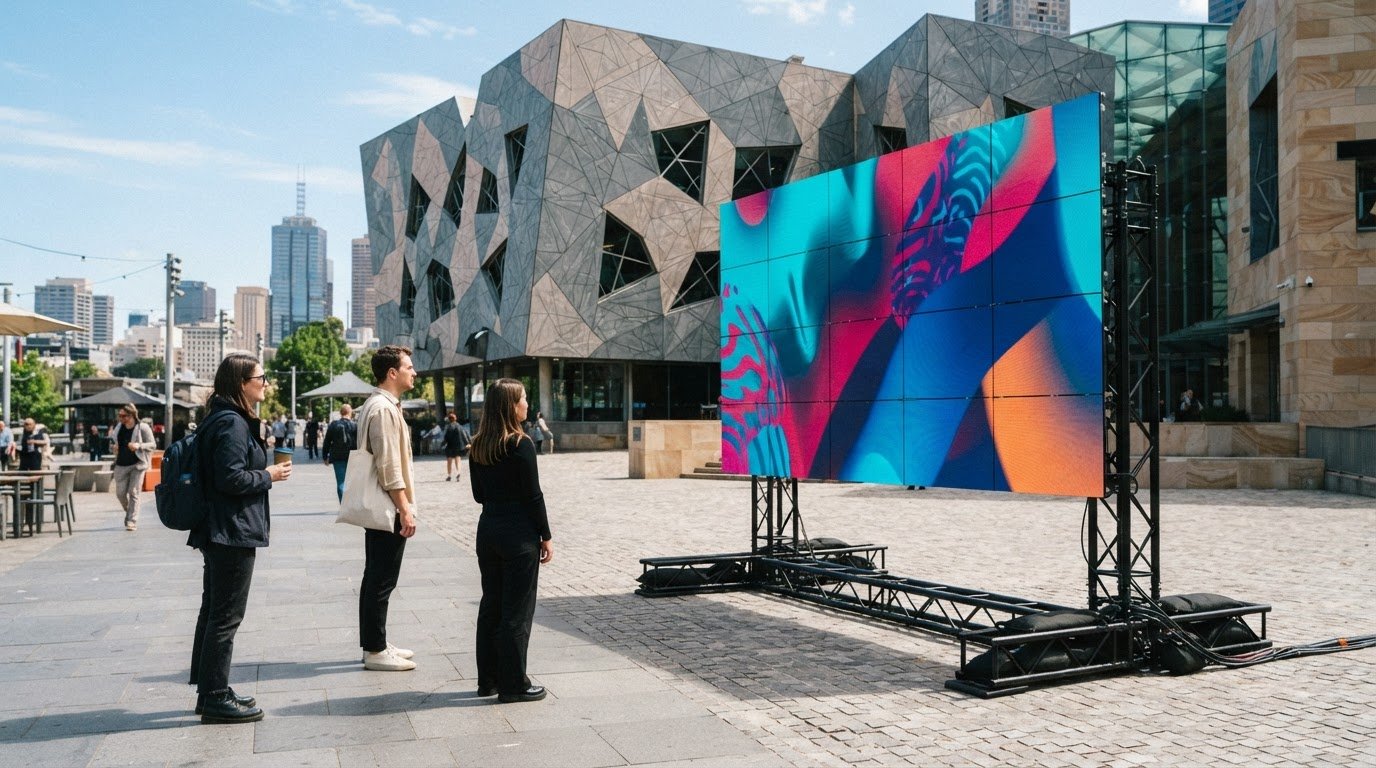
For indoor presentations and corporate events, viewing distance helps determine screen size and image detail. A 2×2 metre LED screen may suit an indoor meeting, while a 6×4 metre wall or larger may be needed at a large sports venue. Outdoor screens are brighter for daylight conditions. Freestanding LED poster screens, measuring 600 mm wide by 2,000 mm high, can display signage or wayfinding information in a defined location, serving as a dynamic alternative to standard printed media like the A1 dimensions outlined by Printbox London (Same Day Printing London).

Hire Locations and Booking

Screen hire in Melbourne depends on the event date, location and production requirements. Include the venue, audience size, indoor or outdoor setting, viewing distance, screen dimensions and content format in your brief. These details help the NextGen AV production team plan transport, access and installation around the event schedule. For large format display rental, early planning also allows time to coordinate the screen with presentations and other production requirements.

The rental agreement and booking confirmation set out insurance, damage, cancellation and delivery terms. Review them for equipment responsibilities, cancellation conditions, delivery arrangements and venue access requirements.

Weather Resistance and Maintenance

Outdoor LED screens are designed with greater resistance to weather than indoor screens, but conditions still shape the setup. The hire provider should match the display to the event environment and manage its inspection and maintenance as part of the hire. Discuss likely exposure to rain, wind, dust and direct sunlight during planning. This gives the technical team practical information for positioning and protecting the display, while preserving clear viewing for the audience.

Delivery, installation and technical support

A display hire can include the LED screen, delivery, professional setup and technical support, depending on project requirements. The agreed scope should also clarify testing, pack down and warranty terms before event day.

Delivery, Setup and Pack Down

Delivery planning starts with the venue schedule, loading access and installation location. These details determine when technicians can assemble the display without disrupting rehearsals or guest access. For a conference, setup can be coordinated with stage preparation; for a product launch, the screen should be ready before content rehearsals begin.

Before the event, the team tests the screen with the intended content and checks the colour and formatting. This can reveal layout problems before attendees arrive. The plan should also specify who manages pack-down, when equipment can be removed and how venue access aligns with the event finish. A clear run sheet keeps each handover orderly.

On-Site Support and Included Equipment

Rental inclusions depend on the agreed project scope. A display hire may combine an LED screen with delivery, installation and technical support, while the production plan assigns responsibility for each part. For presentations, the technical crew can test the visual output with the supplied content and align screen operation with the event schedule.

On-site support matters when speakers, presentations or brightness conditions change during a live programme. Technical direction can coordinate screen operation with the wider production, keeping transitions controlled. Include content formats and run times in the production plan so testing reflects the actual programme.

Warranty and Technical Assistance

The rental agreement sets out warranty coverage and technical assistance. Review its terms to understand what the warranty covers, how to report equipment issues and what support is included during the hire. It should also distinguish routine technical assistance from damage responsibilities, so the event team understands the process before delivery.

Keep the support contact and escalation process with the event run sheet. If the screen loses signal during a presentation, a clear process helps the crew respond promptly and limit disruption. Aligning support arrangements with delivery, testing and pack-down gives each stage a defined owner.
Large Format Display Rental for Indoor and Outdoor Events

Large Format Display Rental for Indoor and Outdoor Even

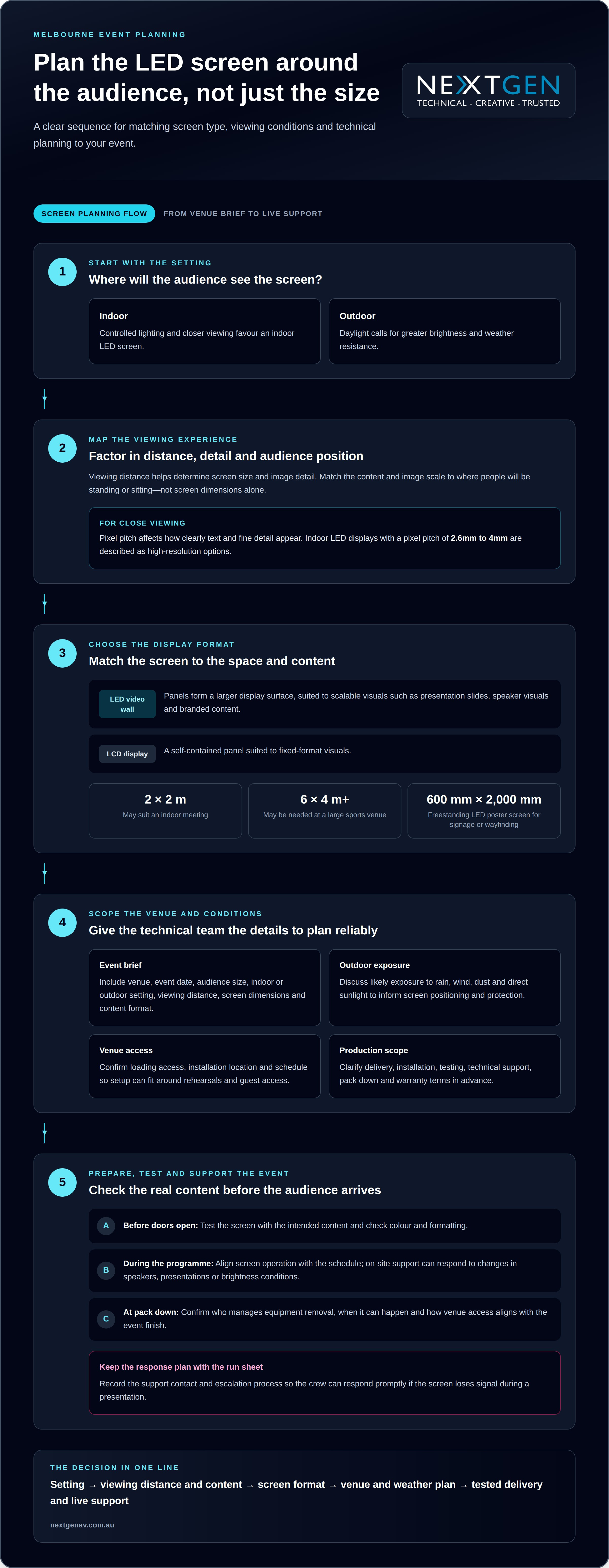
For indoor events, choose a display based on the audience’s viewing distance and intended content. LED video walls suit large, scalable visuals, while LCD displays use fixed panels with backlighting.

Event Types and Applications

At corporate events, a video wall can carry presentation slides, speaker visuals and branded content. For close viewing, pixel pitch affects how clearly text and fine detail appear. Indoor LED displays with a pixel pitch of 2.6mm to 4mm are described as high-resolution options.

Commercial advertising calls for a different viewing plan. A display on an exhibition stand may serve nearby visitors, while signage in a larger indoor space needs to remain legible from further away. Match image scale and content to the audience’s position, rather than relying on screen dimensions alone.

LED walls are built from panels that form a larger display surface. LCD screens are self-contained panels suited to fixed-format visuals. The right option depends on the space, content and viewing distance.

Briefs and Technical Scoping

A useful event brief identifies the venue, event type, screen location and intended audience. Specify whether the display is for a conference presentation, product launch or exhibition advertising. Share the content format and any planned changes between sessions so the technical plan reflects the programme.

Screen size, venue access, installation needs and technical support all shape the production plan. A complete brief helps the NextGen AV production team develop a suitable setup instead of assuming one configuration fits every event.

An event display portfolio can illustrate different approaches, from a single presentation screen to a large video wall. Use examples to discuss layout, content transitions and how the display will fit the event environment. This turns inspiration into a practical brief for your Melbourne event.

How can a display specialist determine whether an indoor or outdoor LED screen suits my event?

A display specialist considers the venue, audience, viewing distance, content and operating environment. For outdoor events, the assessment also covers weather exposure, power access, transport routes and installation conditions.

Bright daylight calls for an outdoor screen designed for visibility. Typical outdoor LED screen brightness ranges from 5,000 to 10,000 nits. The site assessment should consider direct sunlight, likely viewing positions and the display’s resolution, so text and imagery remain clear for the audience. Weather-resistant screens and reliable power sources are essential considerations for outdoor use.

Outdoor-use limits depend on the conditions a screen is designed to withstand. Weather resistance does not mean every screen suits every exposure, so the event site and expected conditions should inform the setup. The production team can plan inspection and maintenance as part of the hire, rather than treating the display as unattended equipment.

For an outdoor cinema night, the production team considers audience size, screen placement and viewing distance alongside the film’s image detail. A large crowd may need a larger screen, while closer viewing may suit a smaller display. Ambient light changes as daylight fades, but resolution and unobstructed sightlines still shape the experience. The configuration should serve viewers at the back without compromising close-up viewing.

Power and logistics need as much attention as the picture. Assess available power, cable routes, vehicle access, unloading space and the installation area. Venue access and setup timing affect how equipment reaches its position and how the team works on site. These details help determine a suitable screen configuration for parks, courtyards and other outdoor environments.

Share your event location, audience plan and access details to shape the technical assessment. Discuss your outdoor display requirements before finalising the site plan.

NextGen AV

NextGen AV helps align your display choice with the venue, audience and event programme. Bring the team in when you need technical planning to connect screen configuration, content and event delivery, rather than treating the display as a standalone hire.

For a conference, product launch or outdoor activation, LED Video Walls can be coordinated with Professional Audio Systems, Lighting Design and Equipment, or Staging and Rigging where the production calls for them. This joined-up approach keeps visual elements in step with presentations, speakers and the wider event environment.

Share your event brief, location, audience needs and intended content to shape the technical plan. Contact NextGen AV to discuss your display requirements.

Shape the event experience

A large format display rental works best when the screen supports the event’s purpose, not just its footprint. Think about the moment you want the audience to remember, whether it’s a product reveal, a presentation or a shared visual experience. That creative decision gives the technical plan a clear direction.

NextGen AV can coordinate LED Video Walls with Professional Audio Systems and Lighting Design and Equipment, bringing the visual experience into step with the wider production. With the technical details aligned, speakers, content and atmosphere can work together while you focus on hosting the event.

Share your event vision and discuss how the display can support it. Contact NextGen AV to plan your screen hire. Your next event can start with a clear idea and a capable production partner.

Frequently Asked Questions

Can LED screens be used in high ambient light environments?

Yes. LED screens can remain visible in bright environments, including outdoor daylight settings. For a clear result, plan content with strong contrast and legible text instead of relying on fine detail or subtle colour differences. This is especially useful for a daytime brand activation, where attendees may only glance at the display as they move through the event.

How can a display specialist identify the right LED screen hire solution for my event?

A display specialist starts by understanding the screen’s role in the programme. A conference with speaker presentations may need changes between slides and video, while a launch could require timed visual cues aligned with the event run sheet. Share the content types, presentation sequence and any live or remote contributions so the proposed setup reflects how the display will be used.

What types of large format displays are available for rent in Australia?

Event display formats include modular LED video walls, LCD displays and freestanding LED poster screens. These formats support different production approaches, from a connected visual surface to a self-contained display or standalone signage. The rental plan can also account for content changes during the event, such as switching from a welcome message to scheduled programme information.

Which Australian companies rent large format displays, and where do they operate?

NextGen AV provides event production and large format display rental in Melbourne. Its technical team can coordinate with venue managers, in-house AV suppliers, rigging providers and other contractors. This helps align the display plan with the wider event team when a venue already has technical arrangements in place.

What screen sizes, resolutions, and brightness levels are available?

The display configuration selected for the event determines its available specifications. Ask the production team to match the screen’s image canvas to the supplied content, including slide layouts, video and branded graphics. This helps avoid stretched visuals or unauthorised space. The final plan should also reflect how the content will appear from the audience’s viewing positions.

How far in advance should I book a display rental in Australia?

Begin planning once your event date and venue are known, particularly if the plan involves a custom LED installation or specialist crew. Early coordination gives the production team time to shape the technical design and align equipment, staffing and venue access. Short-notice bookings may be possible, subject to equipment, staffing and venue access requirements.

The biggest screen isn’t always the right one. For a large format display rental, choose an indoor LED screen for a controlled environment and closer viewing. An outdoor screen is better suited to daylight, with greater brightness and weather resistance. The right choice depends on where your audience will be and what they need to see.

It’s natural to focus on screen size, but viewing distance, ambient light and event location matter just as much. This guide explains how to choose between indoor and outdoor LED screens for your Melbourne event, what affects screen visibility, and what to expect from delivery, installation and on-site technical support. You’ll also learn how content preparation and technical planning help the display work seamlessly with your event, so the audience can focus on the experience rather than the equipment.

Key Takeaways

  • Match the screen to its setting: indoor and outdoor displays are designed for different light and environmental conditions.
  • Plan delivery, installation and technical support alongside the screen choice so the display integrates smoothly with your event.
  • Consider viewing distance and audience needs when planning a screen for an indoor event or commercial display.
  • For outdoor events, include power and weather exposure in the technical plan to support clear, reliable viewing.

Indoor and outdoor LED screen hire

Choose a screen for its setting, viewing distance and audience, not size alone. An indoor LED screen suits controlled lighting, while outdoor models offer greater brightness and weather resistance for daylight events.

Indoor and Outdoor Screen Options

For indoor presentations and corporate events, viewing distance helps determine screen size and image detail. A 2×2 metre LED screen may suit an indoor meeting, while a 6×4 metre wall or larger may be needed at a large sports venue. Outdoor screens are brighter for daylight conditions. Freestanding LED poster screens, measuring 600 mm wide by 2,000 mm high, can display signage or wayfinding information in a defined location.

Hire Locations and Booking

Screen hire in Melbourne depends on the event date, location and production requirements. Include the venue, audience size, indoor or outdoor setting, viewing distance, screen dimensions and content format in your brief. These details help the NextGen AV production team plan transport, access and installation around the event schedule. For large format display rental, early planning also allows time to coordinate the screen with presentations and other production requirements.

The rental agreement and booking confirmation set out insurance, damage, cancellation and delivery terms. Review them for equipment responsibilities, cancellation conditions, delivery arrangements and venue access requirements.

Weather Resistance and Maintenance

Outdoor LED screens are designed with greater resistance to weather than indoor screens, but conditions still shape the setup. The hire provider should match the display to the event environment and manage its inspection and maintenance as part of the hire. Discuss likely exposure to rain, wind, dust and direct sunlight during planning. This gives the technical team practical information for positioning and protecting the display, while preserving clear viewing for the audience.

Delivery, installation and technical support

A display hire can include the LED screen, delivery, professional setup and technical support, depending on project requirements. The agreed scope should also clarify testing, pack down and warranty terms before event day.

Delivery, Setup and Pack Down

Delivery planning starts with the venue schedule, loading access and installation location. These details determine when technicians can assemble the display without disrupting rehearsals or guest access. For a conference, setup can be coordinated with stage preparation; for a product launch, the screen should be ready before content rehearsals begin.

Before the event, the team tests the screen with the intended content and checks the colour and formatting. This can reveal layout problems before attendees arrive. The plan should also specify who manages pack-down, when equipment can be removed and how venue access aligns with the event finish. A clear run sheet keeps each handover orderly.

On-Site Support and Included Equipment

Rental inclusions depend on the agreed project scope. A display hire may combine an LED screen with delivery, installation and technical support, while the production plan assigns responsibility for each part. For presentations, the technical crew can test the visual output with the supplied content and align screen operation with the event schedule.

On-site support matters when speakers, presentations or brightness conditions change during a live programme. Technical direction can coordinate screen operation with the wider production, keeping transitions controlled. Include content formats and run times in the production plan so testing reflects the actual programme.

Warranty and Technical Assistance

The rental agreement sets out warranty coverage and technical assistance. Review its terms to understand what the warranty covers, how to report equipment issues and what support is included during the hire. It should also distinguish routine technical assistance from damage responsibilities, so the event team understands the process before delivery.

Keep the support contact and escalation process with the event run sheet. If the screen loses signal during a presentation, a clear process helps the crew respond promptly and limit disruption. Aligning support arrangements with delivery, testing and pack-down gives each stage a defined owner.

Large Format Display Rental for Indoor and Outdoor Even

For indoor events, choose a display based on the audience’s viewing distance and intended content. LED video walls suit large, scalable visuals, while LCD displays use fixed panels with backlighting.

Event Types and Applications

At corporate events, a video wall can carry presentation slides, speaker visuals and branded content. For close viewing, pixel pitch affects how clearly text and fine detail appear. Indoor LED displays with a pixel pitch of 2.6mm to 4mm are described as high-resolution options.

Commercial advertising calls for a different viewing plan. A display on an exhibition stand may serve nearby visitors, while signage in a larger indoor space needs to remain legible from further away. Match image scale and content to the audience’s position, rather than relying on screen dimensions alone.

LED walls are built from panels that form a larger display surface. LCD screens are self-contained panels suited to fixed-format visuals. The right option depends on the space, content and viewing distance.

Briefs and Technical Scoping

A useful event brief identifies the venue, event type, screen location and intended audience. Specify whether the display is for a conference presentation, product launch or exhibition advertising. Share the content format and any planned changes between sessions so the technical plan reflects the programme.

Screen size, venue access, installation needs and technical support all shape the production plan. A complete brief helps the NextGen AV production team develop a suitable setup instead of assuming one configuration fits every event.

An event display portfolio can illustrate different approaches, from a single presentation screen to a large video wall. Use examples to discuss layout, content transitions and how the display will fit the event environment. This turns inspiration into a practical brief for your Melbourne event.

How can a display specialist determine whether an indoor or outdoor LED screen suits my event?

A display specialist considers the venue, audience, viewing distance, content and operating environment. For outdoor events, the assessment also covers weather exposure, power access, transport routes and installation conditions.

Bright daylight calls for an outdoor screen designed for visibility. Typical outdoor LED screen brightness ranges from 5,000 to 10,000 nits. The site assessment should consider direct sunlight, likely viewing positions and the display’s resolution, so text and imagery remain clear for the audience. Weather-resistant screens and reliable power sources are essential considerations for outdoor use.

Outdoor-use limits depend on the conditions a screen is designed to withstand. Weather resistance does not mean every screen suits every exposure, so the event site and expected conditions should inform the setup. The production team can plan inspection and maintenance as part of the hire, rather than treating the display as unattended equipment.

For an outdoor cinema night, the production team considers audience size, screen placement and viewing distance alongside the film’s image detail. A large crowd may need a larger screen, while closer viewing may suit a smaller display. Ambient light changes as daylight fades, but resolution and unobstructed sightlines still shape the experience. The configuration should serve viewers at the back without compromising close-up viewing.

Power and logistics need as much attention as the picture. Assess available power, cable routes, vehicle access, unloading space and the installation area. Venue access and setup timing affect how equipment reaches its position and how the team works on site. These details help determine a suitable screen configuration for parks, courtyards and other outdoor environments.

Share your event location, audience plan and access details to shape the technical assessment. Discuss your outdoor display requirements before finalising the site plan.

NextGen AV

NextGen AV helps align your display choice with the venue, audience and event programme. Bring the team in when you need technical planning to connect screen configuration, content and event delivery, rather than treating the display as a standalone hire.

For a conference, product launch or outdoor activation, LED Video Walls can be coordinated with Professional Audio Systems, Lighting Design and Equipment, or Staging and Rigging where the production calls for them. This joined-up approach keeps visual elements in step with presentations, speakers and the wider event environment.

Share your event brief, location, audience needs and intended content to shape the technical plan. Contact NextGen AV to discuss your display requirements.

Shape the event experience

A large format display rental works best when the screen supports the event’s purpose, not just its footprint. Think about the moment you want the audience to remember, whether it’s a product reveal, a presentation or a shared visual experience. That creative decision gives the technical plan a clear direction.

NextGen AV can coordinate LED Video Walls with Professional Audio Systems and Lighting Design and Equipment, bringing the visual experience into step with the wider production. With the technical details aligned, speakers, content and atmosphere can work together while you focus on hosting the event.

Share your event vision and discuss how the display can support it. Contact NextGen AV to plan your screen hire. Your next event can start with a clear idea and a capable production partner.

Frequently Asked Questions

Can LED screens be used in high ambient light environments?

Yes. LED screens can remain visible in bright environments, including outdoor daylight settings. For a clear result, plan content with strong contrast and legible text instead of relying on fine detail or subtle colour differences. This is especially useful for a daytime brand activation, where attendees may only glance at the display as they move through the event.

How can a display specialist identify the right LED screen hire solution for my event?

A display specialist starts by understanding the screen’s role in the programme. A conference with speaker presentations may need changes between slides and video, while a launch could require timed visual cues aligned with the event run sheet. Share the content types, presentation sequence and any live or remote contributions so the proposed setup reflects how the display will be used.

What types of large format displays are available for rent in Australia?

Event display formats include modular LED video walls, LCD displays and freestanding LED poster screens. These formats support different production approaches, from a connected visual surface to a self-contained display or standalone signage. The rental plan can also account for content changes during the event, such as switching from a welcome message to scheduled programme information.

Which Australian companies rent large format displays, and where do they operate?

NextGen AV provides event production and large format display rental in Melbourne. Its technical team can coordinate with venue managers, in-house AV suppliers, rigging providers and other contractors. This helps align the display plan with the wider event team when a venue already has technical arrangements in place.

What screen sizes, resolutions, and brightness levels are available?

The display configuration selected for the event determines its available specifications. Ask the production team to match the screen’s image canvas to the supplied content, including slide layouts, video and branded graphics. This helps avoid stretched visuals or unauthorised space. The final plan should also reflect how the content will appear from the audience’s viewing positions.

How far in advance should I book a display rental in Australia?

Begin planning once your event date and venue are known, particularly if the plan involves a custom LED installation or specialist crew. Early coordination gives the production team time to shape the technical design and align equipment, staffing and venue access. Short-notice bookings may be possible, subject to equipment, staffing and venue access requirements.

Back to Articles

Discover Valuable Insights

Unlock Expert Tips and Advice

Our blog is packed with valuable information to help you stay ahead. Whether you’re looking for expert advice, industry trends, or practical tips, you’ll find everything you need. Reach out today to learn more or get in touch with us for personalised support!

Contact Us

Request A Quote

Make an
Enquiry

Let’s Get Your Event Sorted

Complete the enquiry form with your event date, venue, audience size, event type and budget. Our Melbourne AV team will review your requirements and recommend the right PA, screen, lighting, staging or production setup for your event.

What happens next?


1.We review your event details
Tell us your date, venue, audience size and event type.

2.We recommend the right setup
From PA hire to screens, lighting, staging and full AV production.

3. We come back with clear advice
You’ll receive practical recommendations and a fast quote from our Melbourne team.

Need help urgently?
Call 1300 792 922.

Resource Download

Tell us a bit about yourself to download our resources.

7