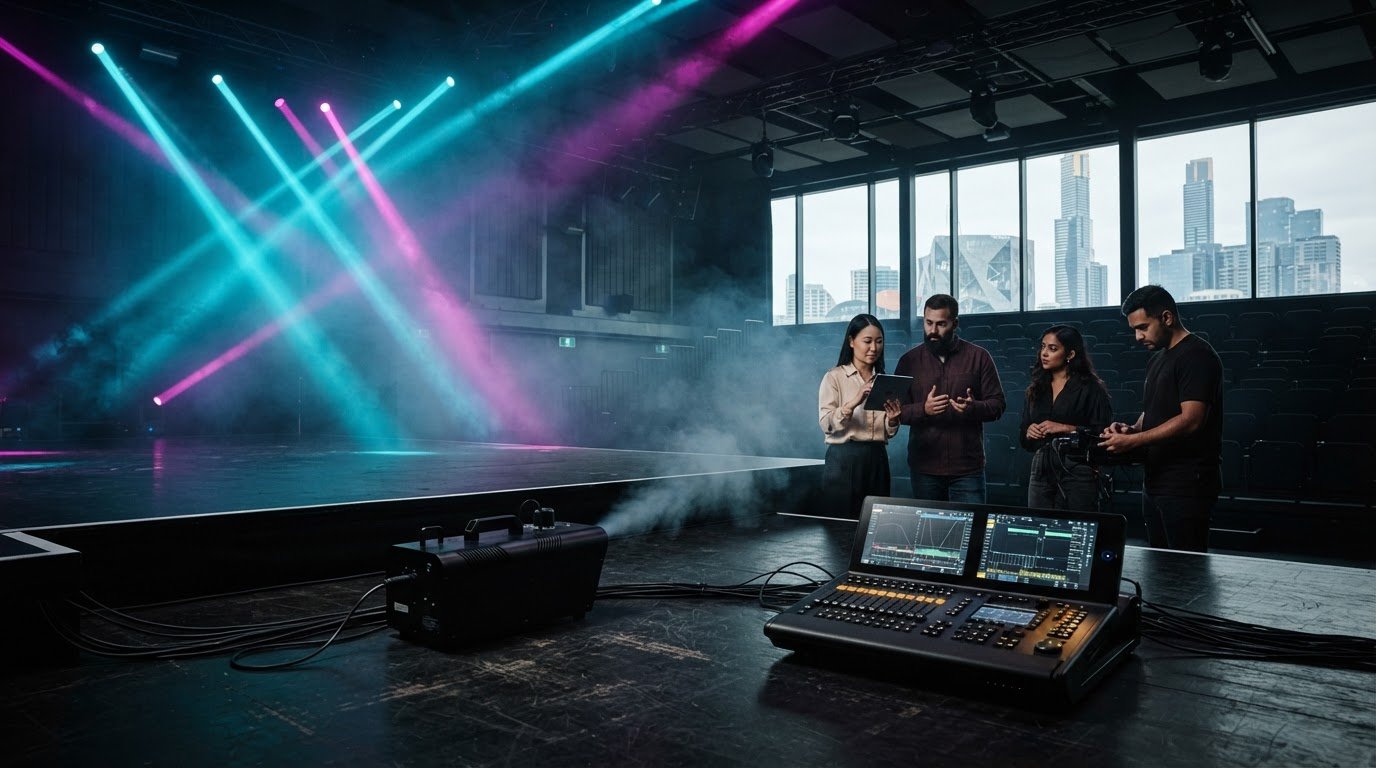
A dramatic beam of light is only as effective as the atmosphere that reveals it. Choosing haze machine rental for atmospheric effects means thinking beyond the machine: the effect needs to complement your lighting design, suit the event format and feel right for the audience. Haze can bring beams into view across a room, while fog creates a denser cloud for a more defined visual cue.
Choosing between these looks is easier when you start with the intended audience experience. Consider the moment the effect supports, how prominent it should be and how it will work with the lighting. For Melbourne events, include venue details and practical setup in the production plan from the outset.
This guide explains how haze and fog differ, how atmospheric effects interact with event lighting, and what to consider when planning setup and operation. NextGen AV’s Melbourne-based team brings lighting and AV production planning together, helping you shape an immersive experience while technical details are managed behind the scenes.
Key Takeaways
- Start with the audience experience you want, then choose an atmospheric effect that supports the event’s creative direction.
- Compare haze, fog and smoke by their visual character and purpose, rather than relying on descriptions alone.
- Plan haze machine rental for atmospheric effects alongside stage lighting so the effect supports the full visual design.
- Build your Melbourne production brief around the visual goal, event details, lighting plan and coordination needs.
- NextGen AV brings Lighting Hire and AV Hire & Event Production together with setup, operation and support.
Haze machine rental for atmospheric effects: start with the audience experience
Begin with the moment you want guests to experience, not the equipment. Should the room feel polished and focused as a presenter takes the stage, or should a reveal build anticipation? The answer helps determine whether haze belongs in the creative plan and how it should work with the lighting. For haze machine rental for atmospheric effects, connect the effect to the event’s purpose before making equipment decisions.
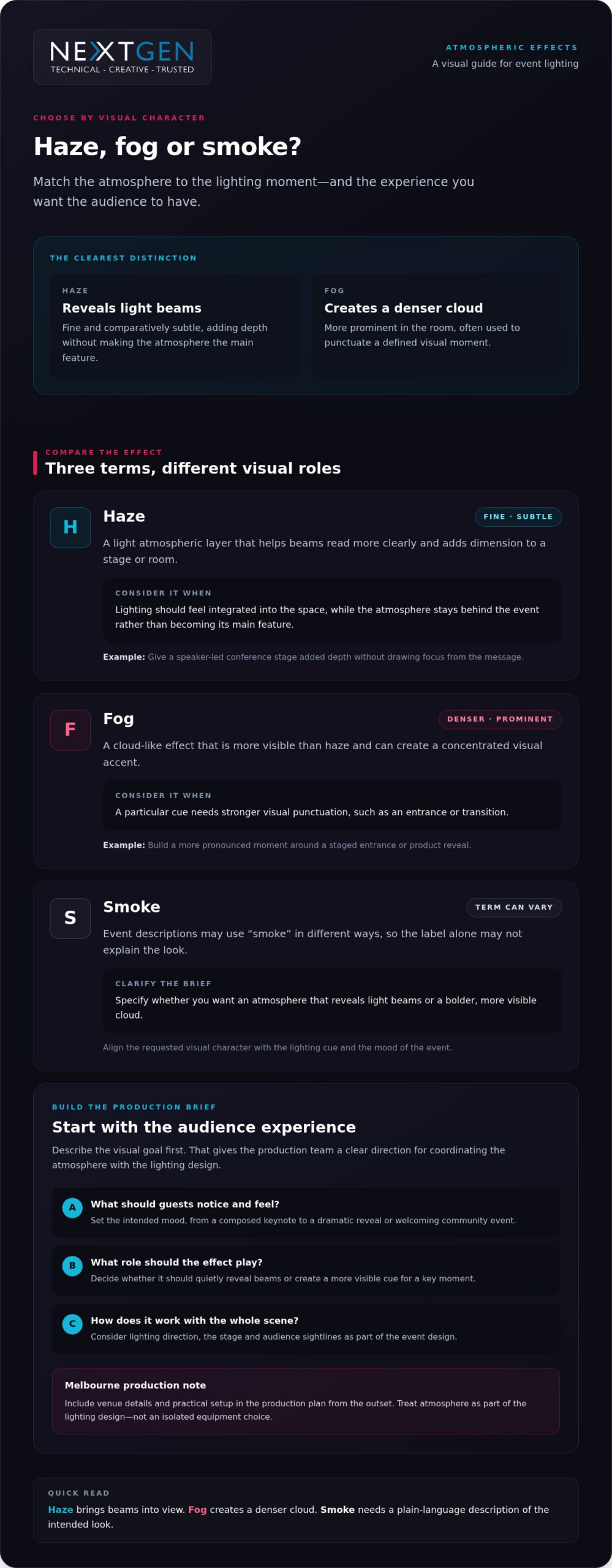
Haze is a fine atmospheric effect that makes beams of light more visible, adding visual depth without creating the dense cloud commonly associated with fog. The Haze machine overview explains the general distinction between haze and fog machines. Since product descriptions can vary, describe the look you want in your event brief rather than relying on a label alone.
That distinction matters when the room has layered lighting. Haze can create a broad, subtle impression across a stage or event space, while fog is generally chosen for a denser, more concentrated visual moment. Neither is automatically the right choice. The best fit depends on the design and the audience’s view.
What does haze add to an event?
Haze can reveal light beams that might otherwise be difficult to see, helping lighting feel integrated into the room rather than limited to individual fixtures. This added depth can make a stage feel more dimensional and give a presentation a considered visual tone. For example, at a corporate presentation, a restrained lighting design can frame the speaker, while haze helps define the beams without drawing focus from the message.
The aim is not simply to make the atmosphere visible. It is to guide attention and reinforce the mood, whether that means a refined setting for a keynote or a more dramatic transition into a product reveal. Lighting direction, the stage and audience sightlines all shape the result, so the effect should support the scene as a whole.
Which event briefs might use atmospheric effects?
Conferences may use a restrained look to give a keynote stage depth. A product launch might use lighting and atmosphere to build anticipation before a reveal, while a gala could use them to create a more theatrical entrance or stage picture. At a community event, the brief may call for a welcoming mood rather than a dramatic one.
These are creative possibilities, not fixed recipes. A bright, information-led conference has different priorities from an evening gala built around performance and movement. Identify what guests should notice, feel and remember, then align the atmospheric effect with the lighting plan, stage design and event format.
For Melbourne planners, an audience-first brief gives the production team a clear creative direction. Describe the intended mood, the key moments on stage and how the lighting should feel in the room. NextGen AV can bring lighting and production planning together, so atmosphere is considered within the event plan rather than as an isolated equipment decision.
Haze, fog and smoke: choose the effect that fits your lighting
Atmospheric effects can shape how lighting reads, from a subtle layer that brings beams into view to a denser accent for a key moment. Choose according to the creative brief and how the effect works with the lighting design, not just the name used in a hire description. When planning haze machine rental for atmospheric effects, describe the visual character you want and the role it should play in the event.
Practical difference: haze creates a fine, less prominent atmosphere that helps reveal lighting, while fog is generally a denser, more visible cloud used for a defined visual moment.
Use this comparison as a starting point. Terminology and product descriptions can vary, so focus on the audience-facing effect rather than assuming every label means the same thing.
- Haze: A fine, comparatively subtle atmosphere. Consider it when visible light beams and added depth are part of the lighting design, without making the atmosphere the main visual feature.
- Fog: A denser, cloud-like effect. It may suit a more pronounced visual cue, such as adding drama to a staged entrance or transition.
- Smoke: A term used in different ways in event descriptions. Clarify whether the brief calls for an atmosphere that reveals beams or a bolder, more visible cloud, then align the choice with the intended lighting and mood.
Haze for a subtle lighting atmosphere
Choose haze as a creative direction when the effect should sit behind the event, helping lighting beams read more clearly without becoming the focus. It can add dimension to a stage picture or room, while the lighting plan determines how that atmosphere contributes to the overall look. For a conference, that may mean supporting a composed, speaker-led stage. For a launch, it could help create a more cinematic visual setting.
Start with the intended mood. Consider what the audience should notice first, how lighting frames the stage and whether a restrained atmosphere supports the event concept. This gives the production team a clearer brief than simply requesting “haze”.
Fog or smoke for a more pronounced visual moment
Fog is commonly associated with a denser, more prominent cloud than haze. Descriptions of smoke can be less consistent, so explain the desired look in plain terms: an atmosphere that reveals beams, or a visible cloud that marks a particular moment. This distinction helps align the effect with the lighting cue and wider event design.
A product launch might call for stronger visual punctuation during a reveal, while a presentation may benefit from an understated treatment that keeps attention on the speaker. The lighting, staging and event format all influence how an atmospheric effect contributes to the scene.
Share the intended look alongside your lighting brief, and NextGen AV can help align the technical production with the audience experience. Explore NextGen AV’s event production as part of planning a cohesive lighting-led event.
How to compare haze machine rental options for your event
A useful comparison starts with the result you want guests to see, then works backwards through the lighting and production plan. Haze machine rental for atmospheric effects is only one part of the brief: the effect needs to fit the event, connect with the stage lighting and be managed as part of the overall production.
Use this checklist to clarify the brief before comparing options:
- Creative goal: Describe the moment and visual impression you want to create.
- Lighting plan: Consider how the effect should relate to lighting positions, cues and the stage picture.
- Event format: Note whether the setting is a presentation, launch, gala or live event, and what the audience needs to focus on.
- Production support: Establish how planning, setup, operation and support fit into the wider event delivery.
Match the effect to the event brief
Start with the moment the audience should notice. Is the effect meant to add quiet depth behind a presenter, or give a launch sequence a more pronounced visual accent? The answer helps define the atmosphere without assuming what a particular machine can achieve. A gala, conference and live event may each call for a different treatment, even when the lighting equipment is similar. Describe the mood and audience focus first.
Assess lighting and production integration
Consider an atmospheric effect alongside stage lighting, not in isolation. Discuss how it relates to lighting positions, cues and the visual design, so the production team can plan it in context. Setup and operation also belong in that conversation because they affect how the effect fits into the production sequence. For wider context on staging and lighting decisions, the stage and lighting hire guide explores how these elements support an event experience.
Compare the service behind the hire
Equipment-only rental and a production service are different planning models. With equipment-only hire, the organiser manages how the equipment fits into the event. A production service can bring planning, setup, operation and support together, connecting technical details with the wider event brief. NextGen AV provides AV Hire & Event Production with setup, operation and support, helping coordinate lighting and other production components.
Technical direction can help keep the creative brief, lighting design and production sequence aligned, with a clear plan for how each element contributes to the audience experience. As you compare haze machine rental options, keep the focus on both the visual goal and the support required to deliver it. NextGen AV’s event production support brings planning and on-site coordination into the conversation, so the atmosphere feels considered within the full event design.
Plan atmospheric effects with your Melbourne event production
A clear production brief turns an atmospheric idea into a practical part of your event plan. For haze machine rental for atmospheric effects, work through the creative goal, event details, lighting design and production coordination in sequence. This gives everyone a shared picture of the intended audience experience and keeps the effect connected to the wider event.
- Define the visual goal. Describe the mood you want and the moment the effect should support.
- Share the event details. Provide the date, venue, audience size and event type, such as a conference, launch or gala.
- Align the effect with lighting. Discuss how the atmosphere should relate to the lighting design and visual direction.
- Coordinate production. Plan how setup, operation and support fit with the rest of the event delivery.
Each step adds useful context. The venue and audience shape how the event is experienced, while the format influences its pace and visual priorities. Sharing these details early helps the production team develop advice around the event you are planning, rather than treating the atmospheric effect as a standalone hire decision.
Brief the production team clearly
Bring together the event date, venue, audience size and event type, then add the creative direction and specific visual moment you have in mind. Explain whether the atmosphere should support a presenter, frame a launch moment or contribute to a gala’s overall look. A concise, well-framed brief gives the team practical details for its recommendations.
Coordinate haze with the lighting plan
Atmospheric effects and lighting design work best as parts of the same visual plan. Discuss where the lighting sits, what the audience should notice and how the effect fits the stage picture. This coordination helps create a cohesive experience, from the room’s overall atmosphere to key moments on stage. For wider production considerations, explore the AV hire and event production guide.
Melbourne-based technical planning gives local organisers a production partner for events in the city. NextGen AV brings lighting and event production planning together, with setup, operation and support shaped around your brief.
Set expectations for advice and quoting
Recommendations are tailored to the event details provided, so include the venue, audience, format and intended visual outcome in your brief. This helps the team consider the effect in relation to the production as a whole. A quote usually takes 1-2 days to prepare dependant on the event. The focus is on planning a considered approach, with the atmospheric effect connected to its lighting and production context.
Ready to turn your visual direction into a coordinated production brief? Plan your event with NextGen AV.
Bring your atmospheric effects brief to NextGen AV
Atmospheric effects work best when planned as part of the production, alongside lighting design and the event’s creative direction. NextGen AV brings technical planning and event delivery together, helping you shape the visual brief around the audience experience rather than treating it as a standalone equipment decision. For haze machine rental for atmospheric effects, that means connecting the idea to the lighting and production plan, then managing the technical details behind the scenes.
A production partner behind the visual impact
NextGen AV provides Lighting Hire and AV Hire & Event Production, including setup, operation and support. The Melbourne-based team delivers events throughout Australia, connecting technical decisions with what guests see and experience. This production perspective helps organisers consider how lighting fits the wider event, from the stage picture to moments that need to hold audience attention.
Experience matters when a creative idea has to work within a live production. NextGen AV has completed 1200+ successful audio-visual hires and delivered 4.5k+ events, supported by 85+ years of combined AV technical expertise. These capabilities inform a considered approach to each brief, with recommendations tailored to the event details and intended visual result.
From event details to practical recommendations
Share the essentials and the creative intent, so the production team can consider the effect in context. The process is clear:
- We review your event details: Tell us your date, venue, audience size and event type.
- We recommend the right setup: From PA hire to screens, lighting, staging and full AV production.
- We come back with clear advice: You’ll receive practical recommendations and a fast quote from our Melbourne team.
These steps connect the event brief to practical production advice. Your date, venue, audience size and format establish the setting; your creative direction explains what the atmosphere needs to contribute. From there, the team can consider lighting and other event elements together, so the technical plan supports a cohesive experience for guests.
That joined-up approach is valuable whether the brief is a focused presentation or a larger event with several production elements to coordinate. Bring the creative ambition, and NextGen AV brings planning, technical expertise and support to help translate it into an event production plan.
Ready to shape the visual brief with a Melbourne production team? Plan your atmospheric effects with NextGen AV.
Shape the atmosphere your event deserves
The strongest atmospheric brief starts with a clear intention: what should guests feel, and which moment should stay with them? Let that direction guide your choice of haze machine rental for atmospheric effects, then bring it into the lighting and production conversation early. A considered plan gives the technical team room to connect creative ambition with the event format and audience experience.
You do not need every technical detail resolved before taking the next step. A clear idea of the mood, venue and key visual moment is a practical place to begin. NextGen AV can help shape that brief into a production plan, with technical coordination managed behind the scenes so you can focus on the event you are creating.
Plan your atmospheric effects with NextGen AV and take the next step towards a cohesive, memorable event experience.
Frequently Asked Questions
What is the difference between a haze machine and a fog machine?
The practical distinction is whether you want the atmosphere to sit in the background or read as a more pronounced visual cue. Product descriptions can use these terms differently, so brief the look you want and when it should appear. For a timed reveal, include the cue and transition in the run sheet. For an effect that supports a longer part of the programme, explain how it should fit that segment.
Can atmospheric effects make event lighting more visible?
Yes. Identify the lighting moments where beam visibility matters most and what the audience needs to see at those points. A speaker-led segment, a performance and a stage transition each have different visual priorities. Defining those priorities helps the production team assess the effect in context, rather than treating visible beams as the goal on their own.
How do I choose a haze machine rental for a corporate event?
Compare the production support as well as the effect being planned. Clarify how the atmospheric element will fit the programme, who will manage its setup and operation, and how it will relate to the event’s other technical elements. For a corporate event, this can help keep the visual treatment aligned with presentation content and stage activity. NextGen AV provides AV Hire & Event Production with setup, operation and support.
Is haze suitable for a conference or product launch?
It can be suitable if it serves a clear role in the programme. For a conference, consider whether the look complements the session format and keeps the presentation’s main content central. For a launch, decide which part of the programme the atmosphere should contribute to, such as an opening or transition. A defined purpose helps avoid adding an effect simply because it is available as a production option.
What details should I share when planning atmospheric effects for an event?
Alongside the basic event brief, share the run sheet, stage layout and key transitions where the effect may be used. Explain how presenters, performers or visual content move through those moments, and note the audience’s viewing direction. This helps the production team understand the timing and context, then consider how the effect fits the event flow and technical plan.
Can atmospheric effects be planned as part of event lighting?
Yes. Include the effect in the production’s cue planning, so its timing is considered alongside lighting changes, presenter transitions and screen content. This is useful when a moment depends on several elements changing together. A coordinated cue plan gives the technical team a shared reference for the sequence and helps the event move cleanly from one programme moment to the next.
How does event production support help coordinate atmospheric effects?
Production support gives the organiser a clear point of coordination for the effect’s place in the event plan. The team can work through setup, operation and how the effect fits the programme’s technical cues, while the organiser focuses on the wider event. Agreeing who calls the relevant cue and how it sits within the run sheet helps the production team and event stakeholders stay aligned.
A dramatic beam of light is only as effective as the atmosphere that reveals it. Choosing haze machine rental for atmospheric effects means thinking beyond the machine: the effect needs to complement your lighting design, suit the event format and feel right for the audience. Haze can bring beams into view across a room, while fog creates a denser cloud for a more defined visual cue.
Choosing between these looks is easier when you start with the intended audience experience. Consider the moment the effect supports, how prominent it should be and how it will work with the lighting. For Melbourne events, include venue details and practical setup in the production plan from the outset.
This guide explains how haze and fog differ, how atmospheric effects interact with event lighting, and what to consider when planning setup and operation. NextGen AV’s Melbourne-based team brings lighting and AV production planning together, helping you shape an immersive experience while technical details are managed behind the scenes.
Key Takeaways
- Start with the audience experience you want, then choose an atmospheric effect that supports the event’s creative direction.
- Compare haze, fog and smoke by their visual character and purpose, rather than relying on descriptions alone.
- Plan haze machine rental for atmospheric effects alongside stage lighting so the effect supports the full visual design.
- Build your Melbourne production brief around the visual goal, event details, lighting plan and coordination needs.
- NextGen AV brings Lighting Hire and AV Hire & Event Production together with setup, operation and support.
Haze machine rental for atmospheric effects: start with the audience experience
Begin with the moment you want guests to experience, not the equipment. Should the room feel polished and focused as a presenter takes the stage, or should a reveal build anticipation? The answer helps determine whether haze belongs in the creative plan and how it should work with the lighting. For haze machine rental for atmospheric effects, connect the effect to the event’s purpose before making equipment decisions.
Haze is a fine atmospheric effect that makes beams of light more visible, adding visual depth without creating the dense cloud commonly associated with fog. The Haze machine overview explains the general distinction between haze and fog machines. Since product descriptions can vary, describe the look you want in your event brief rather than relying on a label alone.
That distinction matters when the room has layered lighting. Haze can create a broad, subtle impression across a stage or event space, while fog is generally chosen for a denser, more concentrated visual moment. Neither is automatically the right choice. The best fit depends on the design and the audience’s view.
What does haze add to an event?
Haze can reveal light beams that might otherwise be difficult to see, helping lighting feel integrated into the room rather than limited to individual fixtures. This added depth can make a stage feel more dimensional and give a presentation a considered visual tone. For example, at a corporate presentation, a restrained lighting design can frame the speaker, while haze helps define the beams without drawing focus from the message.
The aim is not simply to make the atmosphere visible. It is to guide attention and reinforce the mood, whether that means a refined setting for a keynote or a more dramatic transition into a product reveal. Lighting direction, the stage and audience sightlines all shape the result, so the effect should support the scene as a whole.
Which event briefs might use atmospheric effects?
Conferences may use a restrained look to give a keynote stage depth. A product launch might use lighting and atmosphere to build anticipation before a reveal, while a gala could use them to create a more theatrical entrance or stage picture. At a community event, the brief may call for a welcoming mood rather than a dramatic one.
These are creative possibilities, not fixed recipes. A bright, information-led conference has different priorities from an evening gala built around performance and movement. Identify what guests should notice, feel and remember, then align the atmospheric effect with the lighting plan, stage design and event format.
For Melbourne planners, an audience-first brief gives the production team a clear creative direction. Describe the intended mood, the key moments on stage and how the lighting should feel in the room. NextGen AV can bring lighting and production planning together, so atmosphere is considered within the event plan rather than as an isolated equipment decision.
Haze, fog and smoke: choose the effect that fits your lighting
Atmospheric effects can shape how lighting reads, from a subtle layer that brings beams into view to a denser accent for a key moment. Choose according to the creative brief and how the effect works with the lighting design, not just the name used in a hire description. When planning haze machine rental for atmospheric effects, describe the visual character you want and the role it should play in the event.
Practical difference: haze creates a fine, less prominent atmosphere that helps reveal lighting, while fog is generally a denser, more visible cloud used for a defined visual moment.
Use this comparison as a starting point. Terminology and product descriptions can vary, so focus on the audience-facing effect rather than assuming every label means the same thing.
- Haze: A fine, comparatively subtle atmosphere. Consider it when visible light beams and added depth are part of the lighting design, without making the atmosphere the main visual feature.
- Fog: A denser, cloud-like effect. It may suit a more pronounced visual cue, such as adding drama to a staged entrance or transition.
- Smoke: A term used in different ways in event descriptions. Clarify whether the brief calls for an atmosphere that reveals beams or a bolder, more visible cloud, then align the choice with the intended lighting and mood.
Haze for a subtle lighting atmosphere
Choose haze as a creative direction when the effect should sit behind the event, helping lighting beams read more clearly without becoming the focus. It can add dimension to a stage picture or room, while the lighting plan determines how that atmosphere contributes to the overall look. For a conference, that may mean supporting a composed, speaker-led stage. For a launch, it could help create a more cinematic visual setting.
Start with the intended mood. Consider what the audience should notice first, how lighting frames the stage and whether a restrained atmosphere supports the event concept. This gives the production team a clearer brief than simply requesting “haze”.
Fog or smoke for a more pronounced visual moment
Fog is commonly associated with a denser, more prominent cloud than haze. Descriptions of smoke can be less consistent, so explain the desired look in plain terms: an atmosphere that reveals beams, or a visible cloud that marks a particular moment. This distinction helps align the effect with the lighting cue and wider event design.
A product launch might call for stronger visual punctuation during a reveal, while a presentation may benefit from an understated treatment that keeps attention on the speaker. The lighting, staging and event format all influence how an atmospheric effect contributes to the scene.
Share the intended look alongside your lighting brief, and NextGen AV can help align the technical production with the audience experience. Explore NextGen AV’s event production as part of planning a cohesive lighting-led event.
How to compare haze machine rental options for your event
A useful comparison starts with the result you want guests to see, then works backwards through the lighting and production plan. Haze machine rental for atmospheric effects is only one part of the brief: the effect needs to fit the event, connect with the stage lighting and be managed as part of the overall production.
Use this checklist to clarify the brief before comparing options:
- Creative goal: Describe the moment and visual impression you want to create.
- Lighting plan: Consider how the effect should relate to lighting positions, cues and the stage picture.
- Event format: Note whether the setting is a presentation, launch, gala or live event, and what the audience needs to focus on.
- Production support: Establish how planning, setup, operation and support fit into the wider event delivery.
Match the effect to the event brief
Start with the moment the audience should notice. Is the effect meant to add quiet depth behind a presenter, or give a launch sequence a more pronounced visual accent? The answer helps define the atmosphere without assuming what a particular machine can achieve. A gala, conference and live event may each call for a different treatment, even when the lighting equipment is similar. Describe the mood and audience focus first.
Assess lighting and production integration
Consider an atmospheric effect alongside stage lighting, not in isolation. Discuss how it relates to lighting positions, cues and the visual design, so the production team can plan it in context. Setup and operation also belong in that conversation because they affect how the effect fits into the production sequence. For wider context on staging and lighting decisions, the stage and lighting hire guide explores how these elements support an event experience.
Compare the service behind the hire
Equipment-only rental and a production service are different planning models. With equipment-only hire, the organiser manages how the equipment fits into the event. A production service can bring planning, setup, operation and support together, connecting technical details with the wider event brief. NextGen AV provides AV Hire & Event Production with setup, operation and support, helping coordinate lighting and other production components.
Technical direction can help keep the creative brief, lighting design and production sequence aligned, with a clear plan for how each element contributes to the audience experience. As you compare haze machine rental options, keep the focus on both the visual goal and the support required to deliver it. NextGen AV’s event production support brings planning and on-site coordination into the conversation, so the atmosphere feels considered within the full event design.
Plan atmospheric effects with your Melbourne event production
A clear production brief turns an atmospheric idea into a practical part of your event plan. For haze machine rental for atmospheric effects, work through the creative goal, event details, lighting design and production coordination in sequence. This gives everyone a shared picture of the intended audience experience and keeps the effect connected to the wider event.
- Define the visual goal. Describe the mood you want and the moment the effect should support.
- Share the event details. Provide the date, venue, audience size and event type, such as a conference, launch or gala.
- Align the effect with lighting. Discuss how the atmosphere should relate to the lighting design and visual direction.
- Coordinate production. Plan how setup, operation and support fit with the rest of the event delivery.
Each step adds useful context. The venue and audience shape how the event is experienced, while the format influences its pace and visual priorities. Sharing these details early helps the production team develop advice around the event you are planning, rather than treating the atmospheric effect as a standalone hire decision.
Brief the production team clearly
Bring together the event date, venue, audience size and event type, then add the creative direction and specific visual moment you have in mind. Explain whether the atmosphere should support a presenter, frame a launch moment or contribute to a gala’s overall look. A concise, well-framed brief gives the team practical details for its recommendations.
Coordinate haze with the lighting plan
Atmospheric effects and lighting design work best as parts of the same visual plan. Discuss where the lighting sits, what the audience should notice and how the effect fits the stage picture. This coordination helps create a cohesive experience, from the room’s overall atmosphere to key moments on stage. For wider production considerations, explore the AV hire and event production guide.
Melbourne-based technical planning gives local organisers a production partner for events in the city. NextGen AV brings lighting and event production planning together, with setup, operation and support shaped around your brief.
Set expectations for advice and quoting
Recommendations are tailored to the event details provided, so include the venue, audience, format and intended visual outcome in your brief. This helps the team consider the effect in relation to the production as a whole. A quote usually takes 1-2 days to prepare dependant on the event. The focus is on planning a considered approach, with the atmospheric effect connected to its lighting and production context.
Ready to turn your visual direction into a coordinated production brief? Plan your event with NextGen AV.
Bring your atmospheric effects brief to NextGen AV
Atmospheric effects work best when planned as part of the production, alongside lighting design and the event’s creative direction. NextGen AV brings technical planning and event delivery together, helping you shape the visual brief around the audience experience rather than treating it as a standalone equipment decision. For haze machine rental for atmospheric effects, that means connecting the idea to the lighting and production plan, then managing the technical details behind the scenes.
A production partner behind the visual impact
NextGen AV provides Lighting Hire and AV Hire & Event Production, including setup, operation and support. The Melbourne-based team delivers events throughout Australia, connecting technical decisions with what guests see and experience. This production perspective helps organisers consider how lighting fits the wider event, from the stage picture to moments that need to hold audience attention.
Experience matters when a creative idea has to work within a live production. NextGen AV has completed 1200+ successful audio-visual hires and delivered 4.5k+ events, supported by 85+ years of combined AV technical expertise. These capabilities inform a considered approach to each brief, with recommendations tailored to the event details and intended visual result.
From event details to practical recommendations
Share the essentials and the creative intent, so the production team can consider the effect in context. The process is clear:
- We review your event details: Tell us your date, venue, audience size and event type.
- We recommend the right setup: From PA hire to screens, lighting, staging and full AV production.
- We come back with clear advice: You’ll receive practical recommendations and a fast quote from our Melbourne team.
These steps connect the event brief to practical production advice. Your date, venue, audience size and format establish the setting; your creative direction explains what the atmosphere needs to contribute. From there, the team can consider lighting and other event elements together, so the technical plan supports a cohesive experience for guests.
That joined-up approach is valuable whether the brief is a focused presentation or a larger event with several production elements to coordinate. Bring the creative ambition, and NextGen AV brings planning, technical expertise and support to help translate it into an event production plan.
Ready to shape the visual brief with a Melbourne production team? Plan your atmospheric effects with NextGen AV.
Shape the atmosphere your event deserves
The strongest atmospheric brief starts with a clear intention: what should guests feel, and which moment should stay with them? Let that direction guide your choice of haze machine rental for atmospheric effects, then bring it into the lighting and production conversation early. A considered plan gives the technical team room to connect creative ambition with the event format and audience experience.
You do not need every technical detail resolved before taking the next step. A clear idea of the mood, venue and key visual moment is a practical place to begin. NextGen AV can help shape that brief into a production plan, with technical coordination managed behind the scenes so you can focus on the event you are creating.
Plan your atmospheric effects with NextGen AV and take the next step towards a cohesive, memorable event experience.
Frequently Asked Questions
What is the difference between a haze machine and a fog machine?
The practical distinction is whether you want the atmosphere to sit in the background or read as a more pronounced visual cue. Product descriptions can use these terms differently, so brief the look you want and when it should appear. For a timed reveal, include the cue and transition in the run sheet. For an effect that supports a longer part of the programme, explain how it should fit that segment.
Can atmospheric effects make event lighting more visible?
Yes. Identify the lighting moments where beam visibility matters most and what the audience needs to see at those points. A speaker-led segment, a performance and a stage transition each have different visual priorities. Defining those priorities helps the production team assess the effect in context, rather than treating visible beams as the goal on their own.
How do I choose a haze machine rental for a corporate event?
Compare the production support as well as the effect being planned. Clarify how the atmospheric element will fit the programme, who will manage its setup and operation, and how it will relate to the event’s other technical elements. For a corporate event, this can help keep the visual treatment aligned with presentation content and stage activity. NextGen AV provides AV Hire & Event Production with setup, operation and support.
Is haze suitable for a conference or product launch?
It can be suitable if it serves a clear role in the programme. For a conference, consider whether the look complements the session format and keeps the presentation’s main content central. For a launch, decide which part of the programme the atmosphere should contribute to, such as an opening or transition. A defined purpose helps avoid adding an effect simply because it is available as a production option.
What details should I share when planning atmospheric effects for an event?
Alongside the basic event brief, share the run sheet, stage layout and key transitions where the effect may be used. Explain how presenters, performers or visual content move through those moments, and note the audience’s viewing direction. This helps the production team understand the timing and context, then consider how the effect fits the event flow and technical plan.
Can atmospheric effects be planned as part of event lighting?
Yes. Include the effect in the production’s cue planning, so its timing is considered alongside lighting changes, presenter transitions and screen content. This is useful when a moment depends on several elements changing together. A coordinated cue plan gives the technical team a shared reference for the sequence and helps the event move cleanly from one programme moment to the next.
How does event production support help coordinate atmospheric effects?
Production support gives the organiser a clear point of coordination for the effect’s place in the event plan. The team can work through setup, operation and how the effect fits the programme’s technical cues, while the organiser focuses on the wider event. Agreeing who calls the relevant cue and how it sits within the run sheet helps the production team and event stakeholders stay aligned.
Discover Valuable Insights
Unlock Expert Tips and Advice
Our blog is packed with valuable information to help you stay ahead. Whether you’re looking for expert advice, industry trends, or practical tips, you’ll find everything you need. Reach out today to learn more or get in touch with us for personalised support!