
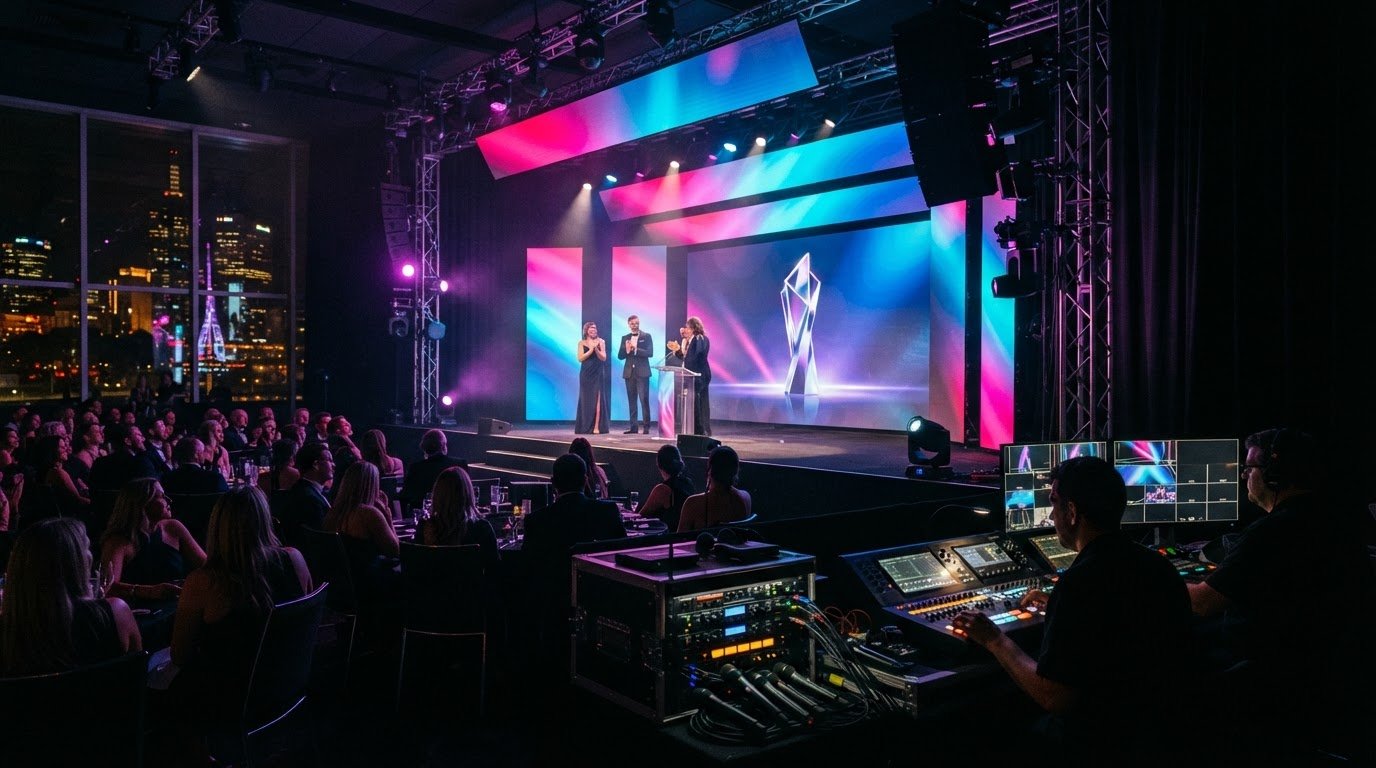
An awards night is remembered for the moment a winner’s name is announced, not the scramble behind the curtain. The right awards night av solutions coordinate each announcement, walk-on and award reveal so guests can focus on the people being recognised. When sound, screens, lighting and stage activity work together, every moment feels polished and purposeful.
A successful ceremony needs more than impressive visuals. Presenters need clear cues, recipients need a confident route to the stage, and guests need to hear and see each key moment. A technical hitch can draw attention away from the people the event is designed to celebrate.
This guide explains how to shape audio, LED video walls, lighting, staging and technical direction around your ceremony, from planning through live operation and pack-down. With NextGen AV’s Melbourne event production experience managing the detail behind the scenes, you can help presenters and recipients feel ready to take centre stage.
Key Takeaways
- Well-planned awards night av solutions coordinate audio, screens, lighting and stage cues around the ceremony’s key recognition moments.
- Match sound and screen content to speeches, acceptance remarks and walk-ons so guests can follow every announcement.
- Assess your Melbourne venue’s sightlines, stage position and audience zones before deciding where screens and production areas should go.
- Bring the run sheet and technical cues into one production plan, connecting presenters, recipients and content from start to finish.
- Professional technical direction and on-site operation manage complexity behind the scenes, keeping attention on the people being celebrated.
Awards night AV solutions: what makes the ceremony feel seamless?
Awards-night AV production coordinates sound, visuals, lighting, staging and live technical operation to make a ceremony clear, engaging and well paced. Each element supports the same story: guests hear the announcement, see the nominee or recipient, and understand what happens next. Strong awards night av solutions make that coordination feel effortless, keeping attention on the people being recognised rather than the equipment behind the moment.
The details matter because an awards ceremony changes pace throughout the evening. Arrival calls for a welcoming atmosphere and useful visual information. During dinner, sound should remain comfortable and allow guests to talk. Presentations call for focused attention, clear speech and well-timed cues. After the final award, lighting and sound can signal the next part of the event and help guests follow the transition.
Which moments need the most technical attention?
Map each change in the programme to a cue instead of treating the run sheet as a list of speeches. A cue sheet should show what the audience needs to hear and see, what changes on stage, and who is responsible for calling each transition. This gives presenters and recipients clear signals, so they can concentrate on their part in the ceremony.
- Guest arrival: Set the room with suitable background audio and arrival visuals. Keep welcome and wayfinding information easy to follow.
- Opening remarks: Direct attention to the stage with a clear microphone feed, an appropriate lighting change and the correct opening content on screen.
- Category introductions: Coordinate the category name, presenter introduction and approved visuals so guests can follow the award being announced.
- Winner announcements: Prepare the announcement audio and reveal content as a single cue, with stage lighting ready for the recipient’s walk-on.
- Closing transitions: Plan a shift in audio, visuals and lighting to move cleanly from the final presentation to the next event moment.
Technical direction connects those cues to the people delivering them. Presenters should know when to begin, where to stand and what signal indicates the next step. Recipients need a clear route to the stage. Rehearsing handovers helps identify timing clashes before guests enter the room.
What should guests experience?
Guests should be able to hear names and remarks from their seats, follow the programme without guessing, and see the stage action during recognition moments. Screen content can reinforce a category or identify a recipient, while considered lighting keeps the stage visible without making every transition a distraction.
That balance is the craft of audiovisual technology: sound and visuals work together, with a clear purpose for each. Keep cues consistent, content legible and transitions calm. The result feels celebratory and assured, with AV shaping the atmosphere while recipients remain at the centre of the ceremony.
How sound, screens and lighting shape awards-night moments
Sound, screens and lighting each carry a different part of the ceremony. Their impact comes from working as one production: clear speech makes announcements meaningful, prepared visuals help guests follow each category, and lighting directs attention without competing with people on stage. Start with a practical question: what does the audience need to hear, see or feel at this moment?
Every AV element should serve a defined audience need or ceremony moment, from hearing a winner’s name clearly to seeing their recognition across the room. That principle keeps creative choices purposeful and helps the production feel polished rather than overcomplicated.
Sound systems that keep every announcement clear
Plan audio around the people speaking and the guests listening. Choose presenter microphones to suit how each host moves and speaks, and make sure acceptance remarks remain audible as recipients step on stage. Playback cues for walk-on music also need clear timing, with a controlled start and finish that supports the transition instead of cutting across speech.
A front of house engineer manages the sound mix heard by guests, balancing speech and music as the programme unfolds. Plan wireless microphone use around who needs a microphone, where they will use it and how handovers will work. Recording those details in advance helps presenters stay composed and keeps the audience connected to each announcement.
LED screens and lighting that focus attention
LED screens can carry event visuals, category names, nominee information and approved presentation content. Organise each item against the run sheet so the right content is ready for the right cue. Use legible layouts and consistent visual styling, especially when guests are seated at different angles across the venue.
Lighting completes the focus. A planned cue can draw attention to the presenter, hold the stage during an announcement, then guide the room towards a recipient’s walk-on. Transitions can shift the atmosphere between dinner and the awards without distracting guests with unnecessary effects. The creative design should frame each recognition moment, not compete with it.
Screen planning starts with the audience and the room. Position, scale and content all affect whether guests can follow what is happening. For more detail on planning screens for an event, read this guide to LED video walls for events.
NextGen AV coordinates professional audio, LED video walls, lighting design and technical direction as one production. With the technical details managed behind the scenes, presenters can focus on the room and recipients can take centre stage.
How to assess awards-night AV for your Melbourne venue
The room is part of the production plan. Before selecting awards night av solutions, assess how guests will enter, dine, watch presentations and move through the venue. A screen that works for the front tables may be difficult to see from a side zone. A stage position that looks impressive on a floor plan may leave some guests with an obstructed view. Map the audience experience before finalising the technical design.
Match the production plan to the room
Start with the venue layout: room shape, seating arrangement, stage position and sightlines between guests, presenters and screens. Note where guests will sit during dinner and whether tables or columns could block their view. Identify suitable production areas for control positions, staging and equipment, then plan placement and operation around the space.
Melbourne venues each bring practical considerations. NextGen AV draws on over 30 years of experience navigating Victorian event venues to shape production around the room, rather than force the same layout into every space. A site-specific plan helps align the stage, screens and audience zones before the ceremony begins.
Review content as well as layout. Confirm the format of category graphics, names and presentation material, then plan screen positions for visibility throughout the room. Consider how the sound plan will support speech across the seating layout, and how lighting can focus attention on the stage without disrupting the atmosphere.
| Event need | Planning considerations |
|---|---|
| Clear announcements | Plan sound system coverage and microphone use around the room and programme. |
| Visible recognition | Position screens for audience sightlines and prepare readable category and recipient content. |
| Focused presentations | Coordinate lighting cues with presenter positions, stage activity and transitions. |
| Safe, practical staging | Fit the stage and production areas to the venue layout and the event’s operating needs. |
Choose a production partner, not just equipment
A venue-specific plan connects creative intent with technical direction and live operation. During pre-production, the team reviews the room layout, content requirements and run sheet, then coordinates how sound, screens, lighting and staging work together. On site, the crew operates to that plan while you focus on guests and event delivery.
NextGen AV manages production from planning and technical direction through on-site operation and pack-down. For broader guidance on coordinating these elements, read full-service event production. Aligning the room and production team helps the technical plan support the ceremony without competing with it.

Build an awards-night AV plan around the run sheet
A run sheet becomes a production plan when every programme moment connects to a person, a cue and a technical responsibility. For reliable awards night av solutions, start with what the ceremony needs to achieve, then map how presenters, recipients, approved content and crew will move through the evening. This gives everyone a shared reference and makes changes easier to manage during the live event.
Turn the programme into a cue sheet
Give each cue a clear trigger and owner. Record who speaks, what content appears, which audio or lighting change is needed, and how stage activity moves into the next moment. Use this briefing sequence to prepare organisers and production teams together:
- Set the objectives. Confirm the event’s tone, key recognition moments and the guest experience you want to create.
- Review the run sheet. Identify speakers, award categories, walk-ons, winner reveals, acceptance remarks and closing transitions. Note timing dependencies and planned changes.
- Build the cue sheet. Pair each moment with its screen content, audio playback, microphone handover and lighting cue. Name the person who calls or responds to each cue.
- Coordinate presenters and recipients. Brief them on entrances, stage positions, microphone use and the signals that guide their next step, so no one has to guess in front of the room.
- Rehearse and refine. Walk through key transitions with the relevant crew and participants. Adjust timing or handovers where the sequence is unclear.
A cue sheet works best when it stays practical. Use consistent cue names, keep the latest version accessible to the people who need it, and communicate approved changes to the production team. Rehearsal tests the handovers, while clear cue ownership helps operators respond confidently if the programme shifts.
Coordinate crew, equipment and safety
Technical direction brings sound, screens, lighting, staging and crew responsibilities into one plan. It also connects production choices to safe working practices. Include a Job Safety Analysis in preparation where applicable, and plan equipment placement, access and crew tasks around the venue and stage design. Where the work calls for them, assign qualified riggers and personnel holding the relevant High-Risk Work Licence.
For staging or structures that need independent assessment, include the structural engineering certificate in the production documentation. Consider the distributed load, meaning how weight is spread across a wider structural area rather than concentrated at one point. Test and Tag also belongs in equipment readiness planning. Include these checks alongside cue planning, not as an afterthought when the crew is ready to build.
NextGen AV coordinates pre-production, technical direction and on-site operation so organisers can stay focused on guests and recipients. Read more about planning your awards-night production with NextGen AV and bringing the run sheet, creative intent and technical details into one coordinated brief.
Deliver a polished awards night with NextGen AV
A memorable awards night reflects the people and achievements it celebrates. Creative intent gives the ceremony its identity; precise timing and dependable live operation let that identity come through without distraction. NextGen AV works as a production partner, shaping an experience that feels distinctive to your event while keeping the recognition itself in focus.
What an experienced production partner manages
A production partner translates your event’s creative direction into a cohesive live experience. That means considering how atmosphere, visual content and stage presentation support the tone you want, while keeping the most meaningful moments clear for guests. When those decisions form part of one production vision, technology feels intentional rather than like a series of separate effects.
NextGen AV brings more than 10 years in the corporate event space and over 30 years of industry experience to this work. The team takes ownership of technical complexity and helps protect the feel of the evening, so your attention stays with guests, presenters and recipients.
Melbourne experience, Australian event capability
With a Melbourne-based warehouse and experience delivering events throughout Australia, NextGen AV supports event organisers locally and across the country. Its past work illustrates the team’s production capability, although these projects were not awards nights. At a Melbourne gala, the team managed a lighting rig involving over 100 moving heads. For a CBD outdoor activation, it coordinated synchronised content across three modular walls.
That experience reflects the creative and technical care that can help an awards night feel polished and true to its purpose. Your ceremony has its own story to tell, and its production should reflect that.
Explore awards-night AV production with NextGen AV and see how a coordinated team can keep the people being celebrated at the centre of the event.
Set the stage for recognition
Your awards night deserves a production plan shaped around the people and achievements at its heart. Start by setting clear priorities: what should guests feel as they arrive, which moments deserve the strongest focus, and how should the evening move from one part of the programme to the next? Those decisions give your awards night AV solutions a purpose beyond presentation, helping technology support the significance of the occasion.
Bring your vision, venue details and programme together early, and the production team can shape a considered approach around them. NextGen AV combines creative thinking with precise technical planning, so you can hand over the complexity while staying connected to the experience you want guests to remember. The result is an evening designed to feel cohesive, assured and worthy of its recipients.
Plan your awards-night production with NextGen AV to bring your event vision and technical requirements into one coordinated plan. Your recipients are ready for their moment. Let’s make it count.
Frequently Asked Questions
What AV equipment is needed for an awards night?
The AV setup depends on the ceremony format. It may also need playback computers, signal distribution and an operator control position. These supporting elements help manage approved content and keep technical controls accessible during the event. Share whether presentations include video, how many speakers are involved and whether the programme includes a post-awards segment, so the plan covers the full evening.
How do you plan AV cues for an awards ceremony?
Use one approved version of the programme and content as the reference for production planning. Give each cue a consistent label and record changes in one place, so presenters and operators are not working from conflicting versions. Before the event, confirm who can approve late edits and how those edits will reach the technical team. This change-control process helps prevent outdated names, graphics or running orders from reaching the audience.
How can LED screens improve an awards night?
LED screens can make recognition more personal by pairing a recipient’s name with an approved portrait, organisation or project image. Give your design team final spellings and image files early, and keep layouts consistent across categories so guests can quickly understand what they are seeing. Review text at the intended display size, not only on a laptop. This helps keep key details readable for guests seated further from the screen.
What sound system is suitable for an awards night?
A suitable system is selected around the room’s acoustics and the balance between speeches, music and dining. Hard surfaces can make speech less distinct, while background conversation can affect how clearly guests hear announcements. A soundcheck with a speaker at the lectern and music at the planned level helps identify issues before doors open. Share priority speeches or performances with the audio team so the mix suits the programme.
How does lighting affect an awards ceremony?
Lighting also shapes how recipients appear in event photographs and video. Discuss planned camera positions and award-photo moments with the production team, then consider how the stage will look from those angles as well as from guest seating. Managing glare and keeping faces clearly visible supports both the in-room experience and the record of the evening. A considered lighting approach helps each recipient’s moment feel polished on stage and on screen.
Can one AV production team manage sound, screens and lighting?
Yes. A single production team can manage these elements through a shared plan and clear communication. For organisers, that means programme changes can go through an agreed production lead rather than being relayed separately to several technical contacts. Confirm decision-making responsibilities and how updates will be communicated before event day. That clarity helps the team respond consistently if timing or approved content changes.
What should Melbourne event organisers consider when planning awards-night AV?
For a Melbourne event, gather the venue’s current technical information before the production briefing. Useful details include access and loading arrangements, available power information, venue requirements for rigging, and the time allowed for setup and pack-down. Share the latest floor plan and nominate a venue contact for operational questions. These details help the production team build a plan around the venue’s practical conditions rather than assumptions.
Discover Valuable Insights
Unlock Expert Tips and Advice
Our blog is packed with valuable information to help you stay ahead. Whether you’re looking for expert advice, industry trends, or practical tips, you’ll find everything you need. Reach out today to learn more or get in touch with us for personalised support!