When you’re working with a new AV partner for the first time, the key timing point is that the permanent-stage assessment generally starts two years after your original partner visa application was lodged. Since April 2026, applications have been expected to be decision-ready at lodgement, and follow-up requests are not routinely issued. Missing or unclear information can hold up assessment while you respond to a request.
That can make the process feel less predictable, especially if you’re unsure whether a request will change the permanent-stage timeline. The two-year point is tied to the original application date, not the date your temporary visa is granted or a later information request.
This guide explains how incomplete applications and requests for further information can affect processing, what the permanent-stage timing is based on, and how to understand the next step in the Australian partner visa process. As at 5 November 2026, half of subclass 801 permanent partner visa decisions were made within six months of the permanent-stage eligibility date.
Key Takeaways
- Ask how technical direction, on-site coordination and delivery will support the audience experience, not just which equipment is supplied.
- Define the event goals, production requirements and deliverables early so the AV plan has a clear scope.
- Sharing your event format, venue details, schedule and content needs before the first meeting helps make the discussion more focused.
- Match LED video walls, professional audio, lighting and staging to the event’s purpose and the experience you want to create.
What should you ask a new AV partner before hiring them?
When working with a new AV partner for the first time, clarify who will lead technical planning and delivery. Ask how the production plan will support your audience, speakers and schedule. For a Melbourne conference, for example, confirm how presentations, microphones and room audio will work together.
Ask for a clear outline of responsibilities, from planning through pack-down. Establish who coordinates venue access, crew, equipment and event-day changes. A named technical lead gives your team one point of contact if the run sheet changes. Ask how they’ll keep presenters and organisers updated.
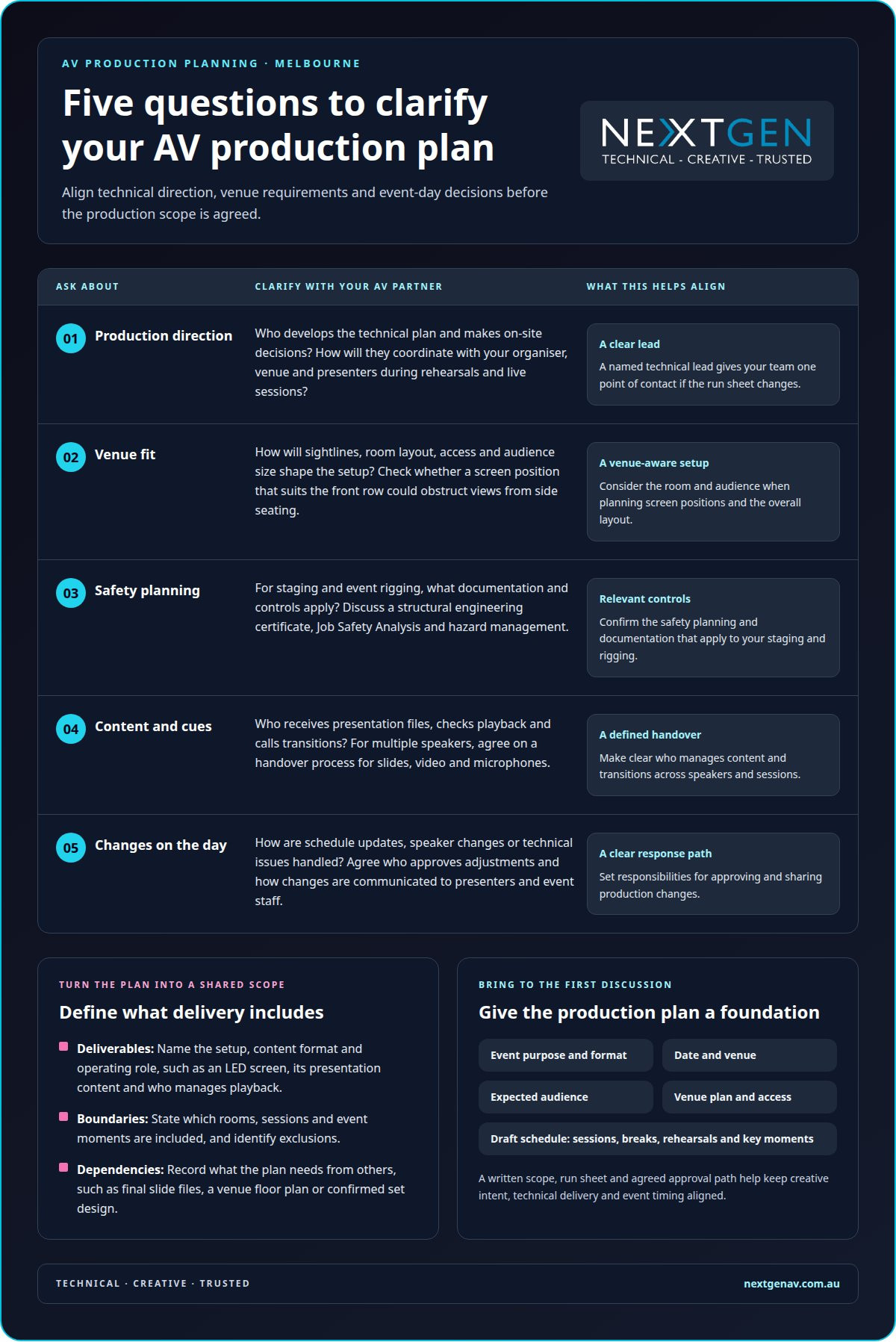
- Who directs the production? Ask who develops the technical plan and makes on-site decisions. Confirm how they coordinate with your event organiser, venue and presenters during rehearsals and live sessions.
- How will the plan fit the venue? Ask how sightlines, room layout, access and audience size shape the setup. For example, a screen position that works for the front row may obstruct views from side seating.
- What safety planning applies? For staging and event rigging, ask what documentation and controls are relevant. Discuss items such as a structural engineering certificate, Job Safety Analysis and hazard management.
- How are content and cues managed? Ask who receives presentation files, checks playback and calls transitions. A conference with multiple speakers needs a clear handover process for slides, video and microphones.
- What happens when plans change? Ask how schedule updates, speaker changes or technical issues are handled. Agree who approves adjustments and how the team communicates changes to presenters and event staff.
Ask how the partner’s experience relates to your event format. Request an example involving a conference, product launch or gala, and find out how the technical choices supported the audience.
Finally, ask what information is needed to shape the production plan. A venue plan, event schedule and content requirements give the first discussion a practical foundation and help avoid assumptions before the scope is agreed.
Before agreeing, ask what the quote covers, which services are optional and how requested changes could affect the scope. Clarify which equipment and crew are included, how additional needs are approved and what you’ll receive in writing before confirming the booking.
How to define scope and deliverables for an AV project
Start with the event outcome, then turn it into production requirements. For a product launch, the scope might include a reveal moment, presenter audio, playback and audience sightlines. This ties each technical decision to a clear purpose instead of treating equipment as a standalone list. When working with a new AV partner for the first time, a written scope also gives both teams a shared reference for decisions.
Record the event format, venue spaces, schedule and intended audience experience in one project brief. Then describe what the production team will supply, operate and coordinate. For a conference, specify whether the scope covers plenary sessions, breakout rooms, rehearsals, live presentation support and pack-down. A detailed brief helps distinguish agreed deliverables from ideas that are still evolving.
- Define each deliverable: Name the required setup, content format and operating role. For example, specify an LED screen, the presentation content it displays and who manages playback.
- Set the production boundaries: State which rooms, sessions and event moments are included. Identify exclusions, such as a separate exhibition area or a second event day.
- Map the schedule: Include access, build, rehearsal, doors opening, live cues and pack-down. A run sheet helps align production activity with speaker changes and venue access.
- Assign decisions: Name who approves creative content, schedule changes and technical adjustments. A clear approval path helps prevent conflicting instructions during production.
- Document dependencies: Record what the production plan needs from others, such as final slide files, a venue floor plan or confirmed set design.
Make acceptance practical. For example, a deliverable may be ready once presentation playback has been tested, the stage layout matches the approved plan and microphones have been checked in rehearsal. This gives the event team and production crew a shared standard.
Finally, describe how changes are handled after approval. If a keynote moves rooms or a reveal cue changes, record the update, its effect on the run sheet and who signs it off. A clearly scoped AV production plan keeps creative intent, technical delivery and event timing aligned.
What information should you provide an AV partner before the first meeting?
Send a concise event brief before the meeting, even if some details are still evolving. Include the event purpose, format, date, venue and expected audience. For a Melbourne product launch, note whether guests will watch a reveal, hear presentations or move between event spaces.
A draft schedule gives the production discussion a practical framework. Mark speaker sessions, breaks, doors opening, rehearsals and key moments. If the event includes a launch cue or panel discussion, note its timing and who will lead it.
- Venue information: Share the venue name, room plan and access details. Add photos or a floor plan showing the stage area, audience seating and any columns that could affect sightlines.
- Audience and room layout: Describe the expected audience and seating arrangement. Theatre-style seating, cabaret tables and standing guests create different viewing and listening needs.
- Content requirements: List planned presentations, videos, live demonstrations and playback cues. Note whether speakers will use prepared slides or bring their own devices.
- People and roles: Identify the event organiser, venue contact, presenters and person approving creative decisions. For a panel, include the moderator and the session format.
- Known constraints: Explain access windows, shared spaces, branding requirements and any fixed stage positions. A venue schedule showing when rooms are available helps shape the production plan.
Content samples can make the first discussion more precise. Share an existing slide deck, video file or brand guide if available. These examples help clarify screen layouts, playback needs and visual direction without relying on broad descriptions.
Flag open decisions, too. For example, say whether the speaker list is final or the schedule may change. Separating confirmed details from pending choices keeps the discussion focused on firm requirements while showing what still needs direction.
Organise these materials in one shared folder, using clear file names such as “draft run sheet” or “venue floor plan”. This gives the production discussion a useful starting point and helps keep event details aligned.
What AV equipment and services should a business partner provide
The right production mix depends on your event format, venue and desired audience experience. A Melbourne conference may need clear speech throughout a large room, while a product launch may use coordinated lighting cues to build anticipation. Ask how each technical element supports the event instead of choosing equipment in isolation.
Look for a partner who connects technical planning with live delivery. That means translating the run sheet into cues, coordinating setup with venue access and managing changes during the event. For a gala, lighting design should complement the stage, presenters and room atmosphere while keeping the stage visible.
- Visual presentation: Ask how screens and content playback will keep information visible to the audience. A product demonstration may need a clear view from several seating areas.
- Speech and sound: Ask how the audio plan will help presenters reach the room. A panel discussion needs intelligible speech and a smooth handover between speakers.
- Lighting design and equipment: Discuss how stage lighting can direct attention, support brand colours and shape key moments. For a product reveal, a planned lighting cue can focus the audience as the presentation begins.
- Staging and event rigging: Where the event needs elevated platforms or suspended equipment, establish how layout, load and safe operation inform the production plan.
- Technical direction: Confirm who coordinates cues, crew and presenters during rehearsals and live sessions. Clear direction helps keep the run sheet moving.
Establish what happens before guests arrive. The production partner should align the technical setup with the venue plan, test playback and audio, and coordinate rehearsal cues. These steps help reduce last-minute confusion for presenters and event staff.
For an event where lighting shapes the audience experience, plan your event lighting around the programme, stage design and key moments. That gives every cue a clear purpose, from welcoming guests to the final reveal.
For broader business planning, keep staffing arrangements distinct from the production brief. Australian Partner Visa applicants should plan for a 12-24 month timeframe for the temporary stage, with the permanent stage assessed later unless eligible for early grant. The Australian Subclass 309 offshore provisional partner visa is estimated to take approximately 12-24 months to process; around 90% of applications are processed in 26 months.
Australia’s Subclass 482 Skills in Demand visa allows businesses to sponsor skilled workers for up to 4 years. These timelines may inform workforce planning, but they do not replace the event partner’s responsibility to confirm equipment, crew and technical coordination for the event.
NextGen AV
NextGen AV helps turn event goals and a defined scope into a coordinated production plan, aligning technical decisions with your programme, venue and audience experience. This partnership is valuable when several elements need to work together, such as LED Video Walls, Professional Audio Systems, Lighting Design and Equipment, or Staging and Rigging.
Instead of treating these as separate choices, the production plan connects them with content, stage design and event cues, while technical direction guides delivery. For a Melbourne conference or launch, share your draft schedule, venue information and priorities to give the team a clear basis for planning.
Bring your event brief and key questions to the conversation. Contact NextGen AV to discuss your event production needs.
Make your next event plan count
When working with a new AV partner for the first time, treat the early planning conversation as the start of a creative collaboration. A clear event vision helps the production team shape technical choices around the atmosphere you want guests to remember, while keeping each decision connected to the event’s purpose.
NextGen AV coordinates LED Video Walls, Professional Audio Systems and Lighting Design and Equipment as part of event production. Each element should support your programme and audience, from a presenter’s key message to the energy of a launch moment. With technical direction guiding delivery, you can focus on welcoming guests and leading the event.
Bring your event concept and priorities into the conversation, then shape the production plan together. Contact NextGen AV to discuss your project and take the next step towards an event that feels considered, polished and distinctly yours.
Discover Valuable Insights
Unlock Expert Tips and Advice
Our blog is packed with valuable information to help you stay ahead. Whether you’re looking for expert advice, industry trends, or practical tips, you’ll find everything you need. Reach out today to learn more or get in touch with us for personalised support!