What bump-in and bump-out involve for event builds and suppliers

A smooth event depends on two well-managed phases: bump-in and bump-out. If you’re wondering what bump-in and bump-out are for events, bump-in is the delivery and setup of equipment, staging and other event elements at the venue. Bump-out is the pack-down, removal and venue restoration that follow.

It’s easy to focus on the event itself, but the work around it shapes how smoothly the day runs. Supplier arrival times, access routes and a clear sequence of tasks help crews build safely and efficiently, while a well-planned pack-down keeps departures orderly.

This guide explains how event equipment and infrastructure are delivered and set up, what bump-out involves, how suppliers coordinate timings and what to include in your event plan. Practical planning links each stage, from the first delivery to the final venue handover, so the event itself can take centre stage.

Key Takeaways

  • Plan deliveries, access routes and build order so staging is ready before AV installation begins.
  • Give bump-out crews a clear sequence for dismantling, removing equipment, sorting items and restoring the venue.
  • Stagger supplier arrival and departure times, with practical gaps between deliveries, setup tasks and rehearsals.
  • Include bump-in and bump-out dates, timings, activities, responsible staff and key contacts in your event details.

1. Transporting and setting up event builds at the venue

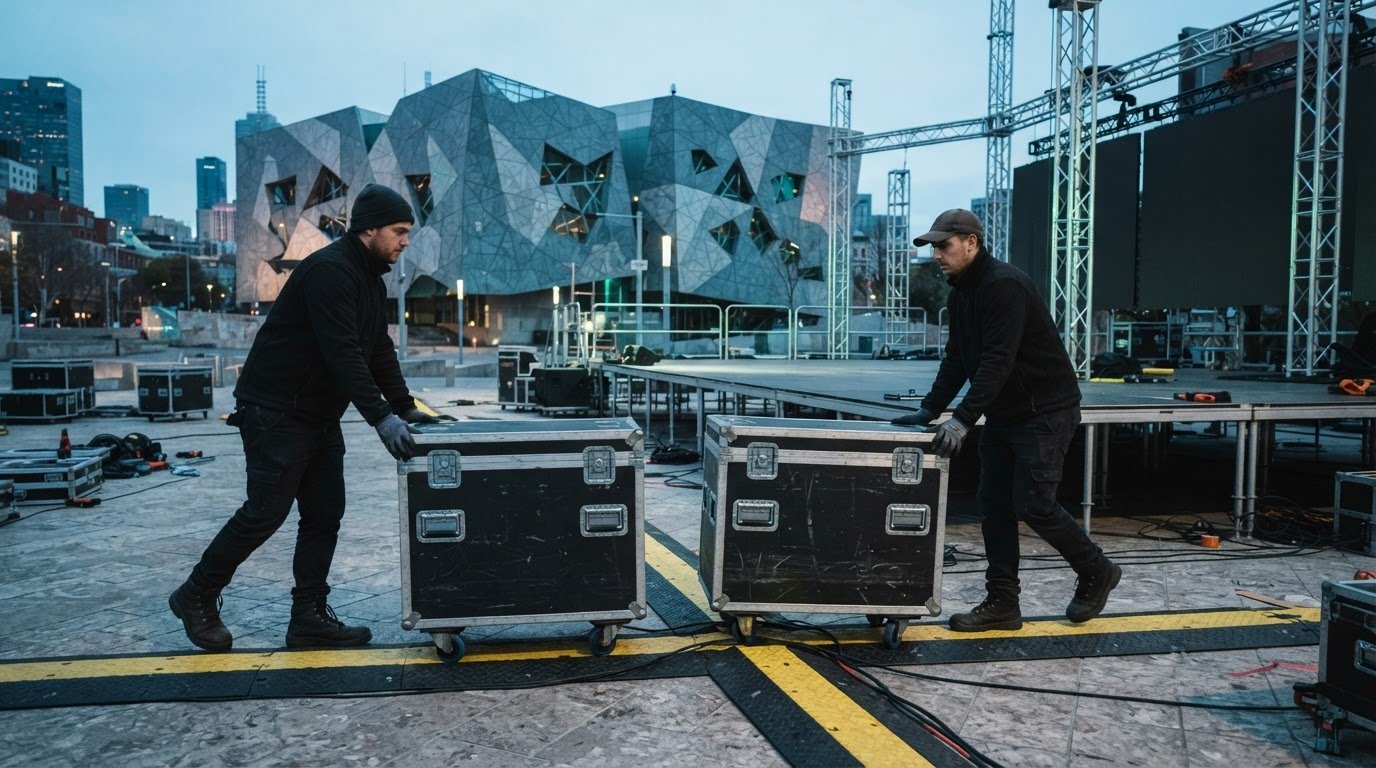
Understanding what bump-in and bump-out involve for events helps you plan the full site transformation. Bump-in covers delivering infrastructure, building staging, installing AV and preparing the venue. After the event, bump-out crews dismantle structures, remove equipment and restore the site. The workload depends on the event’s scale, venue layout and available access.

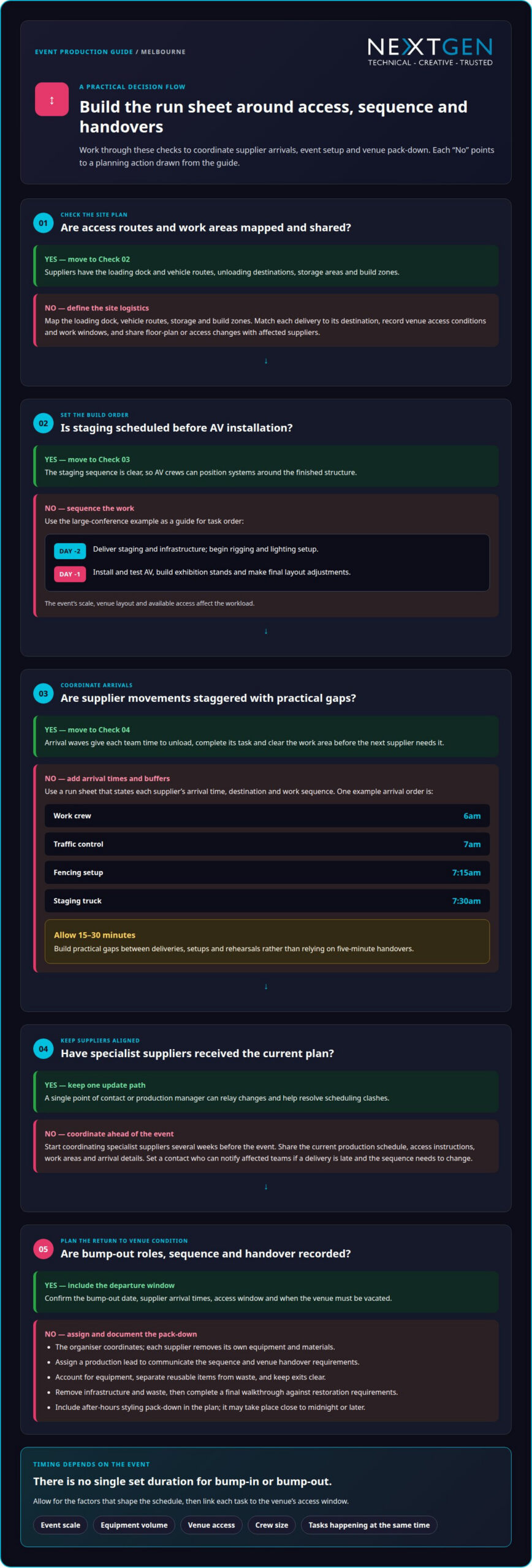
Before transport begins, map the loading dock, vehicle routes, storage areas and build zones. For an exhibition with 200+ stands, coordinated delivery schedules and clear zoning help prevent congestion. Match each delivery to its destination, and make sure crews know where equipment can be unloaded. Venue design and infrastructure affect how staging and technical elements can be positioned.

Venue rules and approvals vary by site and event. Include relevant access conditions, work windows and restoration expectations in the production plan. At a Melbourne venue, loading arrangements can shape the delivery sequence, so share any access or floor-plan changes with affected suppliers. Clear communication keeps every team working to the same layout.

Sequence the build to reduce rework. In a large-conference example, Day -2 is used for staging and infrastructure delivery, followed by initial rigging and lighting setup. On Day -1, crews install and test AV, build exhibition stands and make final layout adjustments. Completing staging before AV installation lets crews position systems around the finished structure.

Bump-in tasks include unloading vehicles, assembling staging, installing lighting and AV, and testing systems before attendees arrive. Identify the required vehicles, equipment and crew in the production plan. During bump-out, dismantle structures in sequence, remove equipment and materials, and keep exits clear. A final walkthrough checks the venue against restoration requirements before handover.

2. Bump-out crew responsibilities

The event organiser coordinates bump-out, and each supplier removes its own equipment and materials. A production lead can assign tasks, communicate the sequence and keep suppliers aligned with the venue’s handover requirements.

After guests leave, crews dismantle event elements and clear the site. They account for equipment as it comes down, separate reusable items from waste, and move materials along the agreed exit route. For a stage build, for example, the crew can clear loose items before dismantling larger sections, keeping the work area organised.

Floral and styling pack-down involves its own tasks. Depending on the design’s scale and the available time, it may need one to two staff members or more. Crews remove flowers and styling items, clean the venue, unload the van at the studio, clean containers, and sort green waste and recyclables.

The sequence matters. Crews can start with items no longer needed for the event, then pack remaining equipment once the programme ends. Styling pack-down often takes place after hours, close to midnight or later. The run sheet should state who leads each task and when suppliers can start clearing their areas.

Restoration is part of the job, not an afterthought. Crews remove event infrastructure, materials, equipment and waste, then return the venue to its pre-event condition. A final walkthrough helps the organiser spot remaining items, check cleared areas and record the handover. Keep exits safe and orderly as teams move equipment out.

Clear responsibilities allow organisers to focus on post-event assessment and future planning while crews manage dismantling. For example, a styling team can handle flowers and containers while technical suppliers pack their own equipment. Confirm the task sequence, item accounting and venue handover steps in the production schedule, so every crew knows its role after guests leave.
What bump-in and bump-out involve for event builds and suppliers

3. Coordinating supplier arrival and departure times

Bump-in and bump-out don’t have one standard duration. The schedule depends on the event’s scale, equipment volume, venue access, crew size and which tasks can happen at the same time. For a Melbourne event, map each supplier’s work to the venue’s access window, allowing time for handovers, testing and changes to the plan.

A run-sheet makes arrival order clear. One example schedules the work crew to arrive at 6am, traffic control at 7am, fencing setup at 7:15am and the staging truck at 7:30am. Staggering those movements helps manage shared access areas. It also gives suppliers a clear arrival time, destination and sequence for their work.

Build practical gaps between activities. Allow 15-30 minute blocks between deliveries, setups and rehearsals, rather than relying on five-minute handovers. Don’t schedule every worker to arrive at 8am. Use logical arrival waves so each team can unload, complete its assigned task and clear the work area before the next supplier needs it.

Start coordinating specialist suppliers several weeks before the event. Share the current production schedule, access instructions, work areas and arrival details. A single point of contact or production manager can relay updates and resolve scheduling clashes. If a delivery is late, that person can notify affected teams and adjust the sequence, rather than leaving suppliers to work through conflicting instructions.

Plan departures just as carefully. Remind suppliers of the bump-out date and their arrival times, then coordinate pack-down with the venue’s access arrangements. Make clear when site access begins and when the venue must be vacated. Floral and styling teams may pack down after hours, close to midnight or later, so include their departure window in the production plan.

There’s no fixed duration for bump-in or bump-out. It depends on the event’s scale, equipment volume, venue access, crew size and which tasks can happen at the same time.

4. Including bump-in and bump-out in event details

Record bump-in and bump-out dates, timings, activities and responsible staff in the event plan and running sheet. Labour requirements depend on the build’s scale, task sequence, venue access and crew needed. Document the site occupancy period and the operational arrangements that apply to the venue.

For a Melbourne event, tailor the schedule to the venue’s access conditions. Give every task an owner, start time, location and completion point. For example, list delivery separately from assembly, then name who confirms the work area is ready for the next supplier.

Build the checklist around the actual site and production plan. Include:

  • Venue access details, loading areas and delivery instructions.
  • Supplier names, on-site contacts and arrival or departure timings.
  • Build and pack-down tasks, their sequence and responsible crew.
  • Equipment and infrastructure checks before guests arrive.
  • Waste removal, equipment accounting and venue restoration.
  • Emergency contacts, including 000, in the event contact list.

Make the site occupancy period explicit. The schedule should show when the organiser’s access begins, when the event opens and when the venue must be completely vacated. This gives the production team and suppliers a shared reference for completing work within the agreed venue window. Keep these timings visible in the running sheet, not just in a separate checklist.

Maintain one current version and share it with the event team and suppliers. If a Melbourne venue changes an access instruction or the event layout shifts, update the affected task, its timing and its owner. For events with a visual production, align screen, lighting and staging requirements with the same schedule. Plan your event production requirements alongside the bump-in and bump-out details, so technical tasks sit within the wider run-sheet.

NextGen AV: LED Video Walls

NextGen AV can plan LED Video Walls as part of your event production, making screen placement, staging, lighting and supplier timings work together. Bring the team in during planning so the display is integrated into the production, not treated as a late addition.

For a product launch or conference, a well-planned LED wall can support presentations and add visual impact to the room. Professional Audio Systems, Lighting Design and Equipment, and Staging and Rigging can also be planned alongside the screen, with setup and pack-down included in the production schedule.

Share your event format, venue details and key timings with NextGen AV to shape the technical plan around the experience you want to create. Contact NextGen AV to discuss your event production requirements.

Shape the next step

Knowing what bump-in and bump-out are for events helps you plan beyond the run sheet. Treat the production schedule as a working document: connect the venue layout, technical requirements and audience experience, then keep the right people informed as plans take shape. This gives each decision a clear purpose, from the first build detail to the final handover.

When visual impact and technical delivery need to work together, involve your production partner while the plan is taking shape. An aligned technical approach can help turn your creative direction into a practical event experience, with fewer disconnected decisions for your team to manage.

Ready to discuss your event’s technical direction? Contact NextGen AV about your event and take the next step towards a well-orchestrated experience.

Frequently Asked Questions

What Is Bump-In and Bump-Out?

Bump-in is the period when a site is prepared for an event; bump-out is the work of clearing it afterwards. On the schedule, these terms mark the overall site-occupation phases, not just the time a particular supplier spends setting up. For example, a lighting supplier’s arrival and departure fall within the event’s bump-in and bump-out windows.

What do bump-in and bump-out mean for events?

For event teams, bump-in and bump-out mark the transitions from an empty venue to an event-ready space, and back again. They determine when suppliers can access work areas and when event spaces must be cleared. A supplier working across conference and exhibition areas, for example, needs timings that fit both zones and the overall event schedule.

What is the difference between bump-in, setup, pack-down and bump-out?

Bump-in is the broader arrival and preparation phase; setup is the assembly and preparation of a specific event element. Pack-down means dismantling or packing that element, while bump-out covers the wider removal and site-clearance phase. For example, a crew might set up a stage during bump-in, then pack it down before bump-out is complete.

What are the safety risks and requirements during event bump-in and bump-out?

Common risks include vehicle movements, lifting and carrying equipment, cable trip hazards and work in shared spaces. Follow the venue’s access instructions and agreed safety procedures, brief crew members before work starts, and keep walkways and exits clear. For example, separate delivery traffic from pedestrian routes and pause movement through a loading area while equipment is being transferred.

What are typical bump-in and bump-out schedules for Australian venues?

There is no standard duration; schedules depend on event scale, equipment volume, venue access, crew size and which tasks can overlap. One example staggers arrivals from the work crew at 6am to traffic control at 7am, fencing at 7:15am and the staging truck at 7:30am.

A smooth event depends on two well-managed phases: bump-in and bump-out. If you’re wondering what bump-in and bump-out are for events, bump-in is the delivery and setup of equipment, staging and other event elements at the venue. Bump-out is the pack-down, removal and venue restoration that follow.

It’s easy to focus on the event itself, but the work around it shapes how smoothly the day runs. Supplier arrival times, access routes and a clear sequence of tasks help crews build safely and efficiently, while a well-planned pack-down keeps departures orderly.

This guide explains how event equipment and infrastructure are delivered and set up, what bump-out involves, how suppliers coordinate timings and what to include in your event plan. Practical planning links each stage, from the first delivery to the final venue handover, so the event itself can take centre stage.

Key Takeaways

  • Plan deliveries, access routes and build order so staging is ready before AV installation begins.
  • Give bump-out crews a clear sequence for dismantling, removing equipment, sorting items and restoring the venue.
  • Stagger supplier arrival and departure times, with practical gaps between deliveries, setup tasks and rehearsals.
  • Include bump-in and bump-out dates, timings, activities, responsible staff and key contacts in your event details.

1. Transporting and setting up event builds at the venue

Understanding what bump-in and bump-out involve for events helps you plan the full site transformation. Bump-in covers delivering infrastructure, building staging, installing AV and preparing the venue. After the event, bump-out crews dismantle structures, remove equipment and restore the site. The workload depends on the event’s scale, venue layout and available access.

Before transport begins, map the loading dock, vehicle routes, storage areas and build zones. For an exhibition with 200+ stands, coordinated delivery schedules and clear zoning help prevent congestion. Match each delivery to its destination, and make sure crews know where equipment can be unloaded. Venue design and infrastructure affect how staging and technical elements can be positioned.

Venue rules and approvals vary by site and event. Include relevant access conditions, work windows and restoration expectations in the production plan. At a Melbourne venue, loading arrangements can shape the delivery sequence, so share any access or floor-plan changes with affected suppliers. Clear communication keeps every team working to the same layout.

Sequence the build to reduce rework. In a large-conference example, Day -2 is used for staging and infrastructure delivery, followed by initial rigging and lighting setup. On Day -1, crews install and test AV, build exhibition stands and make final layout adjustments. Completing staging before AV installation lets crews position systems around the finished structure.

Bump-in tasks include unloading vehicles, assembling staging, installing lighting and AV, and testing systems before attendees arrive. Identify the required vehicles, equipment and crew in the production plan. During bump-out, dismantle structures in sequence, remove equipment and materials, and keep exits clear. A final walkthrough checks the venue against restoration requirements before handover.

2. Bump-out crew responsibilities

The event organiser coordinates bump-out, and each supplier removes its own equipment and materials. A production lead can assign tasks, communicate the sequence and keep suppliers aligned with the venue’s handover requirements.

After guests leave, crews dismantle event elements and clear the site. They account for equipment as it comes down, separate reusable items from waste, and move materials along the agreed exit route. For a stage build, for example, the crew can clear loose items before dismantling larger sections, keeping the work area organised.

Floral and styling pack-down involves its own tasks. Depending on the design’s scale and the available time, it may need one to two staff members or more. Crews remove flowers and styling items, clean the venue, unload the van at the studio, clean containers, and sort green waste and recyclables.

The sequence matters. Crews can start with items no longer needed for the event, then pack remaining equipment once the programme ends. Styling pack-down often takes place after hours, close to midnight or later. The run sheet should state who leads each task and when suppliers can start clearing their areas.

Restoration is part of the job, not an afterthought. Crews remove event infrastructure, materials, equipment and waste, then return the venue to its pre-event condition. A final walkthrough helps the organiser spot remaining items, check cleared areas and record the handover. Keep exits safe and orderly as teams move equipment out.

Clear responsibilities allow organisers to focus on post-event assessment and future planning while crews manage dismantling. For example, a styling team can handle flowers and containers while technical suppliers pack their own equipment. Confirm the task sequence, item accounting and venue handover steps in the production schedule, so every crew knows its role after guests leave.

3. Coordinating supplier arrival and departure times

Bump-in and bump-out don’t have one standard duration. The schedule depends on the event’s scale, equipment volume, venue access, crew size and which tasks can happen at the same time. For a Melbourne event, map each supplier’s work to the venue’s access window, allowing time for handovers, testing and changes to the plan.

A run-sheet makes arrival order clear. One example schedules the work crew to arrive at 6am, traffic control at 7am, fencing setup at 7:15am and the staging truck at 7:30am. Staggering those movements helps manage shared access areas. It also gives suppliers a clear arrival time, destination and sequence for their work.

Build practical gaps between activities. Allow 15-30 minute blocks between deliveries, setups and rehearsals, rather than relying on five-minute handovers. Don’t schedule every worker to arrive at 8am. Use logical arrival waves so each team can unload, complete its assigned task and clear the work area before the next supplier needs it.

Start coordinating specialist suppliers several weeks before the event. Share the current production schedule, access instructions, work areas and arrival details. A single point of contact or production manager can relay updates and resolve scheduling clashes. If a delivery is late, that person can notify affected teams and adjust the sequence, rather than leaving suppliers to work through conflicting instructions.

Plan departures just as carefully. Remind suppliers of the bump-out date and their arrival times, then coordinate pack-down with the venue’s access arrangements. Make clear when site access begins and when the venue must be vacated. Floral and styling teams may pack down after hours, close to midnight or later, so include their departure window in the production plan.

There’s no fixed duration for bump-in or bump-out. It depends on the event’s scale, equipment volume, venue access, crew size and which tasks can happen at the same time.

4. Including bump-in and bump-out in event details

Record bump-in and bump-out dates, timings, activities and responsible staff in the event plan and running sheet. Labour requirements depend on the build’s scale, task sequence, venue access and crew needed. Document the site occupancy period and the operational arrangements that apply to the venue.

For a Melbourne event, tailor the schedule to the venue’s access conditions. Give every task an owner, start time, location and completion point. For example, list delivery separately from assembly, then name who confirms the work area is ready for the next supplier.

Build the checklist around the actual site and production plan. Include:

  • Venue access details, loading areas and delivery instructions.
  • Supplier names, on-site contacts and arrival or departure timings.
  • Build and pack-down tasks, their sequence and responsible crew.
  • Equipment and infrastructure checks before guests arrive.
  • Waste removal, equipment accounting and venue restoration.
  • Emergency contacts, including 000, in the event contact list.

Make the site occupancy period explicit. The schedule should show when the organiser’s access begins, when the event opens and when the venue must be completely vacated. This gives the production team and suppliers a shared reference for completing work within the agreed venue window. Keep these timings visible in the running sheet, not just in a separate checklist.

Maintain one current version and share it with the event team and suppliers. If a Melbourne venue changes an access instruction or the event layout shifts, update the affected task, its timing and its owner. For events with a visual production, align screen, lighting and staging requirements with the same schedule. Plan your event production requirements alongside the bump-in and bump-out details, so technical tasks sit within the wider run-sheet.

NextGen AV: LED Video Walls

NextGen AV can plan LED Video Walls as part of your event production, making screen placement, staging, lighting and supplier timings work together. Bring the team in during planning so the display is integrated into the production, not treated as a late addition.

For a product launch or conference, a well-planned LED wall can support presentations and add visual impact to the room. Professional Audio Systems, Lighting Design and Equipment, and Staging and Rigging can also be planned alongside the screen, with setup and pack-down included in the production schedule.

Share your event format, venue details and key timings with NextGen AV to shape the technical plan around the experience you want to create. Contact NextGen AV to discuss your event production requirements.

Shape the next step

Knowing what bump-in and bump-out are for events helps you plan beyond the run sheet. Treat the production schedule as a working document: connect the venue layout, technical requirements and audience experience, then keep the right people informed as plans take shape. This gives each decision a clear purpose, from the first build detail to the final handover.

When visual impact and technical delivery need to work together, involve your production partner while the plan is taking shape. An aligned technical approach can help turn your creative direction into a practical event experience, with fewer disconnected decisions for your team to manage.

Ready to discuss your event’s technical direction? Contact NextGen AV about your event and take the next step towards a well-orchestrated experience.

Frequently Asked Questions

What Is Bump-In and Bump-Out?

Bump-in is the period when a site is prepared for an event; bump-out is the work of clearing it afterwards. On the schedule, these terms mark the overall site-occupation phases, not just the time a particular supplier spends setting up. For example, a lighting supplier’s arrival and departure fall within the event’s bump-in and bump-out windows.

What do bump-in and bump-out mean for events?

For event teams, bump-in and bump-out mark the transitions from an empty venue to an event-ready space, and back again. They determine when suppliers can access work areas and when event spaces must be cleared. A supplier working across conference and exhibition areas, for example, needs timings that fit both zones and the overall event schedule.

What is the difference between bump-in, setup, pack-down and bump-out?

Bump-in is the broader arrival and preparation phase; setup is the assembly and preparation of a specific event element. Pack-down means dismantling or packing that element, while bump-out covers the wider removal and site-clearance phase. For example, a crew might set up a stage during bump-in, then pack it down before bump-out is complete.

What are the safety risks and requirements during event bump-in and bump-out?

Common risks include vehicle movements, lifting and carrying equipment, cable trip hazards and work in shared spaces. Follow the venue’s access instructions and agreed safety procedures, brief crew members before work starts, and keep walkways and exits clear. For example, separate delivery traffic from pedestrian routes and pause movement through a loading area while equipment is being transferred.

What are typical bump-in and bump-out schedules for Australian venues?

There is no standard duration; schedules depend on event scale, equipment volume, venue access, crew size and which tasks can overlap. One example staggers arrivals from the work crew at 6am to traffic control at 7am, fencing at 7:15am and the staging truck at 7:30am.

Back to Articles

Discover Valuable Insights

Unlock Expert Tips and Advice

Our blog is packed with valuable information to help you stay ahead. Whether you’re looking for expert advice, industry trends, or practical tips, you’ll find everything you need. Reach out today to learn more or get in touch with us for personalised support!

Contact Us

Request A Quote

Make an
Enquiry

Let’s Get Your Event Sorted

Complete the enquiry form with your event date, venue, audience size, event type and budget. Our Melbourne AV team will review your requirements and recommend the right PA, screen, lighting, staging or production setup for your event.

What happens next?


1.We review your event details
Tell us your date, venue, audience size and event type.

2.We recommend the right setup
From PA hire to screens, lighting, staging and full AV production.

3. We come back with clear advice
You’ll receive practical recommendations and a fast quote from our Melbourne team.

Need help urgently?
Call 1300 792 922.

Resource Download

Tell us a bit about yourself to download our resources.

7