Post-event AV Debrief: When to Meet and What to Review

The most useful post-event AV debriefs happen while details are fresh, so aim to meet within one to three days after the event. A comprehensive post-event av debrief checklist helps your team review what worked, where logistics caused friction and what to improve next time. Schedule the meeting during event kickoff so it does not get lost once production is complete.

It is easy to focus on the polished moments the audience saw, but an honest review also looks at the decisions and technical details behind them. Make it safe for crew, presenters and organisers to raise issues without turning the discussion into a blame exercise.

This guide from NextGen AV explains what an event debrief is, when to hold one and how to structure the conversation. It covers practical checks for AV performance, timing, communication and feedback, and how to turn observations into clear actions for your next local event in Melbourne.

Key Takeaways

  • Make honest feedback easier by gathering perspectives in more than one format and keeping the discussion focused on learning, not blame.
  • Review the event timeline alongside venue logistics and AV performance to pinpoint where smoother coordination could improve the audience experience.
  • Turn the debrief into a practical production report that records what worked, what needs attention and lessons to carry forward.
  • Schedule the meeting within one to three days after the event, while details are fresh enough to support clear, useful actions.

Creating a safe space for honest feedback

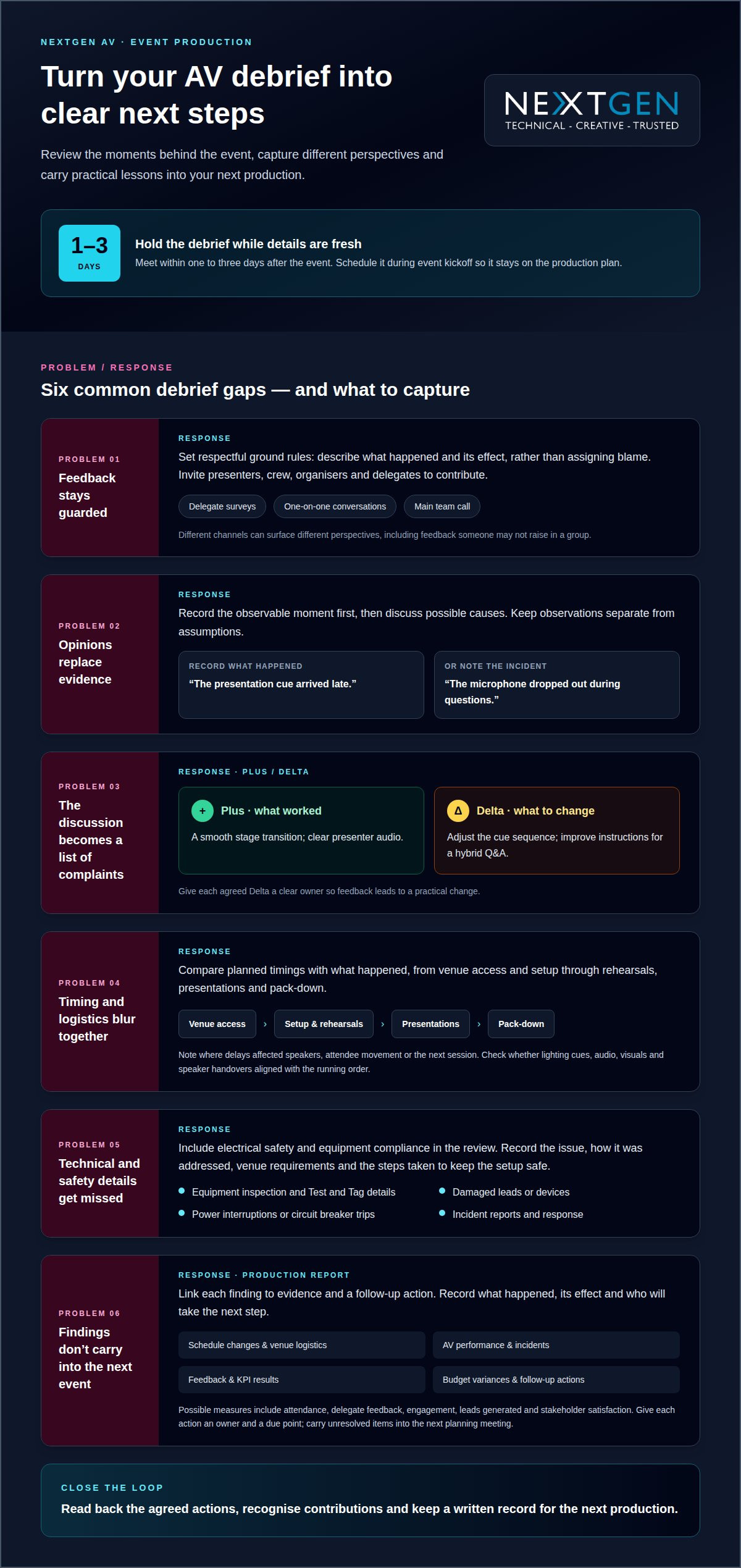
Set clear ground rules before the discussion starts. Ask everyone to describe what happened rather than assign blame: “The presentation cue arrived late” is more useful than naming a person. A facilitator can invite quieter crew members to contribute and keep the conversation focused on event objectives. This makes it easier to identify what supported success and what disrupted it.

Collect feedback through three channels: delegate surveys, one-on-one conversations and the main team call. Each captures a different perspective. A survey can show whether attendees could hear presenters clearly, while a private conversation may reveal an issue someone would not raise in a group. Ask delegates about registration, room logistics, content and their overall experience.

Use Plus/Delta to keep the meeting constructive. Under “Plus”, record what worked, such as a smooth stage transition or clear presenter audio. Under “Delta”, note what should change, such as adjusting the cue sequence or improving instructions for a hybrid Q&A. This simple format balances recognition with practical improvements instead of letting the meeting become a list of complaints.

  • Agree on respectful discussion. Explain that feedback should describe a specific moment and its effect, so the team can examine the process.
  • Invite different perspectives. Give presenters, crew, organisers and delegates a way to contribute, because each group experiences different parts of the event.
  • Separate observations from assumptions. Record “the microphone dropped out during questions” before discussing possible causes, keeping the review grounded in what happened.
  • Assign each action an owner. Turn a Delta into a clear task, such as revising the presenter briefing, so feedback leads to a change.

Close by reading back the agreed actions and recognising contributions. For example, record how a crew member’s early warning helped resolve a transition issue. Specific acknowledgement encourages openness, while a written action record carries useful feedback into the next production.

Conference organisers should collect delegate feedback and complete a post-event review. Together, these steps connect the delegate experience with the team’s reflection, so feedback informs agreed actions and useful lessons carry into the next production.

Event timeline and logistics review

Start the meeting with the event schedule and agreed objectives. Compare planned timings with what happened, from venue access and setup through rehearsals, presentations and pack-down. Record where delays affected speakers, attendee movement or the next session. This helps stakeholders distinguish a one-off disruption from a process that needs changing.

Review event goals against the selected key performance indicators (KPIs). These might include attendance, delegate feedback, engagement, leads generated or stakeholder satisfaction. Record the result for each measure and explain what contributed to it. For example, strong attendance alongside low session participation may point to a programme or room-flow issue.

Include electrical safety and equipment compliance in the Australian review. Record equipment inspection and Test and Tag details, damaged leads or devices, power interruptions, circuit breaker trips and incident reports. Note how each issue was addressed, the venue requirements and the steps taken to keep the setup safe.

What should an AV post-event debrief checklist include? Cover schedule changes, venue logistics, setup and rehearsal time, AV performance, incidents, feedback, KPI results, budget variances and assigned follow-up actions. A downloaded template can give the team a consistent format, but add event-specific observations rather than ticking boxes without context.

Review the budget by comparing planned and actual spending across agreed categories, then record the reasons for significant variances. This gives organisers a clearer basis for future planning without treating every difference as a failure. Include outstanding invoices or adjustments in the event record.

  • Check transitions. Note whether lighting cues, audio, visuals and speaker handovers aligned with the running order.
  • Capture technical issues. Record what occurred, when it affected delivery and how the team resolved it.
  • Assign next steps. Give each action an owner and a due point, then carry unresolved items into the next planning meeting.

For complex productions, event technical planning support can help align production requirements with the venue and programme.
Post-event AV Debrief: When to Meet and What to Review

What is an event debrief?

An event debrief is a structured review of delivery, outcomes and lessons. For a corporate event, it connects the run sheet with audience engagement, feedback and production records. The aim is to explain what happened, why it happened and what should change. The NSW Ministry of Health describes debriefing as documenting response strategies, challenges, best practices and lessons learned.

Document AV incidents in a production report while details are clear. Record the time, affected equipment or platform, audience impact, suspected cause, fix and follow-up action. For example, note when a playback delay interrupted a speaker transition, which signal path was examined and who will update the cue sequence. Keep observations separate from assumptions.

A useful report captures both successful delivery and areas for improvement. Include event objectives, schedule changes, AV performance, stakeholder feedback, vendor coordination and budget variances. Link each finding to evidence, such as a cue sheet, operator log or attendee comment. This makes the analysis useful for future decisions rather than just a record of opinions.

  • Record the event context. Document the format, venue, programme and changes that affected delivery.
  • Capture incidents consistently. Add the time, impact, cause, resolution and follow-up owner for each AV issue.
  • Separate outcomes from actions. Note what worked, then specify the process change needed, such as revising a presenter briefing.
  • Update the event playbook. Transfer repeatable lessons into run sheets, cue lists and vendor instructions for the next production.

Keep the playbook practical and easy to use. A lesson about delayed content, for instance, should become a defined asset handover step, not simply “improve communication”. Review completed actions before the next event, then refine the process if results or feedback show the change fell short. This turns one production’s experience into a stronger operating method.

Timing the post-event debrief

Hold the main debrief within one to three days after the event, while crew members can still recall speaker cues, session transitions and technical interruptions clearly. For a longer conference, capture observations at the end of each day, then review the full programme together. This preserves details without turning every session into a separate meeting.

Use a post-event AV debrief checklist to structure the review, and complete the event template within 24-48 hours. Keep the post-event AV debrief checklist focused on observations that need discussion, not just box-ticking. Then bring organisers, production crew and relevant stakeholders together. A 60-90 minute meeting suits most events, with additional time for complex technical elements.

Include the review in the event kickoff plan, not on a post-event to-do list. Agree who will attend, who will facilitate and which records the team will review. Schedule the meeting within one to three days, then complete the written review within seven days. This gives the team time to gather feedback while keeping observations current.

  • Record immediate observations. After each session, note a missed cue, delayed speaker or successful transition while details remain clear.
  • Gather written input first. Invite crew and presenters to submit concise notes before the meeting, giving quieter contributors time to reflect.
  • Protect the discussion window. Avoid scheduling the review during pack-down, travel or another live session, when attention is divided.
  • Set follow-up dates. Assign each action a responsible person and completion point, then review progress before the next conference.

For multi-day events, use a short daily check-in to flag urgent fixes, then reserve the formal debrief for patterns across the event. Repeated delays across sessions may point to a run-sheet issue, while one isolated speaker change may need only a note. Keep immediate operational decisions separate from lessons for future planning.

Plan a structured production discussion to align technical requirements, event timing and review responsibilities before your next programme.

NextGen AV: Virtual and Hybrid Event Solutions

NextGen AV plans Virtual and Hybrid Event Solutions around your programme, presenters and audience experience. Bring the team in when your debrief identifies recurring challenges with remote participation, room audio or screen visibility. Clear production planning can align technical cues with the run sheet and help presenters and in-room attendees stay connected.

For a hybrid conference, LED Video Walls can support clear presentation content, while Professional Audio Systems help deliver speech throughout the room. Lighting Design and Equipment can be planned around the stage and camera requirements. Each element should serve the event format and audience, not operate as a standalone technical feature.

Share your debrief findings, event objectives and next programme requirements with NextGen AV. Contact NextGen AV to discuss your event production needs.

Shape the next production with purpose

Let each event’s lessons shape the next creative brief. Use your post-event AV debrief checklist to guide decisions about the audience journey, content priorities and production approach rather than repeating a familiar format by default. A clear record gives your planning team a stronger starting point and keeps future decisions connected to the experience you want to create.

As you develop the next brief, carry forward the event objectives, audience needs and most important lessons. This gives the production conversation a clear direction from the outset and helps align creative ambition with practical delivery.

Discuss your next event and take the next step towards an experience designed with purpose.

Frequently Asked Questions

What AV equipment failures and technical issues should be recorded in a debrief?

Record faults that affected operation, even when the team resolved them quickly. Note the symptom, affected signal path or equipment, point in the programme, audience impact and recovery. Distinguish a complete failure from an intermittent fault. For example, document whether a presentation image froze, the audio continued and the operator restored playback, so the production team can investigate the right part of the system.

What AV performance metrics should be reviewed after an event?

Review measures that connect technical delivery to event objectives: cue execution, playback interruptions, audio coverage feedback, screen visibility, session transitions and remote audience participation. Compare the planned run sheet with operator notes to identify timing changes. Pair those operational records with delegate feedback and engagement outcomes. A cue matters most when it helps the presenter communicate clearly and keeps the programme moving.

What questions should be asked in an AV supplier debrief?

Ask which production decisions supported delivery, where venue access or programme changes created pressure, and how technical communication worked between teams. Discuss whether setup information, content handover and rehearsal arrangements were clear. Explore practical ways to improve coordination next time, such as a revised escalation path or earlier confirmation of presentation files. Keep questions focused on shared processes and improvements, not blame.

The most useful post-event AV debriefs happen while details are fresh, so aim to meet within one to three days after the event. A comprehensive post-event av debrief checklist helps your team review what worked, where logistics caused friction and what to improve next time. Schedule the meeting during event kickoff so it does not get lost once production is complete.

It is easy to focus on the polished moments the audience saw, but an honest review also looks at the decisions and technical details behind them. Make it safe for crew, presenters and organisers to raise issues without turning the discussion into a blame exercise.

This guide from NextGen AV explains what an event debrief is, when to hold one and how to structure the conversation. It covers practical checks for AV performance, timing, communication and feedback, and how to turn observations into clear actions for your next local event in Melbourne.

Key Takeaways

  • Make honest feedback easier by gathering perspectives in more than one format and keeping the discussion focused on learning, not blame.
  • Review the event timeline alongside venue logistics and AV performance to pinpoint where smoother coordination could improve the audience experience.
  • Turn the debrief into a practical production report that records what worked, what needs attention and lessons to carry forward.
  • Schedule the meeting within one to three days after the event, while details are fresh enough to support clear, useful actions.

Creating a safe space for honest feedback

Set clear ground rules before the discussion starts. Ask everyone to describe what happened rather than assign blame: “The presentation cue arrived late” is more useful than naming a person. A facilitator can invite quieter crew members to contribute and keep the conversation focused on event objectives. This makes it easier to identify what supported success and what disrupted it.

Collect feedback through three channels: delegate surveys, one-on-one conversations and the main team call. Each captures a different perspective. A survey can show whether attendees could hear presenters clearly, while a private conversation may reveal an issue someone would not raise in a group. Ask delegates about registration, room logistics, content and their overall experience.

Use Plus/Delta to keep the meeting constructive. Under “Plus”, record what worked, such as a smooth stage transition or clear presenter audio. Under “Delta”, note what should change, such as adjusting the cue sequence or improving instructions for a hybrid Q&A. This simple format balances recognition with practical improvements instead of letting the meeting become a list of complaints.

  • Agree on respectful discussion. Explain that feedback should describe a specific moment and its effect, so the team can examine the process.
  • Invite different perspectives. Give presenters, crew, organisers and delegates a way to contribute, because each group experiences different parts of the event.
  • Separate observations from assumptions. Record “the microphone dropped out during questions” before discussing possible causes, keeping the review grounded in what happened.
  • Assign each action an owner. Turn a Delta into a clear task, such as revising the presenter briefing, so feedback leads to a change.

Close by reading back the agreed actions and recognising contributions. For example, record how a crew member’s early warning helped resolve a transition issue. Specific acknowledgement encourages openness, while a written action record carries useful feedback into the next production.

Conference organisers should collect delegate feedback and complete a post-event review. Together, these steps connect the delegate experience with the team’s reflection, so feedback informs agreed actions and useful lessons carry into the next production.

Event timeline and logistics review

Start the meeting with the event schedule and agreed objectives. Compare planned timings with what happened, from venue access and setup through rehearsals, presentations and pack-down. Record where delays affected speakers, attendee movement or the next session. This helps stakeholders distinguish a one-off disruption from a process that needs changing.

Review event goals against the selected key performance indicators (KPIs). These might include attendance, delegate feedback, engagement, leads generated or stakeholder satisfaction. Record the result for each measure and explain what contributed to it. For example, strong attendance alongside low session participation may point to a programme or room-flow issue.

Include electrical safety and equipment compliance in the Australian review. Record equipment inspection and Test and Tag details, damaged leads or devices, power interruptions, circuit breaker trips and incident reports. Note how each issue was addressed, the venue requirements and the steps taken to keep the setup safe.

What should an AV post-event debrief checklist include? Cover schedule changes, venue logistics, setup and rehearsal time, AV performance, incidents, feedback, KPI results, budget variances and assigned follow-up actions. A downloaded template can give the team a consistent format, but add event-specific observations rather than ticking boxes without context.

Review the budget by comparing planned and actual spending across agreed categories, then record the reasons for significant variances. This gives organisers a clearer basis for future planning without treating every difference as a failure. Include outstanding invoices or adjustments in the event record.

  • Check transitions. Note whether lighting cues, audio, visuals and speaker handovers aligned with the running order.
  • Capture technical issues. Record what occurred, when it affected delivery and how the team resolved it.
  • Assign next steps. Give each action an owner and a due point, then carry unresolved items into the next planning meeting.

For complex productions, event technical planning support can help align production requirements with the venue and programme.

What is an event debrief?

An event debrief is a structured review of delivery, outcomes and lessons. For a corporate event, it connects the run sheet with audience engagement, feedback and production records. The aim is to explain what happened, why it happened and what should change. The NSW Ministry of Health describes debriefing as documenting response strategies, challenges, best practices and lessons learned.

Document AV incidents in a production report while details are clear. Record the time, affected equipment or platform, audience impact, suspected cause, fix and follow-up action. For example, note when a playback delay interrupted a speaker transition, which signal path was examined and who will update the cue sequence. Keep observations separate from assumptions.

A useful report captures both successful delivery and areas for improvement. Include event objectives, schedule changes, AV performance, stakeholder feedback, vendor coordination and budget variances. Link each finding to evidence, such as a cue sheet, operator log or attendee comment. This makes the analysis useful for future decisions rather than just a record of opinions.

  • Record the event context. Document the format, venue, programme and changes that affected delivery.
  • Capture incidents consistently. Add the time, impact, cause, resolution and follow-up owner for each AV issue.
  • Separate outcomes from actions. Note what worked, then specify the process change needed, such as revising a presenter briefing.
  • Update the event playbook. Transfer repeatable lessons into run sheets, cue lists and vendor instructions for the next production.

Keep the playbook practical and easy to use. A lesson about delayed content, for instance, should become a defined asset handover step, not simply “improve communication”. Review completed actions before the next event, then refine the process if results or feedback show the change fell short. This turns one production’s experience into a stronger operating method.

Timing the post-event debrief

Hold the main debrief within one to three days after the event, while crew members can still recall speaker cues, session transitions and technical interruptions clearly. For a longer conference, capture observations at the end of each day, then review the full programme together. This preserves details without turning every session into a separate meeting.

Use a post-event AV debrief checklist to structure the review, and complete the event template within 24-48 hours. Keep the post-event AV debrief checklist focused on observations that need discussion, not just box-ticking. Then bring organisers, production crew and relevant stakeholders together. A 60-90 minute meeting suits most events, with additional time for complex technical elements.

Include the review in the event kickoff plan, not on a post-event to-do list. Agree who will attend, who will facilitate and which records the team will review. Schedule the meeting within one to three days, then complete the written review within seven days. This gives the team time to gather feedback while keeping observations current.

  • Record immediate observations. After each session, note a missed cue, delayed speaker or successful transition while details remain clear.
  • Gather written input first. Invite crew and presenters to submit concise notes before the meeting, giving quieter contributors time to reflect.
  • Protect the discussion window. Avoid scheduling the review during pack-down, travel or another live session, when attention is divided.
  • Set follow-up dates. Assign each action a responsible person and completion point, then review progress before the next conference.

For multi-day events, use a short daily check-in to flag urgent fixes, then reserve the formal debrief for patterns across the event. Repeated delays across sessions may point to a run-sheet issue, while one isolated speaker change may need only a note. Keep immediate operational decisions separate from lessons for future planning.

Plan a structured production discussion to align technical requirements, event timing and review responsibilities before your next programme.

NextGen AV: Virtual and Hybrid Event Solutions

NextGen AV plans Virtual and Hybrid Event Solutions around your programme, presenters and audience experience. Bring the team in when your debrief identifies recurring challenges with remote participation, room audio or screen visibility. Clear production planning can align technical cues with the run sheet and help presenters and in-room attendees stay connected.

For a hybrid conference, LED Video Walls can support clear presentation content, while Professional Audio Systems help deliver speech throughout the room. Lighting Design and Equipment can be planned around the stage and camera requirements. Each element should serve the event format and audience, not operate as a standalone technical feature.

Share your debrief findings, event objectives and next programme requirements with NextGen AV. Contact NextGen AV to discuss your event production needs.

Shape the next production with purpose

Let each event’s lessons shape the next creative brief. Use your post-event AV debrief checklist to guide decisions about the audience journey, content priorities and production approach rather than repeating a familiar format by default. A clear record gives your planning team a stronger starting point and keeps future decisions connected to the experience you want to create.

As you develop the next brief, carry forward the event objectives, audience needs and most important lessons. This gives the production conversation a clear direction from the outset and helps align creative ambition with practical delivery.

Discuss your next event and take the next step towards an experience designed with purpose.

Frequently Asked Questions

What AV equipment failures and technical issues should be recorded in a debrief?

Record faults that affected operation, even when the team resolved them quickly. Note the symptom, affected signal path or equipment, point in the programme, audience impact and recovery. Distinguish a complete failure from an intermittent fault. For example, document whether a presentation image froze, the audio continued and the operator restored playback, so the production team can investigate the right part of the system.

What AV performance metrics should be reviewed after an event?

Review measures that connect technical delivery to event objectives: cue execution, playback interruptions, audio coverage feedback, screen visibility, session transitions and remote audience participation. Compare the planned run sheet with operator notes to identify timing changes. Pair those operational records with delegate feedback and engagement outcomes. A cue matters most when it helps the presenter communicate clearly and keeps the programme moving.

What questions should be asked in an AV supplier debrief?

Ask which production decisions supported delivery, where venue access or programme changes created pressure, and how technical communication worked between teams. Discuss whether setup information, content handover and rehearsal arrangements were clear. Explore practical ways to improve coordination next time, such as a revised escalation path or earlier confirmation of presentation files. Keep questions focused on shared processes and improvements, not blame.

Back to Articles

Discover Valuable Insights

Unlock Expert Tips and Advice

Our blog is packed with valuable information to help you stay ahead. Whether you’re looking for expert advice, industry trends, or practical tips, you’ll find everything you need. Reach out today to learn more or get in touch with us for personalised support!

Contact Us

Request A Quote

Make an
Enquiry

Let’s Get Your Event Sorted

Complete the enquiry form with your event date, venue, audience size, event type and budget. Our Melbourne AV team will review your requirements and recommend the right PA, screen, lighting, staging or production setup for your event.

What happens next?


1.We review your event details
Tell us your date, venue, audience size and event type.

2.We recommend the right setup
From PA hire to screens, lighting, staging and full AV production.

3. We come back with clear advice
You’ll receive practical recommendations and a fast quote from our Melbourne team.

Need help urgently?
Call 1300 792 922.

Resource Download

Tell us a bit about yourself to download our resources.

7