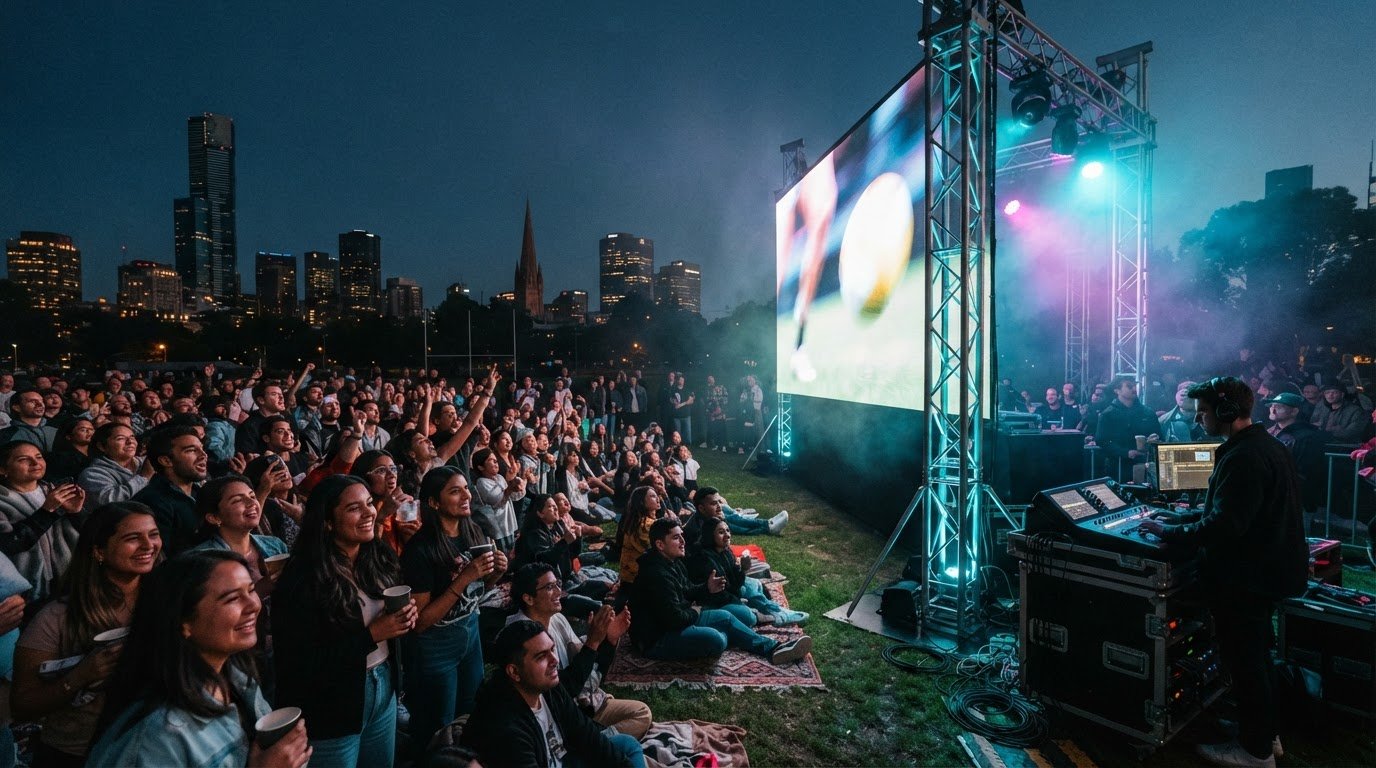
What if the best screen for your Melbourne sports event isn’t simply the biggest one? Successful large screen hire for sports event melbourne starts with what the crowd needs to see: clear action, readable scores and replays, and a view that works across the venue.
Choosing the right screen takes more than measuring the space. Venue layout, audience sightlines, ambient light and the event programme all shape the plan. NextGen AV brings these elements together through AV Hire & Event Production, coordinating setup, operation and support so the technology serves the audience experience.
This guide explains how to plan around your venue and crowd, including screen size and placement, viewing conditions, and the coordination of match footage, scores, replays and event branding. With a tailored production plan and technical details managed behind the scenes, you can give your crowd a clear view of the action and focus on delivering an event to remember.
Key Takeaways
- Plan large screen hire for sports event melbourne around the crowd’s viewing needs, venue layout and sightlines, not screen size alone.
- Map match footage, scores, replays and sponsor messages into a content plan, with a clear purpose and place for each.
- Compare community oval screenings, larger public gatherings and corporate sports activations by audience arrangement, viewing area and event format.
- Build a practical plan by documenting your event date, Melbourne venue, audience, event type and intended content.
- NextGen AV brings production support backed by 1200+ successful audio-visual hires and 4.5k+ events delivered.
Large Screen Hire for Melbourne Sports Events: Start With the Crowd
A dispersed crowd can share the same venue yet experience a match differently. Spectators near the screen may follow every detail, while people further back or moving around the site can lose sight of key moments. When planning large screen hire for sports event melbourne, start by considering how the audience will gather, move and watch, then choose a screen plan to suit.
Screen position, viewing direction and the event layout all affect how well the display serves the crowd. A setup that works for a compact community gathering may not suit a broad public viewing area or a corporate activation with separate audience zones. Planning around the actual venue helps make the screen part of the event, rather than an isolated piece of equipment.
Clear shared viewing helps a dispersed crowd follow the action together and stay engaged with the event. It can give a match screening a stronger sense of occasion while bringing sporting content and event messages into one considered experience.
What does a large screen add to a sports event?
A large screen can make match content easier to follow across a viewing area, particularly when the audience is spread out or not everyone has a direct view of the action. The production plan can make room for live footage, score information, replays and sponsor messages, with each serving a clear purpose. A replay can bring attention back to a key moment, while a score update helps spectators keep track of the match.
Plan the sequence as carefully as the content. Decide when match footage takes priority, when supporting information appears and where event messages fit without distracting from play. Confirm the content and feeds that will be supplied for the event, then build the running plan around them. Large screens have a long history in stadiums and public venues; Jumbotron technology in sports offers useful background on their development and role in shared viewing.
Who is the Melbourne event for?
Define the audience and its viewing priorities first. A community sports screening may centre on spectators gathered around a local oval, while a public event could draw people across a wider site. A corporate sports activation may need to balance the match with sponsor content or event messaging. Each format calls for different decisions about screen position and how people move through the space.
For a Melbourne venue, consider where people are likely to stand or sit, whether they’ll move between viewing and other event areas, and which moments they most need to see clearly. Note the shape of the site and the audience’s likely approach to the screen. These observations give your production team a useful starting point for planning around the crowd, the sporting action and the character of your event.
Plan the Screen Around Sports Content and Viewing Conditions
A screen plan needs to suit both the content on display and the space where people will watch. The same match programme can look different on an open, sunlit site than in a sheltered area, so consider the setting alongside the event schedule. For large screen hire for sports event melbourne, coordinate content, screen position and technical operation during pre-production, before event day.
Start by separating the content into clear categories:
- Live match footage: identify the intended source and when it needs to appear in the programme.
- Scores and match information: establish which updates spectators need to follow the game.
- Replays: decide where replay moments fit without disrupting the flow of live coverage.
- Sponsor messages and event graphics: schedule these around the sporting action so they support the event rather than compete with it.
Before the event, document the content sources, who is coordinating each item and the order in which it should appear. A shared running plan gives the production team a clear reference without making assumptions about which broadcast, feed or footage will be available.
Match footage, scores and replays
The content mix shapes how spectators use the screen. A programme focused on live footage has different priorities from one that also includes score updates, replays and scheduled messages. Map each element to the event sequence, noting when it is needed and how transitions should be handled. A video processor scales content, switches inputs and maps signals to LED tiles. Its role depends on the screen system and production design.
Consider the viewing area as you prepare the content. Give text and graphics a clear hierarchy so key match information stands apart from secondary messages. Reviewing sample content against the event layout can reveal crowded graphics or details that may be difficult to follow from some viewing positions.
Keep the visual experience coherent
Give each screen element a purpose. Keep event branding and sponsor messages consistent with the sports programme, and decide when they should appear so they don’t interrupt a key passage of play. Legibility needs to be planned: consider text size, contrast and the viewing conditions at the site.
Ambient light can affect how screen content is perceived, so factor in the location’s exposure and the event timing when shaping the display plan. For broader context on display planning, refer to an LED Video Walls for Events planning guide. NextGen AV coordinates screen, content sequence and technical operation as part of event production. Explore NextGen AV’s event production support as you shape a screen experience around your event.
Before event day, plan the footage source, score information, replay moments, sponsor messages and event graphics as one coordinated content sequence.
Compare Sports-Event Screen Options by Venue and Audience
Screen options make sense in context. A community oval, a broad public gathering and a corporate activation each bring different audience patterns, content priorities and schedules. For large screen hire for sports event melbourne, compare how each plan serves the people attending instead of choosing a format by appearance alone.
Use this framework to shape your production brief. It connects venue layout and audience arrangement with the content plan.
| Event format | Viewing area and audience | Content and planning focus |
|---|---|---|
| Community oval screening | Consider where spectators naturally gather, how the playing area and event activity shape movement, and which positions need a clear view. | Prioritise match content and relevant score information. Discuss placement in relation to the match programme and the way the crowd uses the grounds. |
| Larger public gathering | Map the viewing area and likely audience approach. Account for people arriving, moving through the site and gathering at different points. | Plan how sporting content fits the wider event schedule, including any event messages that need screen time. |
| Corporate sports activation | Consider audience zones, guest movement and how the screen relates to the event environment. | Coordinate match content with brand messages, sponsor material and programmed moments so the screen supports the activation as a whole. |
Use the comparison as a starting point, not a fixed specification. The right approach depends on the venue and event brief, including the viewing area, audience movement and intended content. These details help guide decisions about screen position and production without assuming a particular screen size or crowd capacity.
Community grounds and local sports screenings
At a local ground, consider where spectators are likely to gather and how the viewing area relates to other event activity. The match programme can guide placement discussions: account for when people arrive, where they pause and how the audience moves during breaks. A site plan and event schedule give the production team useful context.
Corporate activations and larger gatherings
For corporate and public events, align the screen plan with both the sporting programme and the wider event purpose. Brand messages need a considered place alongside match content, while audience movement and scheduled moments influence how the display fits into the experience. NextGen AV supports corporate, community and government event clients, coordinating production details around each brief.
Use this framework to refine your requirements, then discuss your sports event plan with NextGen AV. For broader production context, the audio visual hire Melbourne guide can help you consider how screen requirements fit alongside the event’s wider AV plan.
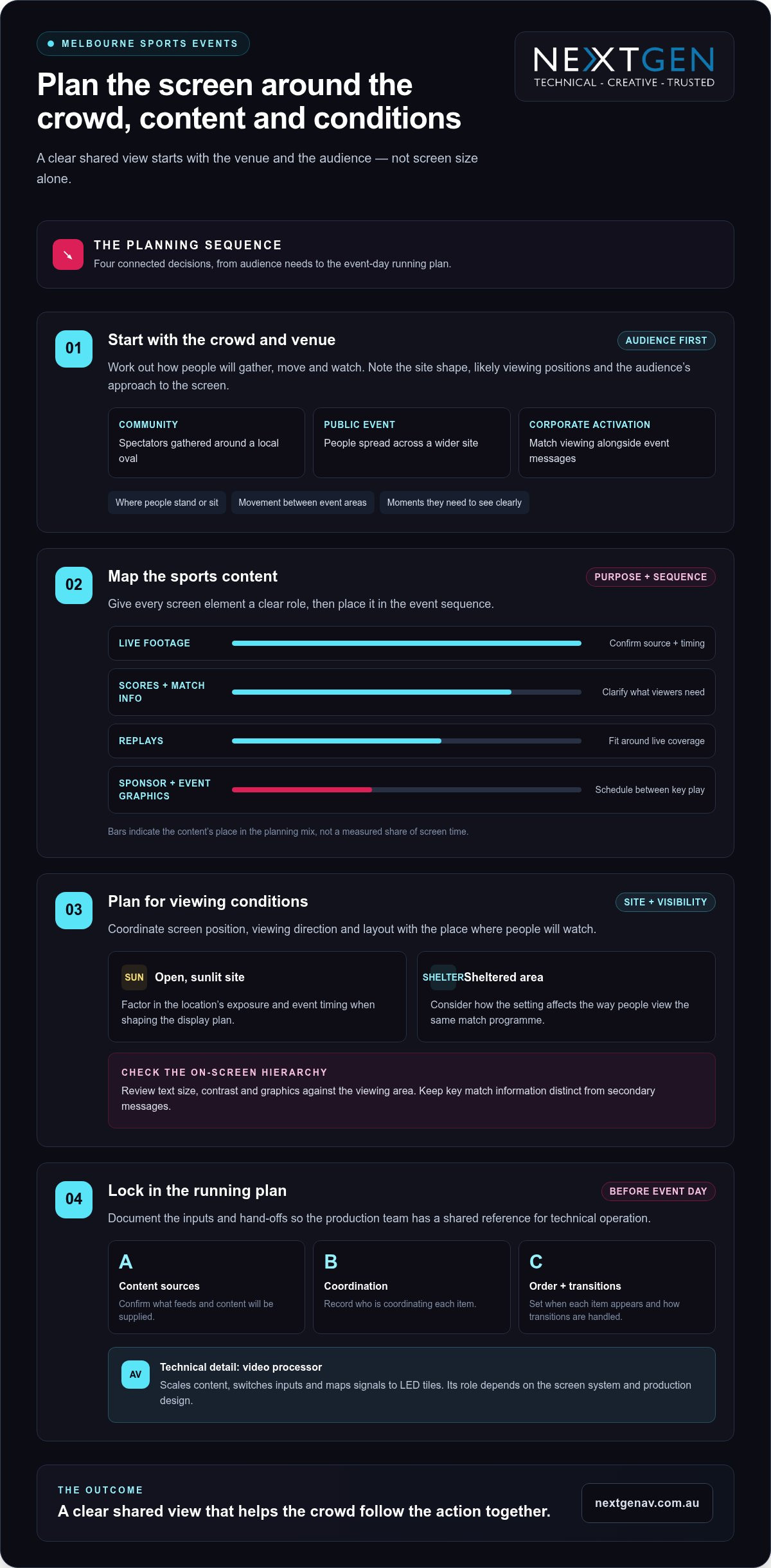
Prepare a Melbourne Sports Event Screen Plan in Four Steps
A clear production plan turns an event idea into practical decisions about the screen, content and on-site coordination. For large screen hire for sports event melbourne, start with the event brief and build towards a shared understanding of how the screen will serve the audience. Record what’s known, identify what’s still being developed and keep the plan grounded in the venue and programme.
- Build the event brief. Record the event date, Melbourne venue, event type, audience profile and sports content requirements. Add the programme, planned sponsor or event messages, and the intended viewing area. Include venue information, such as a site plan or notes about the space, so screen planning reflects the actual setting. Separate confirmed details from decisions still in progress, making it easier to focus discussions and update the brief as plans develop.
- Map the site and audience. Identify where spectators will gather, how they’ll approach the viewing area and whether event activity will draw them elsewhere. Note the layout, including audience zones and the relationship between the screen and other event elements. These observations guide screen-position discussions before you settle on a size.
- Define the production requirements. Outline the intended content, its sources and when each element fits into the programme. Include screen setup and event-day coordination, as well as any related audio, staging or lighting within the wider production. Plan technical requirements for the specific event and site rather than assuming they’ll match another project. Include venue requirements and relevant compliance considerations from the event information.
- Coordinate content and event-day roles. Bring the content sequence and production plan together. Clarify who supplies or approves event graphics, sponsor messages and other planned material, and who coordinates timing with the programme. A shared running plan gives the production team a clear reference for setup, operation and support, while keeping screen content aligned with the activity on site.
Think beyond the screen. If your event includes a stage, lighting or other visual elements, consider how they fit into the site layout and audience experience. This broader view helps align the screen plan with the complete event environment.
NextGen AV coordinates screen setup, operation and event support as part of a considered production plan, with technical requirements shaped around your event brief. Discuss your Melbourne sports event screen plan with the team and bring the moving parts into one coordinated approach.
Bring Your Melbourne Sports Screen Plan to Life With NextGen AV
A strong sports-screen experience depends on more than the display. The event brief, venue, content plan and technical operation need to work together so the crowd can stay focused on the action. NextGen AV is your production partner, coordinating the details behind the scenes rather than simply supplying equipment.
NextGen AV’s experience includes 1200+ successful audio-visual hires and 4.5k+ events delivered. The team brings 85+ years of combined AV technical expertise and includes a team of 24 specialists. For organisers planning large screen hire for sports event melbourne, that production knowledge helps connect the screen plan with the wider event and audience experience.
Production support from brief to event day
AV Hire & Event Production includes setup, operation and support. This joined-up approach aligns technical coordination with the event schedule, screen content and venue plan, giving organisers a clear production pathway from preparation through event day. The screen experience is planned around the programme and the people watching, with technical details managed by an experienced team.
Every event has its own requirements. Screen placement, content handling, setup and operational support are shaped around your brief rather than assumed from a standard template. NextGen AV’s Melbourne team develops tailored recommendations to suit your sports event and bring the production elements into a cohesive plan.
Start with a clear event brief
Begin with the essentials: your event date, Melbourne venue, audience size and event type. Add the intended viewing area, programme, sports content and planned sponsor or event messages. Include the venue information available to you, and distinguish confirmed details from decisions still being worked through. This gives the production team a practical foundation for recommendations and helps identify what needs coordination.
NextGen AV aligns screen setup, operation and event support with your brief, so the audience can focus on the match while the production runs with clear technical direction. Sharing the essentials early also makes planning discussions more focused, from the venue layout to the way content fits the programme.
With event requirements and technical details brought into one plan, you can spend less time coordinating separate moving parts and more time shaping the experience for your crowd. Share your sports event brief with NextGen AV to start planning a tailored Melbourne screen production.
Make Your Next Match a Shared Experience
Turn your event vision into a brief the production team can act on. For large screen hire for sports event melbourne, bring together your venue details, audience needs and intended content, then shape the screen experience around the atmosphere you want to create. A clear starting point aligns technical planning with the moments your crowd has come to share.
NextGen AV takes a considered, collaborative approach to sports-event production, coordinating the technical details so you can focus on welcoming your audience and building anticipation for match day. The Trustindex Top Rated Service 2026 certification (review score >4.5) offers additional reassurance as you plan.
Give your event a confident next step. Plan your Melbourne sports screen experience with NextGen AV and bring your vision to life for the crowd.
Frequently Asked Questions
What size screen do I need for a sports event?
Choose a screen plan based on the viewing area, audience layout and furthest viewing position, rather than selecting a size in isolation. For large screen hire for sports event melbourne, share a site plan or describe the space, including where spectators will gather and whether they’ll be seated or standing. NextGen AV uses those details, along with the intended content, to shape a tailored recommendation.
Is an LED screen suitable for an outdoor sports event in Melbourne?
An LED screen can be considered for an outdoor event, with the display plan shaped by the site and event conditions. Include expected daylight, the location, screen position and event schedule in your planning brief. These details help inform the approach for your Melbourne venue. NextGen AV tailors event solutions to the project, accounting for the setting as well as the audience experience.
Can a large screen show live scores and replays at a sports event?
Scores and replays can be included in the planned screen content, alongside match footage and event graphics. The production plan should identify the content sources, who is coordinating them and when each item is intended to appear. For example, an organiser might schedule score updates between key programme moments and reserve replay content for selected match highlights. The specific content depends on the event arrangements and supplied material.
How do I plan screen placement for a sports event?
Start with a site plan and mark the main audience area, likely viewing positions, entrances and routes people will use. Then consider whether structures, activity zones or changes in the crowd’s position could affect sightlines. For a Melbourne venue, note how the screen relates to the event layout and programme, not just where it can physically fit. Sharing this information helps the production team plan a position that serves the audience.
Do I need more than a screen for a sports event?
That depends on the experience you’re planning. If spectators need to hear commentary or event announcements, professional audio systems may be part of the production alongside the screen. A stage or lighting may also suit an event with presentations or scheduled entertainment. Share the programme and audience needs in your brief so the production plan brings relevant elements together, rather than treating the screen as a standalone decision.
How long does it take to receive an event quote?
A quote usually takes 1-2 days to prepare dependant on the event. To support a tailored response, provide your event date, Melbourne venue, audience size and event type, along with available site information and intended screen content. If some details are still being developed, distinguish them from confirmed plans. This gives the team useful context to prepare practical recommendations for your event.
Discover Valuable Insights
Unlock Expert Tips and Advice
Our blog is packed with valuable information to help you stay ahead. Whether you’re looking for expert advice, industry trends, or practical tips, you’ll find everything you need. Reach out today to learn more or get in touch with us for personalised support!