
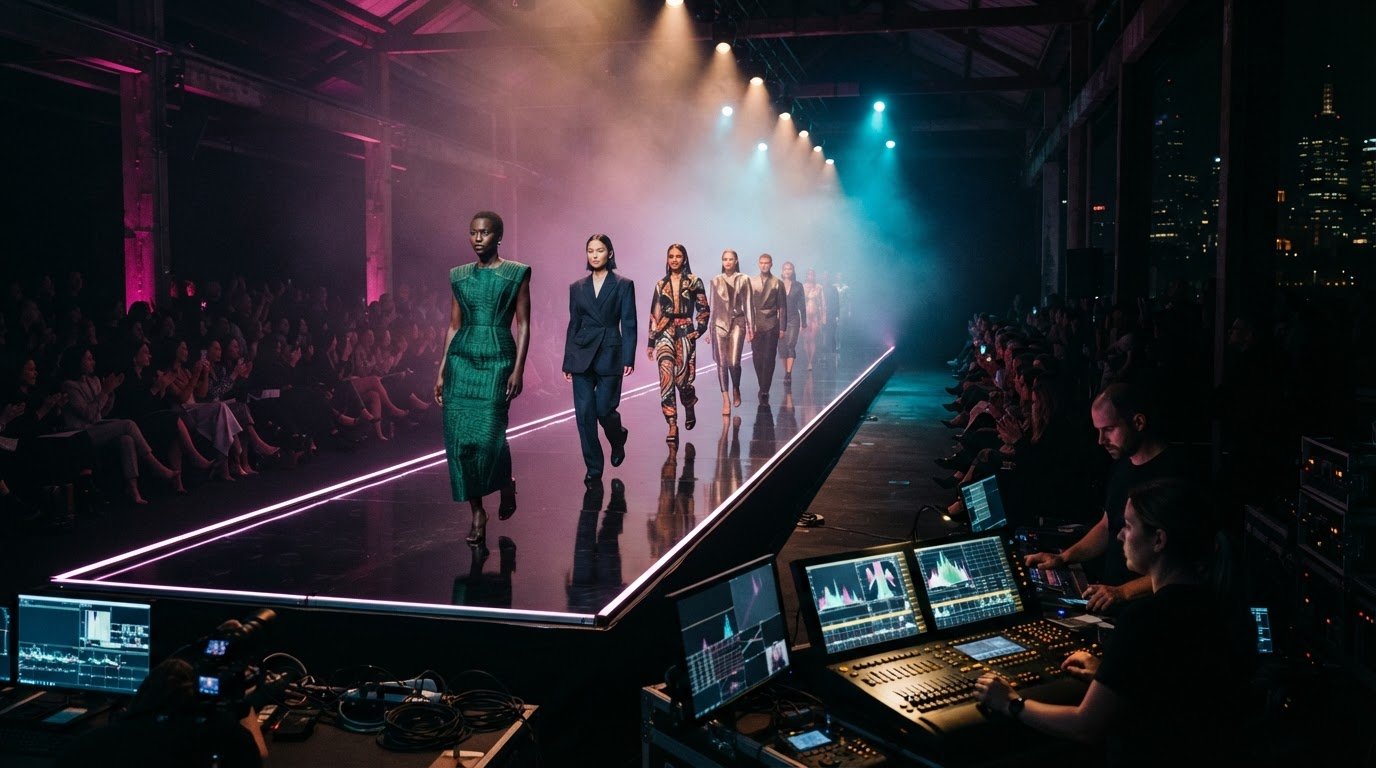
Fashion Show Runway Lighting in Melbourne: Design, Safety and Production

What if runway lighting could make every fabric, silhouette and movement read clearly while shaping the mood of the whole show? Fashion show runway lighting Melbourne productions need to do more than create drama: the design must help garments appear clear to the audience and account for camera views.

If you’re balancing creative impact with venue limits, rigging, power and a tightly timed runway schedule, early coordination matters. Lighting, staging and technical direction need to work together so the collection stays in focus and the production runs smoothly.

This guide explains how to plan lighting around garments, models, camera positions and the venue, along with practical details that help organise the production. NextGen AV provides lighting design, staging, rigging and technical direction for Melbourne events. Its team can support planning from pre-production through on-site management and pack-down, helping you coordinate the technical details behind the runway.

Key Takeaways

  • Plan runway lighting as part of the overall production, aligning the collection, models, audience experience and schedule.
  • Consider how lighting direction and garment texture affect what audiences see, and confirm photography and video needs with the production team.
  • Choose between clean, garment-led illumination and a more atmospheric look by weighing the collection’s identity, runway scale and camera views.
  • For fashion show runway lighting melbourne, confirm venue access, rigging information, runway layout and production timing early.
  • Look for a production partner who coordinates lighting design, technical direction, safety planning and on-site delivery, not just equipment supply.

Why runway lighting in Melbourne shapes the whole fashion show

Runway lighting has to serve the collection, models, audience and event schedule at the same time. It’s not simply a matter of aiming lights at a catwalk. A useful plan considers what each look needs to communicate, where people will be watching from, and how lighting cues fit the running order.

The purpose of runway lighting is to make garments and model movement clear while creating an atmosphere that supports the collection. When the design reflects both the visual brief and the practical needs of the production, the runway feels connected to the rest of the event.

For organisers planning fashion show runway lighting in Melbourne, start by defining the experience the collection should create. A clear brief gives the production team direction for design decisions and helps balance creative ambition with the venue’s conditions.

What does fashion show runway lighting in Melbourne need to achieve?

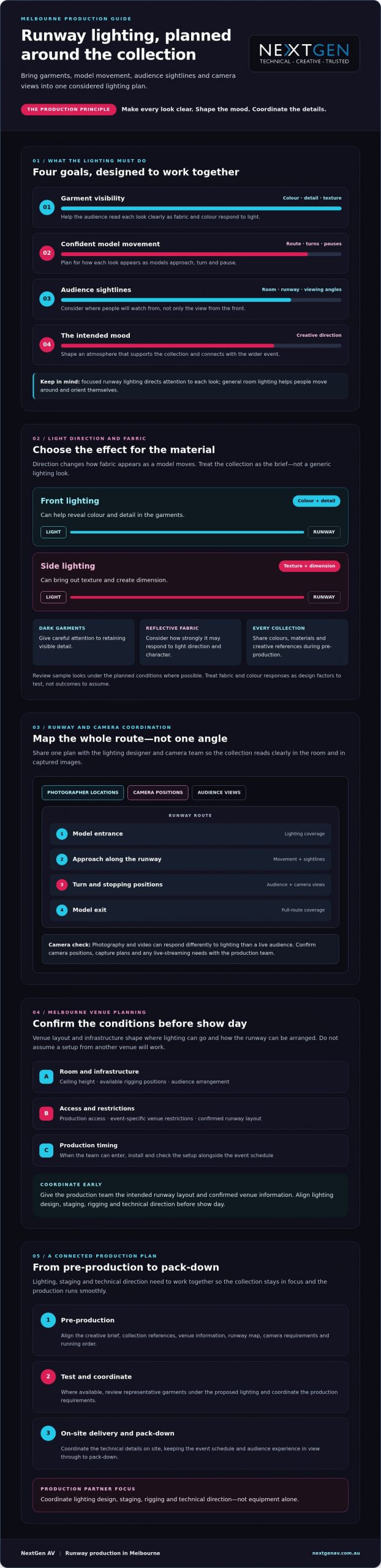
Four goals need to work together: garment visibility, confident model movement, audience sightlines and the intended mood. A lighting angle that brings out the texture of a structured fabric may affect how a flowing or reflective material appears. Share the collection’s colours, materials and creative direction early so the lighting plan responds to the clothes rather than relying on a generic look.

Runway lighting also has a different job from ambient light around the event space. General room lighting helps people move around and orient themselves; focused runway lighting directs attention to each look. The stage lighting techniques overview offers background on principles that can inform a production, but the final design should respond to the show’s specific brief.

Why does a Melbourne venue change the plan?

Every room has its own layout and infrastructure. Ceiling height, available rigging positions, audience arrangement and production access can all affect where lighting can go and how the runway should be arranged. Confirm these details with the venue early, including any event-specific restrictions. Don’t assume a setup used at another venue will work in your space.

Access and timing matter, too. The production plan needs to account for when the team can enter, install and check the setup alongside the event schedule. Give your lighting team the intended runway layout and confirmed venue information so lighting design, staging, rigging and technical direction can be coordinated before show day. Early alignment helps keep the focus on the collection and audience experience.

How runway lighting brings garments, movement and camera views together

Lighting direction affects how fabric appears as a model moves. Front lighting can help reveal colour and detail, while side lighting can bring out texture and create dimension. The right balance depends on the garments, runway route and audience view. Reflective, textured and dark fabrics each bring different considerations, so share collection references, colours and material details during pre-production.

A runway lighting plan needs creative intent and camera awareness so the collection reads clearly in the room and in captured images. Photography and video can respond differently to lighting than a live audience does. Confirm camera positions, capture plans and any live-streaming needs with the production team, then review representative garments under the proposed lighting during a rehearsal or test if available. Advice on perfect fashion show lighting also highlights the value of considering models, garments and the runway as one visual composition.

How do colour and fabric affect the lighting brief?

Bring creative references into the technical conversation early. Dark garments may need careful attention to retain visible detail, while reflective material can respond strongly to the direction and character of light. Treat these as design factors to test, not outcomes to assume. Reviewing sample looks under the planned conditions gives the team a chance to assess how colour, texture and movement appear before the show.

How should lighting support models and cameras?

Map the full runway route, including model entrances and exits, stopping positions and photographer locations. This helps the lighting team consider how each look will appear as models approach, turn and pause, rather than designing for only one audience angle. Share the map with the lighting designer and camera team so their requirements can be coordinated.

Lighting cues should follow the agreed running order and be coordinated with the show caller or stage manager. Transitions can then support the pace of the show rather than compete with it. For broader context on how staging and lighting work together, see this stage and lighting hire guide.

For fashion show runway lighting in Melbourne, align the creative brief, garment tests, camera positions and cue sequence before production day. If you’re shaping the technical plan, talk with NextGen AV about runway lighting design as part of your production planning.

Runway lighting options in Melbourne: match the design to the show

The right lighting approach starts with the collection, not a preset effect. Clean, garment-led illumination keeps attention on colour, cut and detail. A more atmospheric design can make a show feel more dramatic, but effects should support the clothes rather than compete with them. For fashion show runway lighting in Melbourne, weigh the creative direction against runway scale, audience positions and photography or video plans before settling on a look.

Should the runway feel editorial, dramatic or understated?

Use references from the collection and event brief to describe the intended mood. Editorial and understated looks may call for a restrained approach that lets the garments lead; a more expressive design can shape the atmosphere and create a stronger visual frame. Neither approach is automatically better. First confirm garment visibility, sightlines and camera needs, then decide where effects add meaning and where they might distract.

The table below connects common event priorities with design considerations. Use it as a briefing prompt, not a fixed technical prescription.

Event priority Lighting-design consideration
Garments take centre stage Prioritise clear, consistent visibility and keep effects secondary to the collection.
A distinctive mood Use atmosphere to reinforce the creative brief while preserving clear views of each look.
Photography or video Share camera positions and capture plans early so the design considers both the room and the lens.
A compact or unusual runway layout Review audience positions and the route before deciding how the lighting should cover the space.

When should lighting integrate with staging and sound?

Coordinate lighting positions with runway dimensions and stage layout from the outset. Changes to the route or staging can affect sightlines and the areas the lighting needs to cover. Align the creative plan with the production layout before finalising cues. This joined-up planning helps the technical team manage the details without pulling focus from the show.

Sound systems and lighting cues also need to follow the agreed show sequence, particularly when music sets the pace for model entrances. Coordinate cue timing with the show caller or stage manager, and share audio requirements with the production team. For related planning, see this professional sound system hire guide. If visual content is part of the concept, decide how it will complement the runway rather than compete with the collection.
Fashion Show Runway Lighting in Melbourne: Design, Safety and Production

Plan Melbourne runway lighting with venue, rigging and safety in mind

A well-designed runway also needs a practical production plan. For fashion show runway lighting in Melbourne, establish the creative brief, confirm venue details, coordinate lighting with the runway and staging, plan technical delivery, then rehearse before doors open. This sequence gives the production team a chance to resolve constraints before they affect the event schedule.

  • Establish the brief: Define the collection’s visual direction, runway route and audience experience.
  • Confirm the venue: Check access, schedule, available plans, power, ceiling details and rigging information.
  • Coordinate the design: Align lighting positions with the runway layout, staging and camera views.
  • Plan and rehearse: Confirm production responsibilities, cue timing and the rehearsal plan with the relevant teams.

What should organisers confirm with the venue?

Ask the venue for current information about access, available rigging points, power and its event approval process. Confirm who will provide the venue plans and who reviews or approves the proposed production design. These checks are venue-specific, not universal requirements for Melbourne events, so get the details directly from the venue rather than relying on assumptions.

Share the intended runway layout and schedule with the production team. A clear plan helps them assess how the room’s infrastructure and access arrangements affect lighting positions, staging and installation timing.

How should rigging and safety be planned?

Where the design calls for suspended lighting or other equipment, consider rigging as part of the overall production plan. The venue and qualified production personnel can confirm what the proposed setup involves and which people, checks and documents are relevant to that specific work. Safety planning should reflect the actual venue, equipment and scope rather than relying on a generic checklist.

Clarify responsibilities with the venue and production team, including who reviews the proposed setup and what checks or documentation apply. Requirements depend on the event and venue, so confirm the relevant details during planning. Coordinating lighting, staging, rigging and technical direction early helps keep responsibilities clear and supports an organised rehearsal and show-day schedule.

Bring the creative brief and venue information together with a production team that can manage the technical details. Discuss Melbourne event production with NextGen AV to plan runway lighting around your venue, schedule and staging requirements.

Choose a Melbourne end-to-end runway lighting partner

Fashion show runway lighting in Melbourne calls for more than a lighting concept or equipment list. Choose a partner who can connect the creative brief with technical direction, safety planning and on-site coordination, so production details support the show rather than becoming another task for your team to manage.

A supplier focused only on equipment may not coordinate how lighting fits with staging, rigging, venue requirements and the running order. An end-to-end production partner should explain what they’ll manage and where other teams need to be involved. Check that the proposed scope covers the stages you need, from pre-production and technical planning through installation, operation and pack-down where included.

What should a runway lighting partner manage?

Establish clear points of contact for your event, venue and creative teams. Ask who will coordinate production details, how lighting cues will be agreed, and how cue changes or schedule adjustments will be communicated on show day. These arrangements help everyone work from the same plan, particularly when a change to timing or runway layout affects more than one production element.

Before appointing a partner, check that their approach addresses:

  • Lighting design shaped around the collection, runway and audience experience.
  • Technical direction that connects lighting with staging, rigging and the event schedule.
  • Project-specific safety planning coordinated with the venue and relevant production personnel.
  • On-site roles, communication and cue management, with installation and pack-down responsibilities clearly scoped.

What experience and evidence should you ask for?

Request examples relevant to fashion or live events, then clarify what each project involved. The size of a lighting rig alone doesn’t explain the brief, venue or production responsibilities, so ask how an example relates to your event. Look for evidence that the proposed team can coordinate the design and practical details required for your show.

Also ask how technical direction, rigging and safety planning would apply to your proposed production. NextGen AV brings more than 30 years of industry experience. That’s useful context for planning, not a guarantee of a particular result. Confirm which personnel, documents and checks are relevant to your event’s specific scope.

With the right partner, creative intent and production planning stay connected from the first brief to show day. Plan your Melbourne fashion show with NextGen AV and discuss the lighting design, staging, rigging and technical direction your runway requires.

Bring your runway vision to life

Strong fashion show runway lighting in Melbourne connects the collection, model movement and audience experience in one considered design. A useful plan also accounts for camera views, venue conditions, rigging, safety and show timing, so creative ambition is matched by practical technical planning.

Choose a production partner who coordinates lighting design, staging, rigging and technical direction rather than focusing only on equipment. NextGen AV provides event production and equipment hire, with a team that handles pre-production planning, on-site management and pack-down. Its Melbourne-based team can help coordinate the technical details around your runway and venue.

With the production details planned behind the scenes, you can focus on the collection and the moment it meets the audience. Plan your Melbourne runway production with NextGen AV and discuss the lighting design, staging, rigging and technical direction your show requires.

Frequently Asked Questions

How do you light a fashion show runway so garments look clear?

Start with the collection, then plan light direction and coverage around its colours, materials and the audience’s view. Dark, reflective or textured garments may need particular consideration because they can appear differently under different lighting. Share garment references with the lighting team and, if a rehearsal or test is available, review representative looks under the proposed setup. This gives the team a chance to assess visibility before show time without assuming one look suits every collection.

What lighting is used for a fashion show runway?

A runway design may combine focused front lighting to reveal garments, side lighting to bring out shape and texture, and back lighting to separate models from the background. The balance depends on the collection, room layout and intended mood. Some shows favour clear, restrained illumination; others add more atmosphere. The lighting designer should develop the approach from your brief and venue details rather than selecting effects before the visual priorities are clear.

Can runway lighting work for both the audience and photographers?

Yes, if the plan accounts for both the live view and camera positions. Share photographer locations, video coverage and any streaming requirements with the production team early, as lighting that feels effective in the room may appear different on camera. Map sightlines along the runway, including model entrances, turns and stopping positions. Where possible, review representative garments during a rehearsal or test to check how the planned look translates to images.

How do I plan runway lighting for a Melbourne venue?

Planning fashion show runway lighting in Melbourne starts with a clear creative brief and early venue checks. Confirm access and production timing, request current venue plans, and ask about available rigging positions, power and the venue’s approval process. Share the intended runway layout with your production team so they can coordinate lighting, staging and technical direction around the actual room. Venue conditions and processes vary, so verify details with your chosen venue.

What should I ask a runway lighting company before booking?

Ask who will lead design and technical direction, what the proposed scope includes, and how the team will coordinate with your venue and creative contacts. Clarify whether installation, operation and pack-down are included, and who manages cue changes and show-day communication. Request relevant fashion or live-event examples, then confirm what each example involved. A clear answer should connect the creative approach with the practical production responsibilities for your event.

Does runway lighting need to be coordinated with staging and sound?

Yes. Runway dimensions and stage layout influence lighting positions and audience sightlines, while music and model entrances affect cue timing. Coordinate the lighting plan with staging and sound systems, and make sure the show caller or stage manager has the agreed running order and cue information. Early communication helps the teams manage transitions together, so the technical elements support the show’s pace rather than interrupting it.

What safety information should be confirmed before event rigging?

Confirm the venue’s rigging information and approval process, then ask qualified production personnel to assess what the proposed setup requires. Clarify who is responsible for the work and which safety documents, equipment checks and credentials apply to the specific event. Requirements vary with the venue and production, so confirm the relevant details rather than assuming every check or document applies.

What if runway lighting could make every fabric, silhouette and movement read clearly while shaping the mood of the whole show? Fashion show runway lighting Melbourne productions need to do more than create drama: the design must help garments appear clear to the audience and account for camera views.

If you’re balancing creative impact with venue limits, rigging, power and a tightly timed runway schedule, early coordination matters. Lighting, staging and technical direction need to work together so the collection stays in focus and the production runs smoothly.

This guide explains how to plan lighting around garments, models, camera positions and the venue, along with practical details that help organise the production. NextGen AV provides lighting design, staging, rigging and technical direction for Melbourne events. Its team can support planning from pre-production through on-site management and pack-down, helping you coordinate the technical details behind the runway.

Key Takeaways

  • Plan runway lighting as part of the overall production, aligning the collection, models, audience experience and schedule.
  • Consider how lighting direction and garment texture affect what audiences see, and confirm photography and video needs with the production team.
  • Choose between clean, garment-led illumination and a more atmospheric look by weighing the collection’s identity, runway scale and camera views.
  • For fashion show runway lighting melbourne, confirm venue access, rigging information, runway layout and production timing early.
  • Look for a production partner who coordinates lighting design, technical direction, safety planning and on-site delivery, not just equipment supply.

Why runway lighting in Melbourne shapes the whole fashion show

Runway lighting has to serve the collection, models, audience and event schedule at the same time. It’s not simply a matter of aiming lights at a catwalk. A useful plan considers what each look needs to communicate, where people will be watching from, and how lighting cues fit the running order.

The purpose of runway lighting is to make garments and model movement clear while creating an atmosphere that supports the collection. When the design reflects both the visual brief and the practical needs of the production, the runway feels connected to the rest of the event.

For organisers planning fashion show runway lighting in Melbourne, start by defining the experience the collection should create. A clear brief gives the production team direction for design decisions and helps balance creative ambition with the venue’s conditions.

What does fashion show runway lighting in Melbourne need to achieve?

Four goals need to work together: garment visibility, confident model movement, audience sightlines and the intended mood. A lighting angle that brings out the texture of a structured fabric may affect how a flowing or reflective material appears. Share the collection’s colours, materials and creative direction early so the lighting plan responds to the clothes rather than relying on a generic look.

Runway lighting also has a different job from ambient light around the event space. General room lighting helps people move around and orient themselves; focused runway lighting directs attention to each look. The stage lighting techniques overview offers background on principles that can inform a production, but the final design should respond to the show’s specific brief.

Why does a Melbourne venue change the plan?

Every room has its own layout and infrastructure. Ceiling height, available rigging positions, audience arrangement and production access can all affect where lighting can go and how the runway should be arranged. Confirm these details with the venue early, including any event-specific restrictions. Don’t assume a setup used at another venue will work in your space.

Access and timing matter, too. The production plan needs to account for when the team can enter, install and check the setup alongside the event schedule. Give your lighting team the intended runway layout and confirmed venue information so lighting design, staging, rigging and technical direction can be coordinated before show day. Early alignment helps keep the focus on the collection and audience experience.

How runway lighting brings garments, movement and camera views together

Lighting direction affects how fabric appears as a model moves. Front lighting can help reveal colour and detail, while side lighting can bring out texture and create dimension. The right balance depends on the garments, runway route and audience view. Reflective, textured and dark fabrics each bring different considerations, so share collection references, colours and material details during pre-production.

A runway lighting plan needs creative intent and camera awareness so the collection reads clearly in the room and in captured images. Photography and video can respond differently to lighting than a live audience does. Confirm camera positions, capture plans and any live-streaming needs with the production team, then review representative garments under the proposed lighting during a rehearsal or test if available. Advice on perfect fashion show lighting also highlights the value of considering models, garments and the runway as one visual composition.

How do colour and fabric affect the lighting brief?

Bring creative references into the technical conversation early. Dark garments may need careful attention to retain visible detail, while reflective material can respond strongly to the direction and character of light. Treat these as design factors to test, not outcomes to assume. Reviewing sample looks under the planned conditions gives the team a chance to assess how colour, texture and movement appear before the show.

How should lighting support models and cameras?

Map the full runway route, including model entrances and exits, stopping positions and photographer locations. This helps the lighting team consider how each look will appear as models approach, turn and pause, rather than designing for only one audience angle. Share the map with the lighting designer and camera team so their requirements can be coordinated.

Lighting cues should follow the agreed running order and be coordinated with the show caller or stage manager. Transitions can then support the pace of the show rather than compete with it. For broader context on how staging and lighting work together, see this stage and lighting hire guide.

For fashion show runway lighting in Melbourne, align the creative brief, garment tests, camera positions and cue sequence before production day. If you’re shaping the technical plan, talk with NextGen AV about runway lighting design as part of your production planning.

Runway lighting options in Melbourne: match the design to the show

The right lighting approach starts with the collection, not a preset effect. Clean, garment-led illumination keeps attention on colour, cut and detail. A more atmospheric design can make a show feel more dramatic, but effects should support the clothes rather than compete with them. For fashion show runway lighting in Melbourne, weigh the creative direction against runway scale, audience positions and photography or video plans before settling on a look.

Should the runway feel editorial, dramatic or understated?

Use references from the collection and event brief to describe the intended mood. Editorial and understated looks may call for a restrained approach that lets the garments lead; a more expressive design can shape the atmosphere and create a stronger visual frame. Neither approach is automatically better. First confirm garment visibility, sightlines and camera needs, then decide where effects add meaning and where they might distract.

The table below connects common event priorities with design considerations. Use it as a briefing prompt, not a fixed technical prescription.

Event priority Lighting-design consideration
Garments take centre stage Prioritise clear, consistent visibility and keep effects secondary to the collection.
A distinctive mood Use atmosphere to reinforce the creative brief while preserving clear views of each look.
Photography or video Share camera positions and capture plans early so the design considers both the room and the lens.
A compact or unusual runway layout Review audience positions and the route before deciding how the lighting should cover the space.

When should lighting integrate with staging and sound?

Coordinate lighting positions with runway dimensions and stage layout from the outset. Changes to the route or staging can affect sightlines and the areas the lighting needs to cover. Align the creative plan with the production layout before finalising cues. This joined-up planning helps the technical team manage the details without pulling focus from the show.

Sound systems and lighting cues also need to follow the agreed show sequence, particularly when music sets the pace for model entrances. Coordinate cue timing with the show caller or stage manager, and share audio requirements with the production team. For related planning, see this professional sound system hire guide. If visual content is part of the concept, decide how it will complement the runway rather than compete with the collection.

Plan Melbourne runway lighting with venue, rigging and safety in mind

A well-designed runway also needs a practical production plan. For fashion show runway lighting in Melbourne, establish the creative brief, confirm venue details, coordinate lighting with the runway and staging, plan technical delivery, then rehearse before doors open. This sequence gives the production team a chance to resolve constraints before they affect the event schedule.

  • Establish the brief: Define the collection’s visual direction, runway route and audience experience.
  • Confirm the venue: Check access, schedule, available plans, power, ceiling details and rigging information.
  • Coordinate the design: Align lighting positions with the runway layout, staging and camera views.
  • Plan and rehearse: Confirm production responsibilities, cue timing and the rehearsal plan with the relevant teams.

What should organisers confirm with the venue?

Ask the venue for current information about access, available rigging points, power and its event approval process. Confirm who will provide the venue plans and who reviews or approves the proposed production design. These checks are venue-specific, not universal requirements for Melbourne events, so get the details directly from the venue rather than relying on assumptions.

Share the intended runway layout and schedule with the production team. A clear plan helps them assess how the room’s infrastructure and access arrangements affect lighting positions, staging and installation timing.

How should rigging and safety be planned?

Where the design calls for suspended lighting or other equipment, consider rigging as part of the overall production plan. The venue and qualified production personnel can confirm what the proposed setup involves and which people, checks and documents are relevant to that specific work. Safety planning should reflect the actual venue, equipment and scope rather than relying on a generic checklist.

Clarify responsibilities with the venue and production team, including who reviews the proposed setup and what checks or documentation apply. Requirements depend on the event and venue, so confirm the relevant details during planning. Coordinating lighting, staging, rigging and technical direction early helps keep responsibilities clear and supports an organised rehearsal and show-day schedule.

Bring the creative brief and venue information together with a production team that can manage the technical details. Discuss Melbourne event production with NextGen AV to plan runway lighting around your venue, schedule and staging requirements.

Choose a Melbourne end-to-end runway lighting partner

Fashion show runway lighting in Melbourne calls for more than a lighting concept or equipment list. Choose a partner who can connect the creative brief with technical direction, safety planning and on-site coordination, so production details support the show rather than becoming another task for your team to manage.

A supplier focused only on equipment may not coordinate how lighting fits with staging, rigging, venue requirements and the running order. An end-to-end production partner should explain what they’ll manage and where other teams need to be involved. Check that the proposed scope covers the stages you need, from pre-production and technical planning through installation, operation and pack-down where included.

What should a runway lighting partner manage?

Establish clear points of contact for your event, venue and creative teams. Ask who will coordinate production details, how lighting cues will be agreed, and how cue changes or schedule adjustments will be communicated on show day. These arrangements help everyone work from the same plan, particularly when a change to timing or runway layout affects more than one production element.

Before appointing a partner, check that their approach addresses:

  • Lighting design shaped around the collection, runway and audience experience.
  • Technical direction that connects lighting with staging, rigging and the event schedule.
  • Project-specific safety planning coordinated with the venue and relevant production personnel.
  • On-site roles, communication and cue management, with installation and pack-down responsibilities clearly scoped.

What experience and evidence should you ask for?

Request examples relevant to fashion or live events, then clarify what each project involved. The size of a lighting rig alone doesn’t explain the brief, venue or production responsibilities, so ask how an example relates to your event. Look for evidence that the proposed team can coordinate the design and practical details required for your show.

Also ask how technical direction, rigging and safety planning would apply to your proposed production. NextGen AV brings more than 30 years of industry experience. That’s useful context for planning, not a guarantee of a particular result. Confirm which personnel, documents and checks are relevant to your event’s specific scope.

With the right partner, creative intent and production planning stay connected from the first brief to show day. Plan your Melbourne fashion show with NextGen AV and discuss the lighting design, staging, rigging and technical direction your runway requires.

Bring your runway vision to life

Strong fashion show runway lighting in Melbourne connects the collection, model movement and audience experience in one considered design. A useful plan also accounts for camera views, venue conditions, rigging, safety and show timing, so creative ambition is matched by practical technical planning.

Choose a production partner who coordinates lighting design, staging, rigging and technical direction rather than focusing only on equipment. NextGen AV provides event production and equipment hire, with a team that handles pre-production planning, on-site management and pack-down. Its Melbourne-based team can help coordinate the technical details around your runway and venue.

With the production details planned behind the scenes, you can focus on the collection and the moment it meets the audience. Plan your Melbourne runway production with NextGen AV and discuss the lighting design, staging, rigging and technical direction your show requires.

Frequently Asked Questions

How do you light a fashion show runway so garments look clear?

Start with the collection, then plan light direction and coverage around its colours, materials and the audience’s view. Dark, reflective or textured garments may need particular consideration because they can appear differently under different lighting. Share garment references with the lighting team and, if a rehearsal or test is available, review representative looks under the proposed setup. This gives the team a chance to assess visibility before show time without assuming one look suits every collection.

What lighting is used for a fashion show runway?

A runway design may combine focused front lighting to reveal garments, side lighting to bring out shape and texture, and back lighting to separate models from the background. The balance depends on the collection, room layout and intended mood. Some shows favour clear, restrained illumination; others add more atmosphere. The lighting designer should develop the approach from your brief and venue details rather than selecting effects before the visual priorities are clear.

Can runway lighting work for both the audience and photographers?

Yes, if the plan accounts for both the live view and camera positions. Share photographer locations, video coverage and any streaming requirements with the production team early, as lighting that feels effective in the room may appear different on camera. Map sightlines along the runway, including model entrances, turns and stopping positions. Where possible, review representative garments during a rehearsal or test to check how the planned look translates to images.

How do I plan runway lighting for a Melbourne venue?

Planning fashion show runway lighting in Melbourne starts with a clear creative brief and early venue checks. Confirm access and production timing, request current venue plans, and ask about available rigging positions, power and the venue’s approval process. Share the intended runway layout with your production team so they can coordinate lighting, staging and technical direction around the actual room. Venue conditions and processes vary, so verify details with your chosen venue.

What should I ask a runway lighting company before booking?

Ask who will lead design and technical direction, what the proposed scope includes, and how the team will coordinate with your venue and creative contacts. Clarify whether installation, operation and pack-down are included, and who manages cue changes and show-day communication. Request relevant fashion or live-event examples, then confirm what each example involved. A clear answer should connect the creative approach with the practical production responsibilities for your event.

Does runway lighting need to be coordinated with staging and sound?

Yes. Runway dimensions and stage layout influence lighting positions and audience sightlines, while music and model entrances affect cue timing. Coordinate the lighting plan with staging and sound systems, and make sure the show caller or stage manager has the agreed running order and cue information. Early communication helps the teams manage transitions together, so the technical elements support the show’s pace rather than interrupting it.

What safety information should be confirmed before event rigging?

Confirm the venue’s rigging information and approval process, then ask qualified production personnel to assess what the proposed setup requires. Clarify who is responsible for the work and which safety documents, equipment checks and credentials apply to the specific event. Requirements vary with the venue and production, so confirm the relevant details rather than assuming every check or document applies.

Back to Articles

Discover Valuable Insights

Unlock Expert Tips and Advice

Our blog is packed with valuable information to help you stay ahead. Whether you’re looking for expert advice, industry trends, or practical tips, you’ll find everything you need. Reach out today to learn more or get in touch with us for personalised support!

Contact Us

Request A Quote

Make an
Enquiry

Let’s Get Your Event Sorted

Complete the enquiry form with your event date, venue, audience size, event type and budget. Our Melbourne AV team will review your requirements and recommend the right PA, screen, lighting, staging or production setup for your event.

What happens next?


1.We review your event details
Tell us your date, venue, audience size and event type.

2.We recommend the right setup
From PA hire to screens, lighting, staging and full AV production.

3. We come back with clear advice
You’ll receive practical recommendations and a fast quote from our Melbourne team.

Need help urgently?
Call 1300 792 922.

Resource Download

Tell us a bit about yourself to download our resources.

7