Corporate Event Lighting Hire in Melbourne for Music and Venues

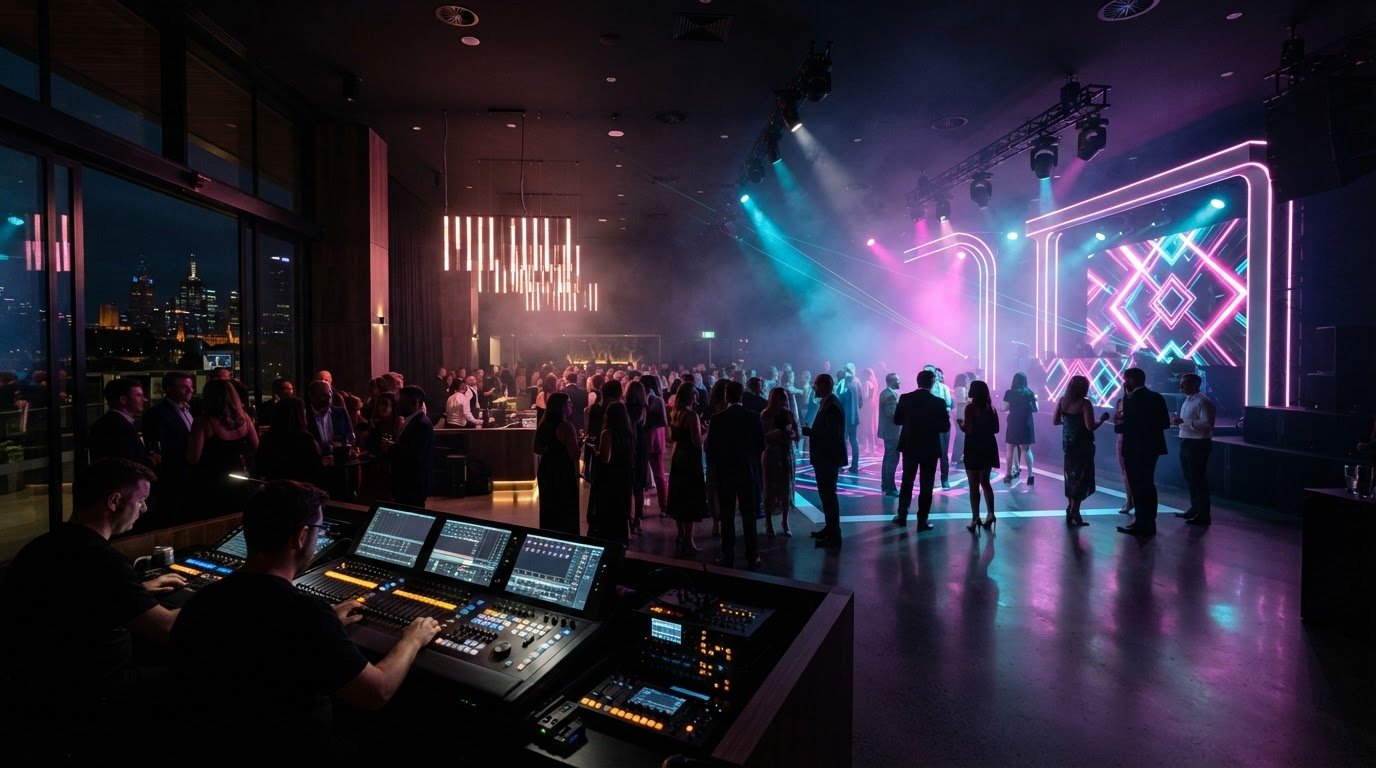
Yes, event lighting can be synchronised with music, using changes in colour, movement and intensity to reinforce the soundtrack and shape the room’s energy. With corporate event lighting hire in Melbourne, the best approach depends on your event format, venue and the experience you want guests to have. Plan music cues as part of the overall lighting design, not as an afterthought.

A considered lighting plan does more than brighten a space. It can shift the mood from polished presentations to a lively celebration while keeping the experience cohesive. Match the equipment and technical support to the programme, venue and audience.

This guide explains how music-synchronised lighting works, what to consider when choosing dry hire or a supported production, and how equipment options and event packages can suit corporate and private events in Melbourne and Sydney. You’ll also get a clear sense of how lighting, audio and staging can work together, helping you plan an event that feels seamless from the first cue to the final moment.

Key Takeaways

  • Choose dry hire when you have the crew and technical plan to manage setup and operation; consider production support when cueing and coordination need expert oversight.
  • Plan lighting alongside LED screens and audio so visual cues, music and presentations work together as one event experience.
  • Use distinct lighting zones to guide guests from the entrance and networking areas to the dance floor, with each area serving a clear purpose.
  • Match moving heads, strobes, lasers and pix bars to the music and atmosphere, then plan their cues as part of the event programme.
  • For events in Melbourne or Sydney, shape the lighting plan around the venue, schedule and audience, then bring in technical direction when the production has multiple elements to coordinate.

Do you dry hire equipment?

Dry hire means hiring lighting equipment without an operator or production crew. Choose an arrangement based on who will install, programme and run the lighting at your venue.

Lighting equipment bookings

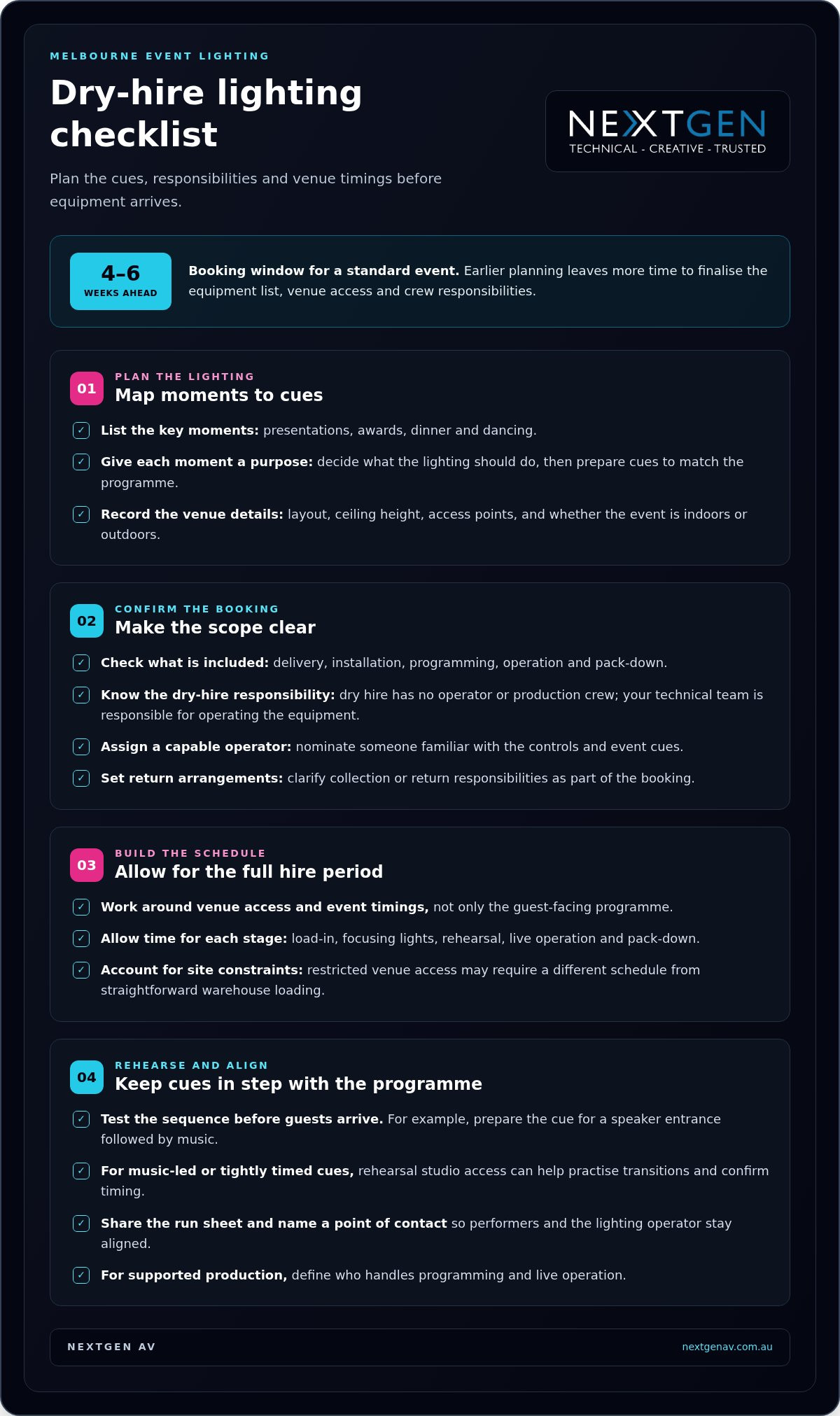
Start by listing key moments in the event, such as presentations, awards, dinner and dancing. Match each moment to a lighting purpose, then note the venue layout, ceiling height, access points and whether the event is indoors or outdoors. These details help determine the equipment and control needed, rather than relying on a generic list.

Before booking, clarify whether the hire includes delivery, installation, programming, operation and pack-down. With dry hire, your technical team is responsible for operating the equipment, so assign someone familiar with the controls and event cues. If a speaker entrance is followed by music, for example, prepare the lighting cues and test the sequence before guests arrive.

Hire periods and lead times

Set the hire period around venue access and event timings, not just the guest-facing programme. Allow time to load in, focus lights, rehearse, operate the event and pack down. A venue with restricted access may need a different schedule from a warehouse with straightforward loading. Include collection or return arrangements in the booking.

For a standard event, plan the booking 4-6 weeks ahead. Earlier planning gives you more time to finalise the equipment list, venue access and crew responsibilities. Share the event date, location, run sheet and lighting requirements together, so the booking reflects the complete production rather than an isolated equipment request. For outdoor events, include the event area and any schedule changes in the production plan.

Rehearsal studio bookings can help when lighting needs to follow music or tightly timed stage cues. Arrange studio access around the performance material, then use rehearsal time to practise transitions and confirm cue timing. A prepared run sheet makes each test purposeful, while a clear point of contact helps performers and the lighting operator stay aligned.

For dry hire, assign someone to receive and manage the equipment, and allow time for them to learn the control setup. For supported production, define who handles programming and live operation. This distinction matters when an event includes several mood changes, presentations or a dance floor: a clear plan keeps technical tasks from disrupting the programme.

Lighting, LED screens and audio equipment hire

A coordinated plan links lighting, LED screens and audio to the event programme. For a Melbourne event, start by matching each element to the venue, audience and key moments.

Lighting equipment hire options

For a Melbourne conference, list the areas that need light: the stage, speaker lectern, networking space and entrance. Then choose equipment for each purpose, such as uplighting to add colour to a room or floodlights for a larger feature. This gives the hire plan a clear scope and connects equipment choices to the audience experience.

Lighting hire ranges from simple room effects to moving fixtures, strobes and lasers. Every visual effect needs a purpose: consider whether it supports a presentation, draws attention to a product or changes the atmosphere for a reception. Match the fixture type and control plan to that goal.

Choosing a corporate lighting hire company

Corporate teams, event organisers and venues hire event production companies for lighting, screens and audio. Choose a production plan that covers the equipment, setup, operation and pack-down your programme requires. A product launch with timed reveals, for example, needs different coordination from a conference with steady stage lighting.

Ask for a clear breakdown of what any equipment hire minimum covers, including whether it applies to equipment alone or also to labour and delivery. Compare the booking scope, not just fixture names. Before finalising arrangements, clarify access times, venue constraints and who will operate the system.

Lighting types for corporate events

Common options include uplights for adding colour to walls, floodlights for larger surfaces, pendant and festoon lights for decorative ambience, and moving heads for dynamic effects. Strobes and lasers create sharper visual accents. Choose each type for the event’s purpose and audience, not just its visual impact.

LED screens and professional audio systems also shape lighting decisions. A bright screen can become the visual focus during a presentation, while clear audio keeps attention on the speaker. Plan the screen’s position and content, and decide how lighting will change between presentations and social periods.

To avoid booking surprises, map the full delivery sequence: venue access, equipment unloading, setup, testing, live operation and pack-down. Limited loading access can affect when equipment reaches the room, while late programme changes may require revised cues. Include each task and responsibility in the event schedule.

Lighting packages for dance floors, ambience and entrances

A Melbourne event lighting hire package should suit the venue, event schedule and intended atmosphere. It can specify fixture selection and placement, control, and the setup or operation required for each event space.

Dance floor and entrance lighting

Give the entrance and dance floor distinct roles in the lighting plan. Entrance uplighting can mark the arrival point, while moving party lights can energise the dance area as the programme shifts from speeches to music. Consider sightlines, guest movement and the dance floor’s position before finalising fixture placement.

For a reception, map the guest journey from doorway to tables and then to the dance floor. Use brighter or more defined entrance lighting to guide arrivals, then transition to colour and movement for dancing. If the event includes a product reveal, reserve a clear visual focus rather than competing with it through effects.

Mood lighting and venue ambience

Mood lighting shapes how guests experience a room, from a formal awards dinner to a relaxed networking reception. Uplighting can add colour to walls, while festoon lighting can create a softer decorative effect. Festoon light hire is supplied in a 10m length, giving planners a defined section to consider when mapping a venue.

Table lamps and ambient lighting can soften the dining area without making the room uniformly bright. Place lamps where guests need comfortable table lighting, then balance them with wall or architectural lighting. View the room from the entrance, tables and stage to check that each area supports the event’s vision.

Event lighting package inclusions

Check that the package description identifies the fixtures, their intended locations and how lighting changes across the programme. A Melbourne gala, for example, might need an arrival look, a dinner setting and a distinct dance-floor scene. The schedule should show who controls each change and when transitions happen.

Clarify the practical scope, including delivery, installation, programming, operation and pack-down. These are separate tasks, so a fixture list alone does not explain how the room will be transformed. For an event with speeches and dancing, match the control plan to the run sheet and assign responsibility for each cue.

Before confirming a package, compare its layout with the venue plan and note areas needing attention, such as the entrance, stage, dining tables or dance floor. This room-by-room review links each light to a purpose and keeps the atmosphere coherent, rather than filling the space with effects.
Corporate Event Lighting Hire in Melbourne for Music and Venues

Moving heads, strobes, lasers and pix bars

Moving heads, strobes, lasers and pix bars create distinct effects for Melbourne events. Choose them for a clear purpose, such as building atmosphere during a gala entrance or adding movement to a dance-floor sequence.

Moving heads can change direction and colour during programmed cues, guiding attention across a stage or room. For a product launch, a focused movement sequence can lead into a reveal. At a conference, more restrained movement can support an awards segment without competing with presenters or screen content. Tie every change to a moment in the run sheet.

Strobes produce brief flashes that add intensity to selected music cues. Use them deliberately rather than as constant background lighting, and consider the event’s audience and overall atmosphere. A gala dance-floor sequence, for example, might use a short strobe cue during a high-energy track, followed by steadier lighting for announcements.

Laser lighting creates defined beams and patterns that can become part of a room’s visual design. Haze or smoke helps make laser and beam-light effects visible, so consider the venue, event format and desired look when planning. Keep the effect aligned with the performance area, and avoid visual accents that distract from a speaker or presentation.

UV lighting can add contrast to suitable surfaces and materials, while pix bars create linear patterns or colour effects across a stage or event space. At an exhibition stand, pix bars can frame a display; at a private function, UV effects may suit a specific dance-floor moment. The result depends on placement, surrounding light and how the audience moves through the room.

Before selecting fixtures, map the event into zones: stage, entrance, dining area and dance floor. Identify the purpose of each effect and when it appears. This prevents moving heads, strobes, lasers and pix bars from competing along the same sightline. A cue plan also lets the lighting operator coordinate transitions with music, speakers and screen content.

For a Melbourne venue, include the room layout, ceiling structure, access and programme timings in the lighting plan. These details inform fixture positions and the direction of effects. For an outdoor event, consider how open space and ambient light affect the intended look. A technical rehearsal lets the team refine cues in the event environment.

Precision matters most when effects are combined. Start with one visual focus, such as a moving-head sequence for an entrance, then add supporting elements only where they strengthen the moment. A clear hierarchy keeps every cue purposeful, so high-impact lighting complements rather than overwhelms the event.

Corporate, wedding and private-event lighting hire in Sydney and Melbourne

Corporate, wedding and private events in Melbourne need lighting plans shaped around their venue, schedule and audience. For temporary lighting, coordinate the venue’s requirements, equipment placement and power plan before confirming the production.

Venue rules and event approvals vary by site. Plan around access, electrical distribution, rigging and the event footprint, and document the crew’s safety responsibilities.

Event types and service locations

A corporate conference in Melbourne may need controlled stage lighting for speakers and presentations, then a different look for networking. A local wedding may prioritise the ceremony, reception tables and dance floor. Private celebrations can call for flexible transitions that suit speeches, dining and music without interrupting the programme.

For your venue, begin with the layout, event schedule and intended atmosphere. Identify the key moments, such as a product reveal, first dance or awards presentation, and mark where each happens. This gives the lighting plan a practical structure and helps coordinate equipment placement with guest movement.

Venue and power requirements

Power needs depend on the selected equipment and how it will be used. Share the lighting plan with the venue’s technical contact, confirm available power points and circuit arrangements, and identify cable routes that do not obstruct guest or crew access. The venue floor plan helps clarify equipment positions and cable paths.

Temporary lighting may require venue approval for equipment placement, event rigging or changes to shared spaces. For an outdoor event, include the site layout and exposure to changing weather in the setup plan. Assign responsibility for installation, operation and pack-down, and record the agreed controls in the event documentation.

Safety planning should address the actual setup, not rely on a generic checklist. A Job Safety Analysis can record task hazards and controls; Test and Tag supports equipment inspection, while a circuit breaker helps manage electrical protection. Where event rigging is involved, a qualified rigger and the relevant High-Risk Work Licence are important planning considerations.

For a practical site review, provide the production team with the venue address, floor plan, access details, event schedule and equipment requirements. This information helps align lighting positions with the room and programme. If a haze machine is part of the visual design, include its intended location and operating cues in the plan.

Bring the venue layout, event timings and power details together before finalising your Melbourne production. Plan event lighting and production around the atmosphere you want guests to experience and the practical needs of the site with NextGen AV.

NextGen AV: LED Video Walls

NextGen AV can bring lighting, screens, audio and staging together in one coordinated event plan. Turn to the team when a presentation, product reveal or gala needs visual content and lighting to work together rather than compete for attention.

LED Video Walls can anchor presentations and display event content, while Professional Audio Systems support clear communication across the room. Lighting Design and Equipment can shape the atmosphere around key moments, with Staging and Rigging helping define the event space. Coordinating these elements aligns technical decisions with the run sheet, venue layout and audience experience.

When multiple production elements need to work as one, contact NextGen AV to discuss your event plans.

Shape the experience from the first cue

Before finalising your event plan, decide how the room should feel at each stage, from guest arrival to the final track. This creative direction gives your production team a clear brief and helps every technical choice support the experience. For corporate event lighting hire in Melbourne, bring your run sheet, venue layout and visual priorities together as a practical next step.

NextGen AV can coordinate Lighting Design and Equipment with LED Video Walls and Professional Audio Systems, so lighting cues, screen content and sound work as one considered production. This is useful when your event moves between presentations, brand moments and celebration, and you want each transition to feel intentional.

Contact NextGen AV about your event to discuss the experience you’re planning. With a clear creative brief and technical direction, you can move into production with focus and give your guests an event that feels distinctly yours.

Frequently Asked Questions

Can the lighting be synchronised with music?

Yes, lighting cues can be programmed to follow music and planned event moments. A corporate awards night, for example, could use a measured look during presentations, then shift into moving effects when the dance-floor track begins. Provide the event music or cue list, mark key transitions and schedule a rehearsal so changes align with the soundtrack and stage action.

Do you offer delivery, setup, and pack-down for lighting products?

Setup, operation and pack-down can be managed as part of event production support. Arrange delivery around venue loading access, the event schedule and the equipment plan. Include when the room becomes available, when guests arrive and when the space must be cleared, so technical work fits the venue timetable without interrupting the event.

Do you offer lighting design for shows?

Yes, lighting design can be tailored to a show’s format and performance cues. A product launch, for instance, may need a focused transition for a reveal, while a live performance may use changes that follow its running order. Share the stage plan, show content and cue sequence so the design supports performers and audience sightlines.

Do you offer lighting for both indoor and outdoor events?

Yes, lighting can be planned for indoor and outdoor events. A ballroom reception and an open-air corporate activation have different layouts, surrounding light and audience movement, so the design should suit the setting. Include the venue plan, event timings and key visual moments in the production brief to shape the lighting approach.

Do you offer site visits or venue assessments?

Venue requirements can be assessed during pre-production planning, using details such as the floor plan, access arrangements, stage position and event schedule. A venue assessment helps identify where lighting should focus and how it fits the room. Share venue information early so it can inform the technical plan and setup.

Does the lighting come with stands and cables?

Stands and cables depend on the lighting configuration and fixture positions your event requires. The equipment schedule should identify the supporting items needed for the setup, including how fixtures will be positioned around a stage or room. A clear schedule helps the crew understand the full arrangement and plan the installation in context.

How much does corporate event lighting hire cost in Melbourne?

The lighting scope depends on the event’s creative and technical requirements. Start by identifying the spaces that need lighting, such as a stage, entrance or dining area, then note the moments that call for a change in look. Share the event schedule and venue layout so the equipment plan suits the programme and audience experience.

How far in advance should I book event lighting in Melbourne?

Book once your event date and venue are set, particularly if the production includes several spaces or timed lighting cues. Early planning gives you time to align the equipment plan with the run sheet, venue access and rehearsal schedule. Share programme changes promptly so the technical plan stays aligned with the event.

Yes, event lighting can be synchronised with music, using changes in colour, movement and intensity to reinforce the soundtrack and shape the room’s energy. With corporate event lighting hire in Melbourne, the best approach depends on your event format, venue and the experience you want guests to have. Plan music cues as part of the overall lighting design, not as an afterthought.

A considered lighting plan does more than brighten a space. It can shift the mood from polished presentations to a lively celebration while keeping the experience cohesive. Match the equipment and technical support to the programme, venue and audience.

This guide explains how music-synchronised lighting works, what to consider when choosing dry hire or a supported production, and how equipment options and event packages can suit corporate and private events in Melbourne and Sydney. You’ll also get a clear sense of how lighting, audio and staging can work together, helping you plan an event that feels seamless from the first cue to the final moment.

Key Takeaways

  • Choose dry hire when you have the crew and technical plan to manage setup and operation; consider production support when cueing and coordination need expert oversight.
  • Plan lighting alongside LED screens and audio so visual cues, music and presentations work together as one event experience.
  • Use distinct lighting zones to guide guests from the entrance and networking areas to the dance floor, with each area serving a clear purpose.
  • Match moving heads, strobes, lasers and pix bars to the music and atmosphere, then plan their cues as part of the event programme.
  • For events in Melbourne or Sydney, shape the lighting plan around the venue, schedule and audience, then bring in technical direction when the production has multiple elements to coordinate.

Do you dry hire equipment?

Dry hire means hiring lighting equipment without an operator or production crew. Choose an arrangement based on who will install, programme and run the lighting at your venue.

Lighting equipment bookings

Start by listing key moments in the event, such as presentations, awards, dinner and dancing. Match each moment to a lighting purpose, then note the venue layout, ceiling height, access points and whether the event is indoors or outdoors. These details help determine the equipment and control needed, rather than relying on a generic list.

Before booking, clarify whether the hire includes delivery, installation, programming, operation and pack-down. With dry hire, your technical team is responsible for operating the equipment, so assign someone familiar with the controls and event cues. If a speaker entrance is followed by music, for example, prepare the lighting cues and test the sequence before guests arrive.

Hire periods and lead times

Set the hire period around venue access and event timings, not just the guest-facing programme. Allow time to load in, focus lights, rehearse, operate the event and pack down. A venue with restricted access may need a different schedule from a warehouse with straightforward loading. Include collection or return arrangements in the booking.

For a standard event, plan the booking 4-6 weeks ahead. Earlier planning gives you more time to finalise the equipment list, venue access and crew responsibilities. Share the event date, location, run sheet and lighting requirements together, so the booking reflects the complete production rather than an isolated equipment request. For outdoor events, include the event area and any schedule changes in the production plan.

Rehearsal studio bookings can help when lighting needs to follow music or tightly timed stage cues. Arrange studio access around the performance material, then use rehearsal time to practise transitions and confirm cue timing. A prepared run sheet makes each test purposeful, while a clear point of contact helps performers and the lighting operator stay aligned.

For dry hire, assign someone to receive and manage the equipment, and allow time for them to learn the control setup. For supported production, define who handles programming and live operation. This distinction matters when an event includes several mood changes, presentations or a dance floor: a clear plan keeps technical tasks from disrupting the programme.

Lighting, LED screens and audio equipment hire

A coordinated plan links lighting, LED screens and audio to the event programme. For a Melbourne event, start by matching each element to the venue, audience and key moments.

Lighting equipment hire options

For a Melbourne conference, list the areas that need light: the stage, speaker lectern, networking space and entrance. Then choose equipment for each purpose, such as uplighting to add colour to a room or floodlights for a larger feature. This gives the hire plan a clear scope and connects equipment choices to the audience experience.

Lighting hire ranges from simple room effects to moving fixtures, strobes and lasers. Every visual effect needs a purpose: consider whether it supports a presentation, draws attention to a product or changes the atmosphere for a reception. Match the fixture type and control plan to that goal.

Choosing a corporate lighting hire company

Corporate teams, event organisers and venues hire event production companies for lighting, screens and audio. Choose a production plan that covers the equipment, setup, operation and pack-down your programme requires. A product launch with timed reveals, for example, needs different coordination from a conference with steady stage lighting.

Ask for a clear breakdown of what any equipment hire minimum covers, including whether it applies to equipment alone or also to labour and delivery. Compare the booking scope, not just fixture names. Before finalising arrangements, clarify access times, venue constraints and who will operate the system.

Lighting types for corporate events

Common options include uplights for adding colour to walls, floodlights for larger surfaces, pendant and festoon lights for decorative ambience, and moving heads for dynamic effects. Strobes and lasers create sharper visual accents. Choose each type for the event’s purpose and audience, not just its visual impact.

LED screens and professional audio systems also shape lighting decisions. A bright screen can become the visual focus during a presentation, while clear audio keeps attention on the speaker. Plan the screen’s position and content, and decide how lighting will change between presentations and social periods.

To avoid booking surprises, map the full delivery sequence: venue access, equipment unloading, setup, testing, live operation and pack-down. Limited loading access can affect when equipment reaches the room, while late programme changes may require revised cues. Include each task and responsibility in the event schedule.

Lighting packages for dance floors, ambience and entrances

A Melbourne event lighting hire package should suit the venue, event schedule and intended atmosphere. It can specify fixture selection and placement, control, and the setup or operation required for each event space.

Dance floor and entrance lighting

Give the entrance and dance floor distinct roles in the lighting plan. Entrance uplighting can mark the arrival point, while moving party lights can energise the dance area as the programme shifts from speeches to music. Consider sightlines, guest movement and the dance floor’s position before finalising fixture placement.

For a reception, map the guest journey from doorway to tables and then to the dance floor. Use brighter or more defined entrance lighting to guide arrivals, then transition to colour and movement for dancing. If the event includes a product reveal, reserve a clear visual focus rather than competing with it through effects.

Mood lighting and venue ambience

Mood lighting shapes how guests experience a room, from a formal awards dinner to a relaxed networking reception. Uplighting can add colour to walls, while festoon lighting can create a softer decorative effect. Festoon light hire is supplied in a 10m length, giving planners a defined section to consider when mapping a venue.

Table lamps and ambient lighting can soften the dining area without making the room uniformly bright. Place lamps where guests need comfortable table lighting, then balance them with wall or architectural lighting. View the room from the entrance, tables and stage to check that each area supports the event’s vision.

Event lighting package inclusions

Check that the package description identifies the fixtures, their intended locations and how lighting changes across the programme. A Melbourne gala, for example, might need an arrival look, a dinner setting and a distinct dance-floor scene. The schedule should show who controls each change and when transitions happen.

Clarify the practical scope, including delivery, installation, programming, operation and pack-down. These are separate tasks, so a fixture list alone does not explain how the room will be transformed. For an event with speeches and dancing, match the control plan to the run sheet and assign responsibility for each cue.

Before confirming a package, compare its layout with the venue plan and note areas needing attention, such as the entrance, stage, dining tables or dance floor. This room-by-room review links each light to a purpose and keeps the atmosphere coherent, rather than filling the space with effects.

Moving heads, strobes, lasers and pix bars

Moving heads, strobes, lasers and pix bars create distinct effects for Melbourne events. Choose them for a clear purpose, such as building atmosphere during a gala entrance or adding movement to a dance-floor sequence.

Moving heads can change direction and colour during programmed cues, guiding attention across a stage or room. For a product launch, a focused movement sequence can lead into a reveal. At a conference, more restrained movement can support an awards segment without competing with presenters or screen content. Tie every change to a moment in the run sheet.

Strobes produce brief flashes that add intensity to selected music cues. Use them deliberately rather than as constant background lighting, and consider the event’s audience and overall atmosphere. A gala dance-floor sequence, for example, might use a short strobe cue during a high-energy track, followed by steadier lighting for announcements.

Laser lighting creates defined beams and patterns that can become part of a room’s visual design. Haze or smoke helps make laser and beam-light effects visible, so consider the venue, event format and desired look when planning. Keep the effect aligned with the performance area, and avoid visual accents that distract from a speaker or presentation.

UV lighting can add contrast to suitable surfaces and materials, while pix bars create linear patterns or colour effects across a stage or event space. At an exhibition stand, pix bars can frame a display; at a private function, UV effects may suit a specific dance-floor moment. The result depends on placement, surrounding light and how the audience moves through the room.

Before selecting fixtures, map the event into zones: stage, entrance, dining area and dance floor. Identify the purpose of each effect and when it appears. This prevents moving heads, strobes, lasers and pix bars from competing along the same sightline. A cue plan also lets the lighting operator coordinate transitions with music, speakers and screen content.

For a Melbourne venue, include the room layout, ceiling structure, access and programme timings in the lighting plan. These details inform fixture positions and the direction of effects. For an outdoor event, consider how open space and ambient light affect the intended look. A technical rehearsal lets the team refine cues in the event environment.

Precision matters most when effects are combined. Start with one visual focus, such as a moving-head sequence for an entrance, then add supporting elements only where they strengthen the moment. A clear hierarchy keeps every cue purposeful, so high-impact lighting complements rather than overwhelms the event.

Corporate, wedding and private-event lighting hire in Sydney and Melbourne

Corporate, wedding and private events in Melbourne need lighting plans shaped around their venue, schedule and audience. For temporary lighting, coordinate the venue’s requirements, equipment placement and power plan before confirming the production.

Venue rules and event approvals vary by site. Plan around access, electrical distribution, rigging and the event footprint, and document the crew’s safety responsibilities.

Event types and service locations

A corporate conference in Melbourne may need controlled stage lighting for speakers and presentations, then a different look for networking. A local wedding may prioritise the ceremony, reception tables and dance floor. Private celebrations can call for flexible transitions that suit speeches, dining and music without interrupting the programme.

For your venue, begin with the layout, event schedule and intended atmosphere. Identify the key moments, such as a product reveal, first dance or awards presentation, and mark where each happens. This gives the lighting plan a practical structure and helps coordinate equipment placement with guest movement.

Venue and power requirements

Power needs depend on the selected equipment and how it will be used. Share the lighting plan with the venue’s technical contact, confirm available power points and circuit arrangements, and identify cable routes that do not obstruct guest or crew access. The venue floor plan helps clarify equipment positions and cable paths.

Temporary lighting may require venue approval for equipment placement, event rigging or changes to shared spaces. For an outdoor event, include the site layout and exposure to changing weather in the setup plan. Assign responsibility for installation, operation and pack-down, and record the agreed controls in the event documentation.

Safety planning should address the actual setup, not rely on a generic checklist. A Job Safety Analysis can record task hazards and controls; Test and Tag supports equipment inspection, while a circuit breaker helps manage electrical protection. Where event rigging is involved, a qualified rigger and the relevant High-Risk Work Licence are important planning considerations.

For a practical site review, provide the production team with the venue address, floor plan, access details, event schedule and equipment requirements. This information helps align lighting positions with the room and programme. If a haze machine is part of the visual design, include its intended location and operating cues in the plan.

Bring the venue layout, event timings and power details together before finalising your Melbourne production. Plan event lighting and production around the atmosphere you want guests to experience and the practical needs of the site with NextGen AV.

NextGen AV: LED Video Walls

NextGen AV can bring lighting, screens, audio and staging together in one coordinated event plan. Turn to the team when a presentation, product reveal or gala needs visual content and lighting to work together rather than compete for attention.

LED Video Walls can anchor presentations and display event content, while Professional Audio Systems support clear communication across the room. Lighting Design and Equipment can shape the atmosphere around key moments, with Staging and Rigging helping define the event space. Coordinating these elements aligns technical decisions with the run sheet, venue layout and audience experience.

When multiple production elements need to work as one, contact NextGen AV to discuss your event plans.

Shape the experience from the first cue

Before finalising your event plan, decide how the room should feel at each stage, from guest arrival to the final track. This creative direction gives your production team a clear brief and helps every technical choice support the experience. For corporate event lighting hire in Melbourne, bring your run sheet, venue layout and visual priorities together as a practical next step.

NextGen AV can coordinate Lighting Design and Equipment with LED Video Walls and Professional Audio Systems, so lighting cues, screen content and sound work as one considered production. This is useful when your event moves between presentations, brand moments and celebration, and you want each transition to feel intentional.

Contact NextGen AV about your event to discuss the experience you’re planning. With a clear creative brief and technical direction, you can move into production with focus and give your guests an event that feels distinctly yours.

Frequently Asked Questions

Can the lighting be synchronised with music?

Yes, lighting cues can be programmed to follow music and planned event moments. A corporate awards night, for example, could use a measured look during presentations, then shift into moving effects when the dance-floor track begins. Provide the event music or cue list, mark key transitions and schedule a rehearsal so changes align with the soundtrack and stage action.

Do you offer delivery, setup, and pack-down for lighting products?

Setup, operation and pack-down can be managed as part of event production support. Arrange delivery around venue loading access, the event schedule and the equipment plan. Include when the room becomes available, when guests arrive and when the space must be cleared, so technical work fits the venue timetable without interrupting the event.

Do you offer lighting design for shows?

Yes, lighting design can be tailored to a show’s format and performance cues. A product launch, for instance, may need a focused transition for a reveal, while a live performance may use changes that follow its running order. Share the stage plan, show content and cue sequence so the design supports performers and audience sightlines.

Do you offer lighting for both indoor and outdoor events?

Yes, lighting can be planned for indoor and outdoor events. A ballroom reception and an open-air corporate activation have different layouts, surrounding light and audience movement, so the design should suit the setting. Include the venue plan, event timings and key visual moments in the production brief to shape the lighting approach.

Do you offer site visits or venue assessments?

Venue requirements can be assessed during pre-production planning, using details such as the floor plan, access arrangements, stage position and event schedule. A venue assessment helps identify where lighting should focus and how it fits the room. Share venue information early so it can inform the technical plan and setup.

Does the lighting come with stands and cables?

Stands and cables depend on the lighting configuration and fixture positions your event requires. The equipment schedule should identify the supporting items needed for the setup, including how fixtures will be positioned around a stage or room. A clear schedule helps the crew understand the full arrangement and plan the installation in context.

How much does corporate event lighting hire cost in Melbourne?

The lighting scope depends on the event’s creative and technical requirements. Start by identifying the spaces that need lighting, such as a stage, entrance or dining area, then note the moments that call for a change in look. Share the event schedule and venue layout so the equipment plan suits the programme and audience experience.

How far in advance should I book event lighting in Melbourne?

Book once your event date and venue are set, particularly if the production includes several spaces or timed lighting cues. Early planning gives you time to align the equipment plan with the run sheet, venue access and rehearsal schedule. Share programme changes promptly so the technical plan stays aligned with the event.

Back to Articles

Discover Valuable Insights

Unlock Expert Tips and Advice

Our blog is packed with valuable information to help you stay ahead. Whether you’re looking for expert advice, industry trends, or practical tips, you’ll find everything you need. Reach out today to learn more or get in touch with us for personalised support!

Contact Us

Request A Quote

Make an
Enquiry

Let’s Get Your Event Sorted

Complete the enquiry form with your event date, venue, audience size, event type and budget. Our Melbourne AV team will review your requirements and recommend the right PA, screen, lighting, staging or production setup for your event.

What happens next?


1.We review your event details
Tell us your date, venue, audience size and event type.

2.We recommend the right setup
From PA hire to screens, lighting, staging and full AV production.

3. We come back with clear advice
You’ll receive practical recommendations and a fast quote from our Melbourne team.

Need help urgently?
Call 1300 792 922.

Resource Download

Tell us a bit about yourself to download our resources.

7