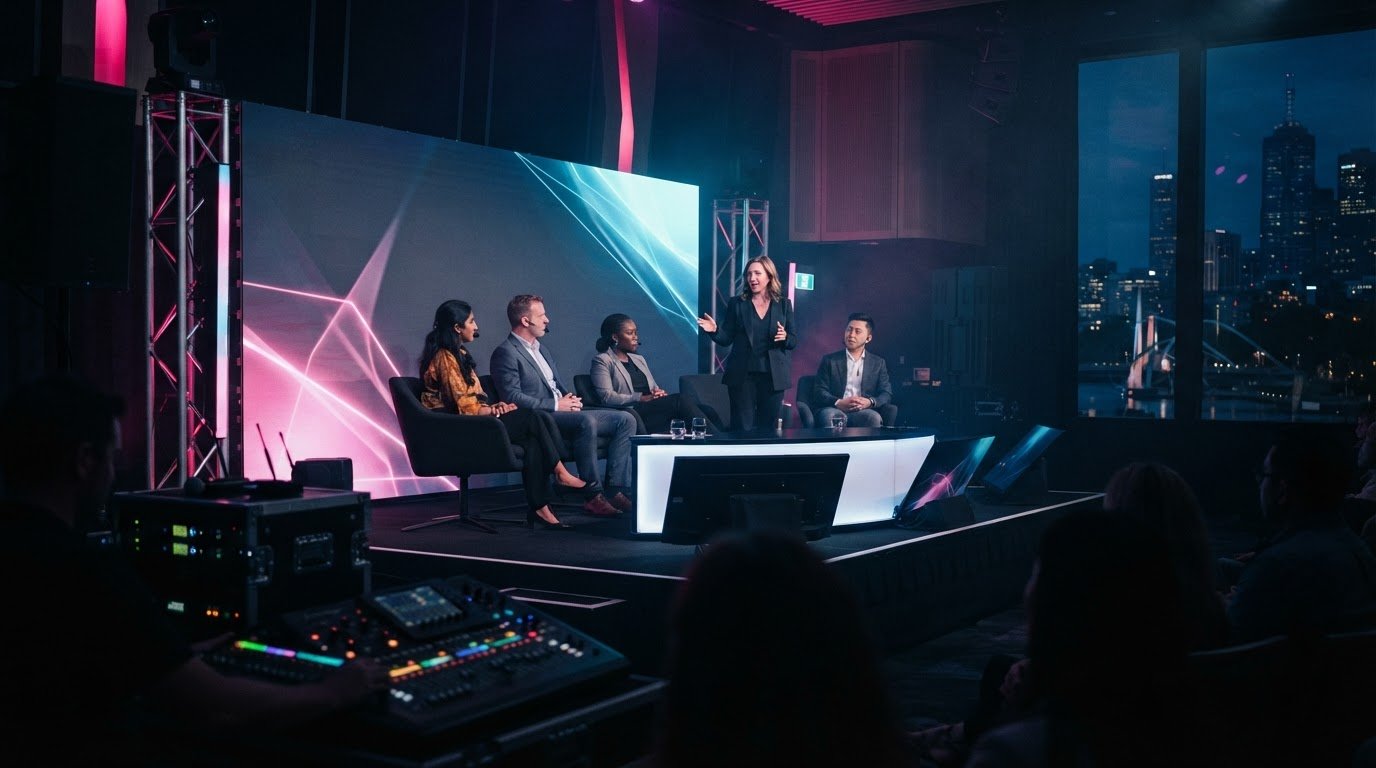
A panel can have an impressive stage and still lose the room if panellists are hard to hear or handovers feel awkward. For audio visual for panel discussions melbourne, clear speech and confident transitions should guide every production decision, with screens and lighting adding value rather than distraction.
If you’re weighing microphone choices, audience sound coverage and the right visuals, you’re asking the questions that shape a polished discussion. NextGen AV brings planning, technical direction and on-site production together, so the moderator, panellists and audience can stay connected while the technical details are managed behind the scenes.
This 2026 planning guide explains how to shape audio around your panel format, coordinate smooth transitions and choose visual elements that suit the room. You’ll also see how a tailored Melbourne AV plan can account for venue layout, audience questions and any virtual component. With those details covered, you can focus on the conversation and feel confident that your event is in capable hands.
Key Takeaways
- Shape your panel AV plan around speech clarity, room coverage and smooth handovers, not equipment alone.
- Match microphones, screens and technical direction to the panel format and the audience’s needs.
- Compare venue-provided AV, equipment-only hire and end-to-end production by who manages planning, operation and pack-down.
- Build a useful brief for audio visual for panel discussions melbourne with the event date, venue, audience size and event type.
- See how NextGen AV’s 1200+ successful audio-visual hires and 85+ years of combined AV technical expertise support a well-managed panel.
Why panel discussion AV in Melbourne needs more than a microphone
A panel is a live exchange, not a sequence of speeches. The moderator introduces ideas, panellists respond to one another, and audience members may contribute questions. Panel discussion AV coordinates sound, visuals and technical support around that changing conversation, so each voice can be heard and every shift in focus feels natural.
The purpose of panel AV is to make every contribution clear, every transition confident and the conversation easy for the audience to follow. That means planning beyond microphone quantity. A handover that interrupts a response, an audience question that can’t be heard across the room, or a visual that pulls attention from the speakers can break the discussion’s momentum.
A single-speaker presentation has a more predictable audio pattern: one person holds the floor, often supported by slides. A panel moves between speakers, sometimes rapidly, and may open the floor to audience participation. The technical plan needs to account for who speaks, when they speak and how the room stays connected throughout. For a foundational definition of a panel discussion, consider how its conversational format differs from a lecture.
What makes panel AV different from a presentation?
Each role creates a different audio need. The moderator must be heard while guiding the conversation; panellists need to respond without losing the thread; audience participants need a clear way to ask questions. Planning microphone positions and handovers alongside the running order helps the technical team support those changes, rather than treating each speaker as a separate presentation.
That coordination shapes what attendees can follow. When the moderator moves from a panellist’s response to an audience question, the sound plan should carry the question into the room, not leave people guessing. Visuals can support the conversation by identifying speakers or displaying relevant material, without competing with the people on stage.
What should a Melbourne organiser prioritise first?
Begin with the event format, venue, audience size and speaker arrangement. A curved stage with panellists facing one another calls for a different microphone plan from a row of speakers facing the audience. The room layout also affects where sound needs to reach and how audience questions can be included.
Set the essentials first: intelligible speech, suitable coverage for the room and orderly transitions. Then decide whether screens or other visual elements will help attendees see speaker names, supporting information or remote participants. Those choices should serve the programme, not simply fill the stage. For broader context on production planning, the Melbourne AV hire and event production guide can help connect panel requirements with the wider event setup.
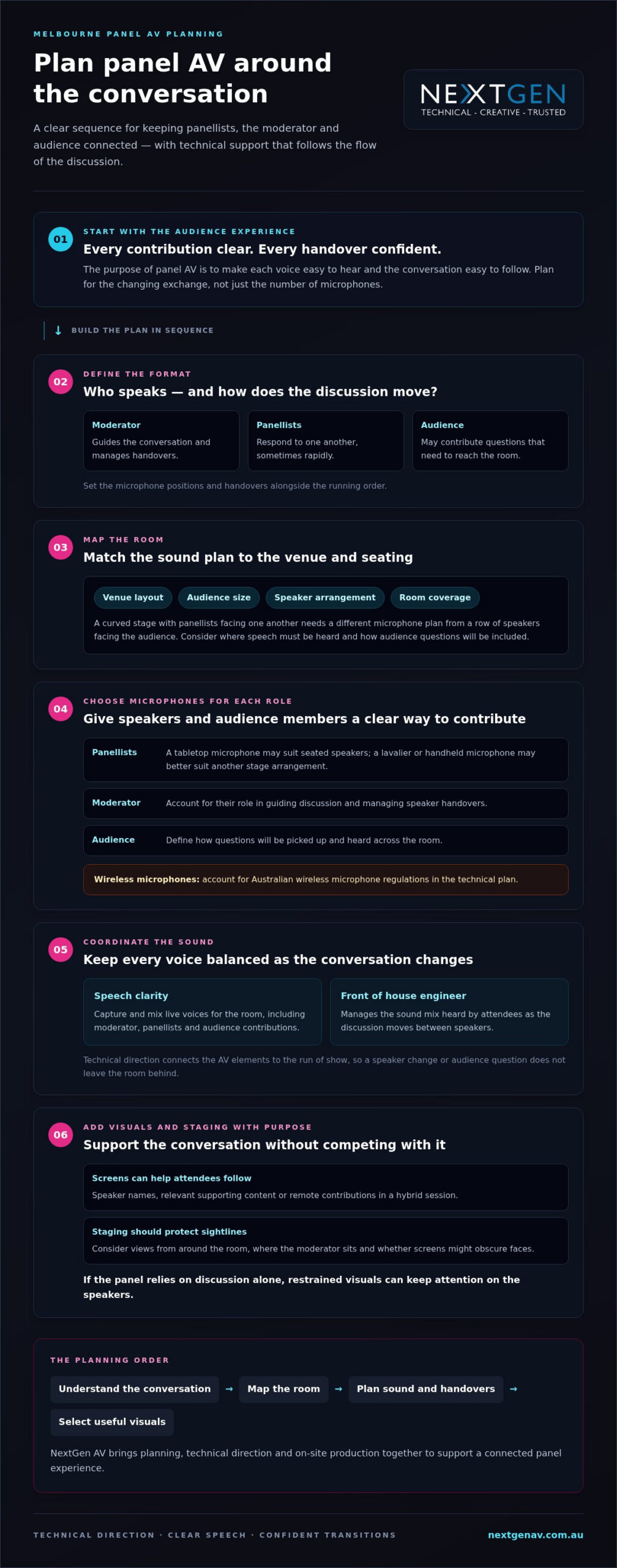
For audio visual for panel discussions melbourne, this order keeps decisions grounded in the audience experience: understand the conversation, map the room, then select technical support that makes both work together.
How sound, screens and technical direction support a panel
A well-planned panel brings several technical roles into one clear experience. Microphones support intelligibility, sound systems carry speech across the room, screens help attendees see information, and staging gives the conversation a visible focus. Technical direction connects these elements to the run of show, so a change of speaker or shift to audience questions doesn’t leave the room behind.
Technical direction turns separate AV elements into one coordinated flow, keeping the conversation clear as speakers and audience contributions change. Audio has its own priorities: each voice must be captured and mixed for the room. LED video screens and staging serve different needs, such as displaying names or improving sightlines. Treating them as distinct parts of the plan helps prevent a visual decision from being mistaken for a sound solution.
How should microphones support panellists and audience questions?
Microphone choices depend on the format, speaker arrangement and who needs to contribute. A tabletop option may suit seated panellists, while a lavalier or handheld microphone may better support a different stage arrangement. The moderator’s role needs separate attention: they guide the discussion and may need to manage handovers between speakers. Audience questions also need a defined microphone plan, so contributions can be heard throughout the room rather than only near the person asking.
A front of house engineer manages the sound mix heard by attendees, balancing live voices as the discussion moves between moderator, panellists and audience. For wireless microphone use, planning should account for Australian wireless microphone regulations as part of the technical plan. Washington State University offers a related reference to wireless audio-visual collaboration systems in academic settings, where technology supports shared discussion.
When do screens and staging improve a panel?
Screens earn their place when they help attendees follow the conversation: displaying speaker names, relevant supporting content or remote contributions in a hybrid session. If the panel relies on discussion alone, restrained visuals may keep attention on the speakers. The Melbourne LED video wall planning can help organisers consider how screen content and placement serve the event experience.
Staging affects how well the audience can see each speaker and how naturally panellists can address one another. Consider sightlines from different parts of the room, the position of the moderator and whether screens might obscure faces. The aim is not to prescribe a stage size, but to create a layout that supports both conversation and visibility.
For audio visual for panel discussions melbourne, coordinate these decisions before event day. NextGen AV can bring professional audio systems, LED video walls, staging and technical direction into a tailored production plan, aligning the technical details with the discussion.
How to Compare AV Options for Melbourne Panel Discussions
The right production model depends on how much responsibility your team can manage and what the panel requires. Venue-provided AV, equipment-only hire and end-to-end production can each suit different event plans. Compare them by who handles each task, rather than assuming access to equipment also includes planning or event-day operation.
A panel can appear simple on paper: speakers take their seats and begin talking. In practice, microphone changes, audience questions and visual cues need to work in step with the run sheet. Equipment alone doesn’t coordinate those moments. Before settling on an approach, map the responsibilities that need to be covered:
Planning: Venue-provided AV may be planned around the venue’s available setup; with equipment-only hire, your team coordinates requirements; end-to-end production brings planning and technical direction together.
Setup: Clarify who installs and prepares the system. With equipment-only hire, setup sits with your team; a production partner manages setup as part of event delivery.
Operation: Establish who manages sound and visual cues during the session. Responsibilities can differ between venue services, equipment hire and end-to-end production.
Speaker support: Decide who briefs speakers and coordinates microphone handovers or audience questions as the discussion moves through its programme.
Pack-down: Identify who is responsible for removing and packing equipment after the event, so this task doesn’t become an unplanned organiser responsibility.
What does end-to-end panel production change?
With end-to-end production, one team can coordinate preparation, setup, operation and pack-down as connected stages of delivery. Technical direction links the AV plan to the running order, helping keep speaker changes, audience participation and visual cues aligned. That frees you to focus on the moderator, panellists and attendees rather than overseeing separate technical tasks.
The recommendation should still follow the event’s actual requirements. A straightforward discussion may need a different level of support from a hybrid panel with remote contributions or a programme featuring several visual elements. A tailored plan keeps production focused on what the event needs.
Which questions reveal the right level of support?
Use practical questions to find gaps in responsibility before event day. Who plans the setup and coordinates it with the venue? Who operates the system during the session? How will a change to the speaker order be handled? Where do audience questions and visual content sit in the run sheet?
For deeper audio planning, consider how the professional sound system hire guide fits with your panel’s venue, format and audience needs. With audio visual for panel discussions melbourne, NextGen AV can manage planning through event delivery and pack-down, tailoring technical direction and support to the session rather than treating the brief as a request for equipment alone.
How to prepare your Melbourne panel AV brief
A clear AV brief turns the panel concept into production decisions the technical team can act on. It doesn’t need to prescribe equipment or specifications. Instead, describe the event, the room, the people taking part and how the session should flow. With those essentials in place, your AV recommendation can respond to the programme and audience experience.
The event date, venue, audience size, panel format and run sheet give an AV team the context to shape a suitable production plan. Build the brief in sequence:
- Record the event date, Melbourne venue, expected audience size and event type, such as a conference session, industry forum or corporate panel.
- Describe the format: who is moderating, how many panellists are involved, how they’ll be arranged and whether audience members will ask questions.
- List the content requirements, including speaker names or titles to display, presentation material, video or other visual content, and any remote participation.
- Share the run sheet, noting introductions, speaker changes, audience Q&A and planned content cues so the technical plan follows the session’s rhythm.
What event details should your AV brief include?
Be specific about how the panel will work, not just what the session is called. For example, explain whether the moderator will introduce each speaker, direct questions around the panel or invite audience participation. Note planned changes to slides or other screen content, and whether remote guests will speak or appear visually. These details help shape support around the programme rather than assumptions.
If some information is still developing, mark it as provisional and identify what may change, such as the final speaker order or presentation content. That gives the production team a useful planning picture while keeping the brief clear and easy to update.
How do venue and run-sheet details shape the setup?
Venue and stage information helps translate the brief into a room-specific plan. Describe the panel’s position, the audience layout and any sightline considerations you already know. This informs where speech needs to carry and whether screen content will be useful across the room. Avoid guessing venue capabilities or specifying technical requirements before the production plan is tailored to the space.
Use the run sheet to mark moments that affect technical flow: opening remarks, moderator introductions, speaker handovers, audience questions and changes to displayed content. If a question period follows the discussion, make that transition visible in the schedule. The team can then align operation with the programme and keep cues clear for speakers and organisers.
A focused brief makes planning more efficient and gives your technical partner a stronger basis for recommendations. Share your Melbourne panel AV brief with NextGen AV to develop a production plan around your venue, format and event-day flow.
How NextGen AV supports panel discussions in Melbourne
For a panel, the AV plan needs to connect preparation with what happens live: speakers need a clear experience on stage, the audience needs to follow the conversation, and the organiser needs a production team managing the moving parts. NextGen AV works as a technical partner, coordinating planning, production and event-day support around your requirements.
That approach is grounded in 1200+ successful audio-visual hires and 85+ years of combined AV technical expertise. NextGen AV holds the Trustindex Top Rated Service 2026 certification (review score > 4.5). These credentials support a considered process, while recommendations are shaped by your venue, programme and panel format.
For audio visual for panel discussions melbourne, the goal is to make the technology work in service of the conversation. Planning can account for professional audio systems, screens, lighting and staging where they fit the session, with technical direction keeping production aligned with the run sheet. You get a coordinated partner from the first event details through delivery and pack-down, rather than being left to manage disconnected technical tasks.
What happens after you share your event details?
Share the core information and NextGen AV can shape recommendations around the event itself. The process moves from understanding the brief, to matching a setup to your needs, to returning practical advice. This keeps the next steps clear and gives the production team a foundation for planning the technical details.
- We review your event details: Tell us your date, venue, audience size and event type.
- We recommend the right setup: From PA hire to screens, lighting, staging and full AV production.
- We come back with clear advice: You’ll receive practical recommendations and a fast quote from our Melbourne team.
The sequence is straightforward, but it’s built around the specific demands of your panel. A discussion with audience questions may call for a different plan from a session with prepared presentations or remote contributions. The recommendations reflect those details, so the technical production supports the event’s format rather than adding unnecessary complexity.
How can organisers take the next step?
To begin, share your event date, venue, audience size and panel format, along with key run-sheet details. A quote usually takes 1-2 days to prepare, depending on the event. This gives the team useful context to develop practical recommendations for your Melbourne panel.
Bring the event plan into focus with NextGen AV. Discuss your Melbourne panel discussion and outline the support you need, from technical direction to event-day production.
When you’re ready to progress, Plan your panel discussion with NextGen AV and put a coordinated AV approach in place for your speakers and audience.
Shape the conversation before event day
The strongest panel experience starts with a clear idea of what you want the audience to take away. Use that outcome to guide the conversation’s tone, the moderator’s role and the moments that deserve emphasis. When the purpose is clear, technical production can support the story without competing with it.
As you move from planning into delivery, keep the speaker experience in view. A well-prepared moderator and panellists can focus on listening, responding and connecting with the room, while coordinated production supports the pace of the discussion. That shared focus is what turns audio visual for panel discussions melbourne into an experience that feels considered from the first introduction to the final exchange.
NextGen AV can help translate your event vision into a tailored production plan, with technical direction and event-day support shaped around your panel. Plan your Melbourne panel discussion with NextGen AV and take the next step towards a polished, engaging event. Your speakers can focus on the conversation, and your audience can stay with it.
Frequently Asked Questions
What audio visual equipment is needed for a panel discussion?
A panel discussion typically needs professional sound systems, microphones suited to the speaker arrangement and an audio mix managed for the room. The setup depends on the format: seated panellists may need a different microphone arrangement from a moderator moving between speakers. Screens, staging and lighting can support the session where they serve a clear purpose, such as displaying speaker details or helping attendees see the stage.
How many microphones do you need for a panel discussion?
Plan for the moderator and each panellist who may speak at the same time, then consider how audience members will ask questions. If speakers are likely to respond quickly to one another, sharing a microphone may interrupt the exchange. A separate audience microphone can make questions easier for the whole room to hear. Match the final count to the format and planned handovers.
How do you prevent audio feedback during a panel discussion?
Feedback is best managed through careful microphone and speaker placement, appropriate sound levels and active audio mixing. Keep microphones away from loudspeakers where the room layout allows, and avoid leaving unused microphones open during the discussion. A front of house engineer can monitor the mix and respond to changes as speakers take turns. The room, stage arrangement and sound system all inform the approach.
Are LED screens necessary for a Melbourne panel discussion?
No, LED screens aren’t essential for every Melbourne panel. They’re useful when attendees need to see speaker names, presentation material or remote contributors, particularly if the room layout makes details difficult to follow. For a discussion centred on conversation, a screen may add little. Base the decision on audience sightlines and the content planned for the session, rather than treating a screen as a default requirement.
How far in advance should I arrange AV for a panel discussion?
Start planning as soon as your event date and venue are taking shape. Early discussion gives the production team time to understand the room, panel format and programme before technical decisions are finalised. It also leaves room to update the plan if speakers or content change. If your event is already booked, share the details promptly so planning can move forward with a clear brief.
What information should I include when requesting a panel AV quote?
Along with the event basics, describe how the session will run: the moderator and panellist arrangement, audience Q&A, presentation material and any remote participation. Include a draft run sheet and note what support you need on the day, such as setup, operation or pack-down. If you have a room layout or venue information, share it to help the team tailor its recommendations to the event.
Can NextGen AV provide audio visual support for panel discussions in Melbourne?
Yes. NextGen AV provides panel AV planning and event production in Melbourne, with professional audio systems, LED video walls, staging and technical direction shaped around your event. The team coordinates technical details from preparation through event-day support and pack-down, so you can focus on your speakers and audience. For audio visual for panel discussions melbourne, share your format and event details to get practical guidance.
A panel can have an impressive stage and still lose the room if panellists are hard to hear or handovers feel awkward. For audio visual for panel discussions melbourne, clear speech and confident transitions should guide every production decision, with screens and lighting adding value rather than distraction.
If you’re weighing microphone choices, audience sound coverage and the right visuals, you’re asking the questions that shape a polished discussion. NextGen AV brings planning, technical direction and on-site production together, so the moderator, panellists and audience can stay connected while the technical details are managed behind the scenes.
This 2026 planning guide explains how to shape audio around your panel format, coordinate smooth transitions and choose visual elements that suit the room. You’ll also see how a tailored Melbourne AV plan can account for venue layout, audience questions and any virtual component. With those details covered, you can focus on the conversation and feel confident that your event is in capable hands.
Key Takeaways
- Shape your panel AV plan around speech clarity, room coverage and smooth handovers, not equipment alone.
- Match microphones, screens and technical direction to the panel format and the audience’s needs.
- Compare venue-provided AV, equipment-only hire and end-to-end production by who manages planning, operation and pack-down.
- Build a useful brief for audio visual for panel discussions melbourne with the event date, venue, audience size and event type.
- See how NextGen AV’s 1200+ successful audio-visual hires and 85+ years of combined AV technical expertise support a well-managed panel.
Why panel discussion AV in Melbourne needs more than a microphone
A panel is a live exchange, not a sequence of speeches. The moderator introduces ideas, panellists respond to one another, and audience members may contribute questions. Panel discussion AV coordinates sound, visuals and technical support around that changing conversation, so each voice can be heard and every shift in focus feels natural.
The purpose of panel AV is to make every contribution clear, every transition confident and the conversation easy for the audience to follow. That means planning beyond microphone quantity. A handover that interrupts a response, an audience question that can’t be heard across the room, or a visual that pulls attention from the speakers can break the discussion’s momentum.
A single-speaker presentation has a more predictable audio pattern: one person holds the floor, often supported by slides. A panel moves between speakers, sometimes rapidly, and may open the floor to audience participation. The technical plan needs to account for who speaks, when they speak and how the room stays connected throughout. For a foundational definition of a panel discussion, consider how its conversational format differs from a lecture.
What makes panel AV different from a presentation?
Each role creates a different audio need. The moderator must be heard while guiding the conversation; panellists need to respond without losing the thread; audience participants need a clear way to ask questions. Planning microphone positions and handovers alongside the running order helps the technical team support those changes, rather than treating each speaker as a separate presentation.
That coordination shapes what attendees can follow. When the moderator moves from a panellist’s response to an audience question, the sound plan should carry the question into the room, not leave people guessing. Visuals can support the conversation by identifying speakers or displaying relevant material, without competing with the people on stage.
What should a Melbourne organiser prioritise first?
Begin with the event format, venue, audience size and speaker arrangement. A curved stage with panellists facing one another calls for a different microphone plan from a row of speakers facing the audience. The room layout also affects where sound needs to reach and how audience questions can be included.
Set the essentials first: intelligible speech, suitable coverage for the room and orderly transitions. Then decide whether screens or other visual elements will help attendees see speaker names, supporting information or remote participants. Those choices should serve the programme, not simply fill the stage. For broader context on production planning, the Melbourne AV hire and event production guide can help connect panel requirements with the wider event setup.
For audio visual for panel discussions melbourne, this order keeps decisions grounded in the audience experience: understand the conversation, map the room, then select technical support that makes both work together.
How sound, screens and technical direction support a panel
A well-planned panel brings several technical roles into one clear experience. Microphones support intelligibility, sound systems carry speech across the room, screens help attendees see information, and staging gives the conversation a visible focus. Technical direction connects these elements to the run of show, so a change of speaker or shift to audience questions doesn’t leave the room behind.
Technical direction turns separate AV elements into one coordinated flow, keeping the conversation clear as speakers and audience contributions change. Audio has its own priorities: each voice must be captured and mixed for the room. LED video screens and staging serve different needs, such as displaying names or improving sightlines. Treating them as distinct parts of the plan helps prevent a visual decision from being mistaken for a sound solution.
How should microphones support panellists and audience questions?
Microphone choices depend on the format, speaker arrangement and who needs to contribute. A tabletop option may suit seated panellists, while a lavalier or handheld microphone may better support a different stage arrangement. The moderator’s role needs separate attention: they guide the discussion and may need to manage handovers between speakers. Audience questions also need a defined microphone plan, so contributions can be heard throughout the room rather than only near the person asking.
A front of house engineer manages the sound mix heard by attendees, balancing live voices as the discussion moves between moderator, panellists and audience. For wireless microphone use, planning should account for Australian wireless microphone regulations as part of the technical plan. Washington State University offers a related reference to wireless audio-visual collaboration systems in academic settings, where technology supports shared discussion.
When do screens and staging improve a panel?
Screens earn their place when they help attendees follow the conversation: displaying speaker names, relevant supporting content or remote contributions in a hybrid session. If the panel relies on discussion alone, restrained visuals may keep attention on the speakers. The Melbourne LED video wall planning can help organisers consider how screen content and placement serve the event experience.
Staging affects how well the audience can see each speaker and how naturally panellists can address one another. Consider sightlines from different parts of the room, the position of the moderator and whether screens might obscure faces. The aim is not to prescribe a stage size, but to create a layout that supports both conversation and visibility.
For audio visual for panel discussions melbourne, coordinate these decisions before event day. NextGen AV can bring professional audio systems, LED video walls, staging and technical direction into a tailored production plan, aligning the technical details with the discussion.
How to Compare AV Options for Melbourne Panel Discussions
The right production model depends on how much responsibility your team can manage and what the panel requires. Venue-provided AV, equipment-only hire and end-to-end production can each suit different event plans. Compare them by who handles each task, rather than assuming access to equipment also includes planning or event-day operation.
A panel can appear simple on paper: speakers take their seats and begin talking. In practice, microphone changes, audience questions and visual cues need to work in step with the run sheet. Equipment alone doesn’t coordinate those moments. Before settling on an approach, map the responsibilities that need to be covered:
Planning: Venue-provided AV may be planned around the venue’s available setup; with equipment-only hire, your team coordinates requirements; end-to-end production brings planning and technical direction together.
Setup: Clarify who installs and prepares the system. With equipment-only hire, setup sits with your team; a production partner manages setup as part of event delivery.
Operation: Establish who manages sound and visual cues during the session. Responsibilities can differ between venue services, equipment hire and end-to-end production.
Speaker support: Decide who briefs speakers and coordinates microphone handovers or audience questions as the discussion moves through its programme.
Pack-down: Identify who is responsible for removing and packing equipment after the event, so this task doesn’t become an unplanned organiser responsibility.
What does end-to-end panel production change?
With end-to-end production, one team can coordinate preparation, setup, operation and pack-down as connected stages of delivery. Technical direction links the AV plan to the running order, helping keep speaker changes, audience participation and visual cues aligned. That frees you to focus on the moderator, panellists and attendees rather than overseeing separate technical tasks.
The recommendation should still follow the event’s actual requirements. A straightforward discussion may need a different level of support from a hybrid panel with remote contributions or a programme featuring several visual elements. A tailored plan keeps production focused on what the event needs.
Which questions reveal the right level of support?
Use practical questions to find gaps in responsibility before event day. Who plans the setup and coordinates it with the venue? Who operates the system during the session? How will a change to the speaker order be handled? Where do audience questions and visual content sit in the run sheet?
For deeper audio planning, consider how the professional sound system hire guide fits with your panel’s venue, format and audience needs. With audio visual for panel discussions melbourne, NextGen AV can manage planning through event delivery and pack-down, tailoring technical direction and support to the session rather than treating the brief as a request for equipment alone.
How to prepare your Melbourne panel AV brief
A clear AV brief turns the panel concept into production decisions the technical team can act on. It doesn’t need to prescribe equipment or specifications. Instead, describe the event, the room, the people taking part and how the session should flow. With those essentials in place, your AV recommendation can respond to the programme and audience experience.
The event date, venue, audience size, panel format and run sheet give an AV team the context to shape a suitable production plan. Build the brief in sequence:
- Record the event date, Melbourne venue, expected audience size and event type, such as a conference session, industry forum or corporate panel.
- Describe the format: who is moderating, how many panellists are involved, how they’ll be arranged and whether audience members will ask questions.
- List the content requirements, including speaker names or titles to display, presentation material, video or other visual content, and any remote participation.
- Share the run sheet, noting introductions, speaker changes, audience Q&A and planned content cues so the technical plan follows the session’s rhythm.
What event details should your AV brief include?
Be specific about how the panel will work, not just what the session is called. For example, explain whether the moderator will introduce each speaker, direct questions around the panel or invite audience participation. Note planned changes to slides or other screen content, and whether remote guests will speak or appear visually. These details help shape support around the programme rather than assumptions.
If some information is still developing, mark it as provisional and identify what may change, such as the final speaker order or presentation content. That gives the production team a useful planning picture while keeping the brief clear and easy to update.
How do venue and run-sheet details shape the setup?
Venue and stage information helps translate the brief into a room-specific plan. Describe the panel’s position, the audience layout and any sightline considerations you already know. This informs where speech needs to carry and whether screen content will be useful across the room. Avoid guessing venue capabilities or specifying technical requirements before the production plan is tailored to the space.
Use the run sheet to mark moments that affect technical flow: opening remarks, moderator introductions, speaker handovers, audience questions and changes to displayed content. If a question period follows the discussion, make that transition visible in the schedule. The team can then align operation with the programme and keep cues clear for speakers and organisers.
A focused brief makes planning more efficient and gives your technical partner a stronger basis for recommendations. Share your Melbourne panel AV brief with NextGen AV to develop a production plan around your venue, format and event-day flow.
How NextGen AV supports panel discussions in Melbourne
For a panel, the AV plan needs to connect preparation with what happens live: speakers need a clear experience on stage, the audience needs to follow the conversation, and the organiser needs a production team managing the moving parts. NextGen AV works as a technical partner, coordinating planning, production and event-day support around your requirements.
That approach is grounded in 1200+ successful audio-visual hires and 85+ years of combined AV technical expertise. NextGen AV holds the Trustindex Top Rated Service 2026 certification (review score > 4.5). These credentials support a considered process, while recommendations are shaped by your venue, programme and panel format.
For audio visual for panel discussions melbourne, the goal is to make the technology work in service of the conversation. Planning can account for professional audio systems, screens, lighting and staging where they fit the session, with technical direction keeping production aligned with the run sheet. You get a coordinated partner from the first event details through delivery and pack-down, rather than being left to manage disconnected technical tasks.
What happens after you share your event details?
Share the core information and NextGen AV can shape recommendations around the event itself. The process moves from understanding the brief, to matching a setup to your needs, to returning practical advice. This keeps the next steps clear and gives the production team a foundation for planning the technical details.
- We review your event details: Tell us your date, venue, audience size and event type.
- We recommend the right setup: From PA hire to screens, lighting, staging and full AV production.
- We come back with clear advice: You’ll receive practical recommendations and a fast quote from our Melbourne team.
The sequence is straightforward, but it’s built around the specific demands of your panel. A discussion with audience questions may call for a different plan from a session with prepared presentations or remote contributions. The recommendations reflect those details, so the technical production supports the event’s format rather than adding unnecessary complexity.
How can organisers take the next step?
To begin, share your event date, venue, audience size and panel format, along with key run-sheet details. A quote usually takes 1-2 days to prepare, depending on the event. This gives the team useful context to develop practical recommendations for your Melbourne panel.
Bring the event plan into focus with NextGen AV. Discuss your Melbourne panel discussion and outline the support you need, from technical direction to event-day production.
When you’re ready to progress, Plan your panel discussion with NextGen AV and put a coordinated AV approach in place for your speakers and audience.
Shape the conversation before event day
The strongest panel experience starts with a clear idea of what you want the audience to take away. Use that outcome to guide the conversation’s tone, the moderator’s role and the moments that deserve emphasis. When the purpose is clear, technical production can support the story without competing with it.
As you move from planning into delivery, keep the speaker experience in view. A well-prepared moderator and panellists can focus on listening, responding and connecting with the room, while coordinated production supports the pace of the discussion. That shared focus is what turns audio visual for panel discussions melbourne into an experience that feels considered from the first introduction to the final exchange.
NextGen AV can help translate your event vision into a tailored production plan, with technical direction and event-day support shaped around your panel. Plan your Melbourne panel discussion with NextGen AV and take the next step towards a polished, engaging event. Your speakers can focus on the conversation, and your audience can stay with it.
Frequently Asked Questions
What audio visual equipment is needed for a panel discussion?
A panel discussion typically needs professional sound systems, microphones suited to the speaker arrangement and an audio mix managed for the room. The setup depends on the format: seated panellists may need a different microphone arrangement from a moderator moving between speakers. Screens, staging and lighting can support the session where they serve a clear purpose, such as displaying speaker details or helping attendees see the stage.
How many microphones do you need for a panel discussion?
Plan for the moderator and each panellist who may speak at the same time, then consider how audience members will ask questions. If speakers are likely to respond quickly to one another, sharing a microphone may interrupt the exchange. A separate audience microphone can make questions easier for the whole room to hear. Match the final count to the format and planned handovers.
How do you prevent audio feedback during a panel discussion?
Feedback is best managed through careful microphone and speaker placement, appropriate sound levels and active audio mixing. Keep microphones away from loudspeakers where the room layout allows, and avoid leaving unused microphones open during the discussion. A front of house engineer can monitor the mix and respond to changes as speakers take turns. The room, stage arrangement and sound system all inform the approach.
Are LED screens necessary for a Melbourne panel discussion?
No, LED screens aren’t essential for every Melbourne panel. They’re useful when attendees need to see speaker names, presentation material or remote contributors, particularly if the room layout makes details difficult to follow. For a discussion centred on conversation, a screen may add little. Base the decision on audience sightlines and the content planned for the session, rather than treating a screen as a default requirement.
How far in advance should I arrange AV for a panel discussion?
Start planning as soon as your event date and venue are taking shape. Early discussion gives the production team time to understand the room, panel format and programme before technical decisions are finalised. It also leaves room to update the plan if speakers or content change. If your event is already booked, share the details promptly so planning can move forward with a clear brief.
What information should I include when requesting a panel AV quote?
Along with the event basics, describe how the session will run: the moderator and panellist arrangement, audience Q&A, presentation material and any remote participation. Include a draft run sheet and note what support you need on the day, such as setup, operation or pack-down. If you have a room layout or venue information, share it to help the team tailor its recommendations to the event.
Can NextGen AV provide audio visual support for panel discussions in Melbourne?
Yes. NextGen AV provides panel AV planning and event production in Melbourne, with professional audio systems, LED video walls, staging and technical direction shaped around your event. The team coordinates technical details from preparation through event-day support and pack-down, so you can focus on your speakers and audience. For audio visual for panel discussions melbourne, share your format and event details to get practical guidance.
Discover Valuable Insights
Unlock Expert Tips and Advice
Our blog is packed with valuable information to help you stay ahead. Whether you’re looking for expert advice, industry trends, or practical tips, you’ll find everything you need. Reach out today to learn more or get in touch with us for personalised support!