


What if runway lighting could make every fabric, silhouette and movement read clearly while shaping the mood of the whole show? Fashion show runway lighting Melbourne productions need to do more than create drama: the design must help garments appear clear to the audience and account for camera views.
If you’re balancing creative impact with venue limits, rigging, power and a tightly timed runway schedule, early coordination matters. Lighting, staging and technical direction need to work together so the collection stays in focus and the production runs smoothly.
This guide explains how to plan lighting around garments, models, camera positions and the venue, along with practical details that help organise the production. NextGen AV provides lighting design, staging, rigging and technical direction for Melbourne events. Its team can support planning from pre-production through on-site management and pack-down, helping you coordinate the technical details behind the runway.
Key Takeaways
- Plan runway lighting as part of the overall production, aligning the collection, models, audience experience and schedule.
- Consider how lighting direction and garment texture affect what audiences see, and confirm photography and video needs with the production team.
- Choose between clean, garment-led illumination and a more atmospheric look by weighing the collection’s identity, runway scale and camera views.
- For fashion show runway lighting melbourne, confirm venue access, rigging information, runway layout and production timing early.
- Look for a production partner who coordinates lighting design, technical direction, safety planning and on-site delivery, not just equipment supply.
Why runway lighting in Melbourne shapes the whole fashion show
Runway lighting has to serve the collection, models, audience and event schedule at the same time. It’s not simply a matter of aiming lights at a catwalk. A useful plan considers what each look needs to communicate, where people will be watching from, and how lighting cues fit the running order.
The purpose of runway lighting is to make garments and model movement clear while creating an atmosphere that supports the collection. When the design reflects both the visual brief and the practical needs of the production, the runway feels connected to the rest of the event.
For organisers planning fashion show runway lighting in Melbourne, start by defining the experience the collection should create. A clear brief gives the production team direction for design decisions and helps balance creative ambition with the venue’s conditions.
What does fashion show runway lighting in Melbourne need to achieve?
Four goals need to work together: garment visibility, confident model movement, audience sightlines and the intended mood. A lighting angle that brings out the texture of a structured fabric may affect how a flowing or reflective material appears. Share the collection’s colours, materials and creative direction early so the lighting plan responds to the clothes rather than relying on a generic look.
Runway lighting also has a different job from ambient light around the event space. General room lighting helps people move around and orient themselves; focused runway lighting directs attention to each look. The stage lighting techniques overview offers background on principles that can inform a production, but the final design should respond to the show’s specific brief.
Why does a Melbourne venue change the plan?
Every room has its own layout and infrastructure. Ceiling height, available rigging positions, audience arrangement and production access can all affect where lighting can go and how the runway should be arranged. Confirm these details with the venue early, including any event-specific restrictions. Don’t assume a setup used at another venue will work in your space.
Access and timing matter, too. The production plan needs to account for when the team can enter, install and check the setup alongside the event schedule. Give your lighting team the intended runway layout and confirmed venue information so lighting design, staging, rigging and technical direction can be coordinated before show day. Early alignment helps keep the focus on the collection and audience experience.
How runway lighting brings garments, movement and camera views together
Lighting direction affects how fabric appears as a model moves. Front lighting can help reveal colour and detail, while side lighting can bring out texture and create dimension. The right balance depends on the garments, runway route and audience view. Reflective, textured and dark fabrics each bring different considerations, so share collection references, colours and material details during pre-production.
A runway lighting plan needs creative intent and camera awareness so the collection reads clearly in the room and in captured images. Photography and video can respond differently to lighting than a live audience does. Confirm camera positions, capture plans and any live-streaming needs with the production team, then review representative garments under the proposed lighting during a rehearsal or test if available. Advice on perfect fashion show lighting also highlights the value of considering models, garments and the runway as one visual composition.
How do colour and fabric affect the lighting brief?
Bring creative references into the technical conversation early. Dark garments may need careful attention to retain visible detail, while reflective material can respond strongly to the direction and character of light. Treat these as design factors to test, not outcomes to assume. Reviewing sample looks under the planned conditions gives the team a chance to assess how colour, texture and movement appear before the show.
How should lighting support models and cameras?
Map the full runway route, including model entrances and exits, stopping positions and photographer locations. This helps the lighting team consider how each look will appear as models approach, turn and pause, rather than designing for only one audience angle. Share the map with the lighting designer and camera team so their requirements can be coordinated.
Lighting cues should follow the agreed running order and be coordinated with the show caller or stage manager. Transitions can then support the pace of the show rather than compete with it. For broader context on how staging and lighting work together, see this stage and lighting hire guide.
For fashion show runway lighting in Melbourne, align the creative brief, garment tests, camera positions and cue sequence before production day. If you’re shaping the technical plan, talk with NextGen AV about runway lighting design as part of your production planning.
Runway lighting options in Melbourne: match the design to the show
The right lighting approach starts with the collection, not a preset effect. Clean, garment-led illumination keeps attention on colour, cut and detail. A more atmospheric design can make a show feel more dramatic, but effects should support the clothes rather than compete with them. For fashion show runway lighting in Melbourne, weigh the creative direction against runway scale, audience positions and photography or video plans before settling on a look.
Should the runway feel editorial, dramatic or understated?
Use references from the collection and event brief to describe the intended mood. Editorial and understated looks may call for a restrained approach that lets the garments lead; a more expressive design can shape the atmosphere and create a stronger visual frame. Neither approach is automatically better. First confirm garment visibility, sightlines and camera needs, then decide where effects add meaning and where they might distract.
The table below connects common event priorities with design considerations. Use it as a briefing prompt, not a fixed technical prescription.
| Event priority | Lighting-design consideration |
|---|---|
| Garments take centre stage | Prioritise clear, consistent visibility and keep effects secondary to the collection. |
| A distinctive mood | Use atmosphere to reinforce the creative brief while preserving clear views of each look. |
| Photography or video | Share camera positions and capture plans early so the design considers both the room and the lens. |
| A compact or unusual runway layout | Review audience positions and the route before deciding how the lighting should cover the space. |
When should lighting integrate with staging and sound?
Coordinate lighting positions with runway dimensions and stage layout from the outset. Changes to the route or staging can affect sightlines and the areas the lighting needs to cover. Align the creative plan with the production layout before finalising cues. This joined-up planning helps the technical team manage the details without pulling focus from the show.
Sound systems and lighting cues also need to follow the agreed show sequence, particularly when music sets the pace for model entrances. Coordinate cue timing with the show caller or stage manager, and share audio requirements with the production team. For related planning, see this professional sound system hire guide. If visual content is part of the concept, decide how it will complement the runway rather than compete with the collection.

Plan Melbourne runway lighting with venue, rigging and safety in mind
A well-designed runway also needs a practical production plan. For fashion show runway lighting in Melbourne, establish the creative brief, confirm venue details, coordinate lighting with the runway and staging, plan technical delivery, then rehearse before doors open. This sequence gives the production team a chance to resolve constraints before they affect the event schedule.
- Establish the brief: Define the collection’s visual direction, runway route and audience experience.
- Confirm the venue: Check access, schedule, available plans, power, ceiling details and rigging information.
- Coordinate the design: Align lighting positions with the runway layout, staging and camera views.
- Plan and rehearse: Confirm production responsibilities, cue timing and the rehearsal plan with the relevant teams.
What should organisers confirm with the venue?
Ask the venue for current information about access, available rigging points, power and its event approval process. Confirm who will provide the venue plans and who reviews or approves the proposed production design. These checks are venue-specific, not universal requirements for Melbourne events, so get the details directly from the venue rather than relying on assumptions.
Share the intended runway layout and schedule with the production team. A clear plan helps them assess how the room’s infrastructure and access arrangements affect lighting positions, staging and installation timing.
How should rigging and safety be planned?
Where the design calls for suspended lighting or other equipment, consider rigging as part of the overall production plan. The venue and qualified production personnel can confirm what the proposed setup involves and which people, checks and documents are relevant to that specific work. Safety planning should reflect the actual venue, equipment and scope rather than relying on a generic checklist.
Clarify responsibilities with the venue and production team, including who reviews the proposed setup and what checks or documentation apply. Requirements depend on the event and venue, so confirm the relevant details during planning. Coordinating lighting, staging, rigging and technical direction early helps keep responsibilities clear and supports an organised rehearsal and show-day schedule.
Bring the creative brief and venue information together with a production team that can manage the technical details. Discuss Melbourne event production with NextGen AV to plan runway lighting around your venue, schedule and staging requirements.
Choose a Melbourne end-to-end runway lighting partner
Fashion show runway lighting in Melbourne calls for more than a lighting concept or equipment list. Choose a partner who can connect the creative brief with technical direction, safety planning and on-site coordination, so production details support the show rather than becoming another task for your team to manage.
A supplier focused only on equipment may not coordinate how lighting fits with staging, rigging, venue requirements and the running order. An end-to-end production partner should explain what they’ll manage and where other teams need to be involved. Check that the proposed scope covers the stages you need, from pre-production and technical planning through installation, operation and pack-down where included.
What should a runway lighting partner manage?
Establish clear points of contact for your event, venue and creative teams. Ask who will coordinate production details, how lighting cues will be agreed, and how cue changes or schedule adjustments will be communicated on show day. These arrangements help everyone work from the same plan, particularly when a change to timing or runway layout affects more than one production element.
Before appointing a partner, check that their approach addresses:
- Lighting design shaped around the collection, runway and audience experience.
- Technical direction that connects lighting with staging, rigging and the event schedule.
- Project-specific safety planning coordinated with the venue and relevant production personnel.
- On-site roles, communication and cue management, with installation and pack-down responsibilities clearly scoped.
What experience and evidence should you ask for?
Request examples relevant to fashion or live events, then clarify what each project involved. The size of a lighting rig alone doesn’t explain the brief, venue or production responsibilities, so ask how an example relates to your event. Look for evidence that the proposed team can coordinate the design and practical details required for your show.
Also ask how technical direction, rigging and safety planning would apply to your proposed production. NextGen AV brings more than 30 years of industry experience. That’s useful context for planning, not a guarantee of a particular result. Confirm which personnel, documents and checks are relevant to your event’s specific scope.
With the right partner, creative intent and production planning stay connected from the first brief to show day. Plan your Melbourne fashion show with NextGen AV and discuss the lighting design, staging, rigging and technical direction your runway requires.
Bring your runway vision to life
Strong fashion show runway lighting in Melbourne connects the collection, model movement and audience experience in one considered design. A useful plan also accounts for camera views, venue conditions, rigging, safety and show timing, so creative ambition is matched by practical technical planning.
Choose a production partner who coordinates lighting design, staging, rigging and technical direction rather than focusing only on equipment. NextGen AV provides event production and equipment hire, with a team that handles pre-production planning, on-site management and pack-down. Its Melbourne-based team can help coordinate the technical details around your runway and venue.
With the production details planned behind the scenes, you can focus on the collection and the moment it meets the audience. Plan your Melbourne runway production with NextGen AV and discuss the lighting design, staging, rigging and technical direction your show requires.
Frequently Asked Questions
How do you light a fashion show runway so garments look clear?
Start with the collection, then plan light direction and coverage around its colours, materials and the audience’s view. Dark, reflective or textured garments may need particular consideration because they can appear differently under different lighting. Share garment references with the lighting team and, if a rehearsal or test is available, review representative looks under the proposed setup. This gives the team a chance to assess visibility before show time without assuming one look suits every collection.
What lighting is used for a fashion show runway?
A runway design may combine focused front lighting to reveal garments, side lighting to bring out shape and texture, and back lighting to separate models from the background. The balance depends on the collection, room layout and intended mood. Some shows favour clear, restrained illumination; others add more atmosphere. The lighting designer should develop the approach from your brief and venue details rather than selecting effects before the visual priorities are clear.
Can runway lighting work for both the audience and photographers?
Yes, if the plan accounts for both the live view and camera positions. Share photographer locations, video coverage and any streaming requirements with the production team early, as lighting that feels effective in the room may appear different on camera. Map sightlines along the runway, including model entrances, turns and stopping positions. Where possible, review representative garments during a rehearsal or test to check how the planned look translates to images.
How do I plan runway lighting for a Melbourne venue?
Planning fashion show runway lighting in Melbourne starts with a clear creative brief and early venue checks. Confirm access and production timing, request current venue plans, and ask about available rigging positions, power and the venue’s approval process. Share the intended runway layout with your production team so they can coordinate lighting, staging and technical direction around the actual room. Venue conditions and processes vary, so verify details with your chosen venue.
What should I ask a runway lighting company before booking?
Ask who will lead design and technical direction, what the proposed scope includes, and how the team will coordinate with your venue and creative contacts. Clarify whether installation, operation and pack-down are included, and who manages cue changes and show-day communication. Request relevant fashion or live-event examples, then confirm what each example involved. A clear answer should connect the creative approach with the practical production responsibilities for your event.
Does runway lighting need to be coordinated with staging and sound?
Yes. Runway dimensions and stage layout influence lighting positions and audience sightlines, while music and model entrances affect cue timing. Coordinate the lighting plan with staging and sound systems, and make sure the show caller or stage manager has the agreed running order and cue information. Early communication helps the teams manage transitions together, so the technical elements support the show’s pace rather than interrupting it.
What safety information should be confirmed before event rigging?
Confirm the venue’s rigging information and approval process, then ask qualified production personnel to assess what the proposed setup requires. Clarify who is responsible for the work and which safety documents, equipment checks and credentials apply to the specific event. Requirements vary with the venue and production, so confirm the relevant details rather than assuming every check or document applies.
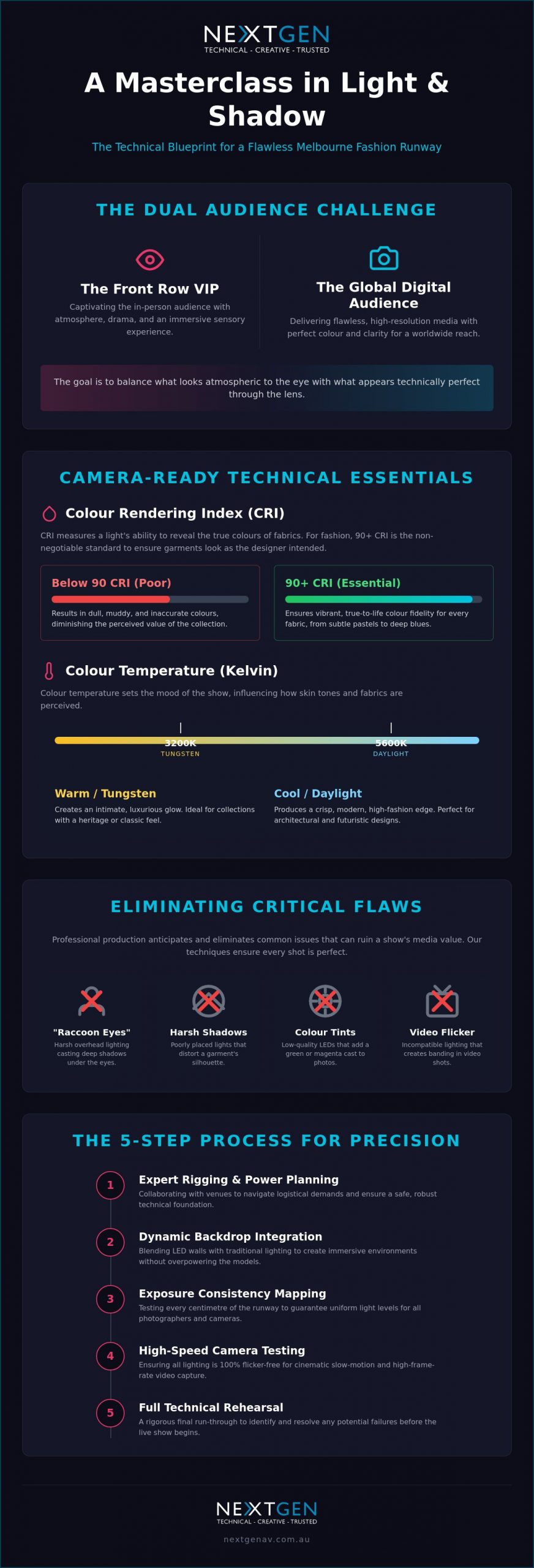
A single misplaced shadow can instantly diminish the perceived value of a designer’s entire collection. You understand that a Melbourne fashion show is no longer just an event for the front row; it is a high-stakes content engine for a global audience. When you invest in professional runway stage hire melbourne, you are not just booking a platform. You are setting the foundation for a visual narrative where every stitch and texture must be rendered with absolute clarity. We know the pressure of ensuring that the vibrant silks and intricate patterns seen on the catwalk look just as breathtaking in the high-resolution media gallery as they do in person.
This expert guide reveals how to transform your 2026 event into a masterclass of light and shadow. You will discover the technical precision required to eliminate harsh silhouettes and ensure true-to-life colour representation through high-CRI LED technology. We will walk you through the latest trends in modular video walls and the essential safety protocols that allow you to focus on the creative vision while we handle the technical heavy lifting. From the first model’s entrance to the final walk, learn how to create an atmosphere of prestige that resonates both in the room and across every digital platform.
Key Takeaways
- Master the “Dual Audience” strategy to ensure your collection captivates the front row while delivering the technical precision required for global digital media.
- Understand why 90+ CRI lighting is essential for accurate fabric colour and how to choose the right Kelvin rating for cinematic skin tones.
- Navigate the specific logistical demands of local venues by integrating professional runway stage hire melbourne with expert rigging and power planning.
- Explore techniques for blending dynamic LED backdrops with traditional lighting to create immersive environments without washing out the models.
- Implement a rigorous five-step technical rehearsal process that identifies potential failures early, ensuring your live show executes with absolute precision.
The Critical Role of Lighting in Modern Fashion Shows
Lighting is the invisible architect of a fashion show. It is the most influential element of your runway’s brand identity, acting as the lens through which every guest perceives your creative vision. High-end illumination does more than just reveal fabric; it increases the perceived value of the garments, transforming a seasonal collection into an aspirational masterpiece. When you secure professional runway stage hire melbourne, you are building a foundation for prestige. Precision is the standard. Every shadow must be intentional, and every highlight must serve the narrative of the clothes.
This commitment to enhancing perceived value through meticulous styling is a philosophy shared by leaders in luxury presentation; for example, the property staging and interior design experts at Raw at Home demonstrate how curated aesthetics can elevate the appeal of any high-end environment.
Modern organisers face the Dual Audience challenge. You are designing for the VIPs in the front row and a global digital audience simultaneously. What looks atmospheric to the naked eye can often appear muddy or distorted through a camera lens. Balancing these two worlds requires a sophisticated mastery of Stage lighting principles. Our approach moves beyond mere visibility. We use light to guide the audience’s focus, ensuring their eyes follow the model’s movement while the technical setup remains entirely transparent to the viewer.
Lighting for the Lens: Photography and Social Media
The “Instagram Effect” dictates the success of modern fashion events. Your event’s viral potential is decided the moment the first model hits the catwalk. Poorly planned rigs often result in “raccoon eyes” or harsh shadows that obscure the model’s face and distort the garment’s silhouette. We eliminate these flaws by using multi-point light sources that provide soft, wrap-around illumination. Consistency is vital. Every centimetre of the catwalk must maintain the same exposure level. This ensures that a photographer at the end of the runway gets the same perfect shot as a social media influencer seated halfway down the track.
This demand for flawless visual presentation extends beyond the catwalk; in the competitive Australian property market, firms like UberRE apply similar high-end photography and marketing standards to help agents showcase homes with maximum impact.
Creating Atmosphere and Drama
Great lighting design creates a sense of depth and separation. We use high-contrast techniques to pull the model away from the background, making the collection pop against the environment. The psychological impact of colour temperature cannot be overstated. Warm, amber tones evoke a sense of luxury and heritage, while crisp, cool whites suggest a modern, architectural edge. By syncing dynamic lighting cues with your music, we elevate the show from a simple walk to a cinematic production. This synchronisation builds momentum, driving the energy of the room toward a high-impact finale that leaves a lasting impression on your audience.
Technical Essentials: What Makes a Runway ‘Camera-Ready’?
Achieving a camera-ready aesthetic is a rigorous technical discipline. It requires more than just high-intensity beams; it demands a sophisticated understanding of the principles of lighting design to ensure that what the camera captures is a true reflection of the designer’s intent. When organising your runway stage hire melbourne, the technical specifications of your lighting rig are just as critical as the dimensions of the platform itself. We believe that technical precision is the only way to safeguard the visual integrity of a collection.
High CRI (Colour Rendering Index) is the industry’s non-negotiable standard for fashion. Any fixture with a CRI below 90 will inevitably make expensive, high-luxury fabrics appear muddy or dull. We prioritise 90+ CRI to ensure that every shade, from subtle pastels to deep midnight blues, is rendered with absolute fidelity. Colour temperature is the next layer of the craft. We typically choose between daylight (5600K) for a crisp, high-fashion edge or tungsten (3200K) to create a warmer, more intimate glow. The choice depends entirely on the collection’s palette and the desired emotional response from the audience.
The Science of Colour Accuracy
Low-quality LED systems often introduce a subtle green or magenta tint. This is a disaster for brand consistency because it distorts the true colour of the garments in every photograph. We also ensure all fixtures are flicker-free, which is a vital requirement for high-speed video and cinematic slow-motion shots. CRI (Colour Rendering Index) is a quantitative measure of a light source’s ability to reveal the colours of various objects faithfully in comparison with a natural light source. Using high-end equipment prevents these technical glitches from undermining your show’s prestige.
Essential Hardware for Runway Success
A flawless show relies on a balanced mix of precision hardware. Profile lights and spotlights define the model with sharp, clean edges, creating that iconic “cut-out” look against the backdrop. Wash lights provide the foundational illumination, ensuring a seamless pool of light across the entire length of the catwalk without a single dark spot. These elements are orchestrated through a DMX control console, allowing our technicians to execute precise, real-time dimming and seamless colour shifts. If you’re planning a high-stakes show, our team can help you design a camera-ready environment that protects your brand’s visual integrity.
Creative Integration: LED Walls and Dynamic Backdrops
The modern runway is no longer a static platform. It is a dynamic canvas where digital content and physical light intersect to tell a story. By combining high-resolution LED video walls with precision stage lighting, we create immersive environments that transport your audience into the heart of your brand. When you invest in premium runway stage hire melbourne, you are securing the stage for a cinematic experience. Digital scenery has revolutionised the industry, allowing designers to change the entire theme of a show at the touch of a button, moving from minimalist urban landscapes to surreal dreamscapes in seconds.
Integrating these technologies requires a sophisticated technical touch. We use moving head lights to inject energy into the space, projecting light onto the floor and ceiling to mirror the movement on the digital screens. This prevents the backdrop from feeling like a separate entity and instead makes it part of a living, breathing set. Success lies in the details of the execution, where the technical rig supports the creative vision without ever distracting from the collection itself. Managing light spill is our priority; we ensure that the ambient glow from the screens never compromises the crisp illumination of the models.
Balancing Screen Brightness and Stage Light
Achieving harmony between a bright LED screen and the models on the catwalk is a delicate science. If the screen brightness isn’t perfectly calibrated, it can wash out the models or create a distracting silhouette. We use technical calibration to match the colour temperature of your LED wall to your stage lights, ensuring a uniform look across all media. Following expert insights on runway lighting, we employ layered lighting strategies. This allows us to front-light the models with surgical precision while avoiding glare or light spill onto the background screens, maintaining perfect depth and clarity.
Special Effects and Theatrical Flair
To elevate the show further, we introduce theatrical elements that add texture and drama. Light haze is an effective way to make light beams visible, creating a three-dimensional atmosphere that feels tangible to the audience. We also utilise Gobo patterns to project brand logos or intricate textures directly onto the runway surface, reinforcing the collection’s aesthetic. High-energy finales often demand more aggressive techniques. Strobe effects and rapid colour shifts can be programmed to sync perfectly with the music, creating a crescendo of visual energy that leaves the audience breathless as the final models depart the stage.
Planning Your Melbourne Runway: Logistics and Venues
Melbourne’s fashion landscape is defined by its architectural diversity, ranging from the ornate grandeur of heritage landmarks to the industrial grit of inner-city warehouses. Planning a show in these spaces requires more than just a creative eye; it demands a rigorous logistical strategy. When you begin the process of runway stage hire melbourne, you are initiating a complex sequence of technical requirements that must be perfectly aligned with the venue’s physical constraints. Engaging your audio visual hire Melbourne partner during the initial site selection ensures that your ambitious vision is actually supported by the room’s infrastructure.
Melbourne Venue Considerations
Navigating heritage venues like the Royal Exhibition Building or Melbourne Town Hall involves strict adherence to preservation guidelines. Rigging points are often limited or highly specific, meaning we often design bespoke ground-supported truss systems to carry the weight of professional lighting and LED displays. For outdoor festivals using temporary marquees, the stakes are even higher. We must account for wind loads and terrain stability while ensuring access to 3-phase power. Most high-end lighting rigs and video walls draw more current than a standard domestic circuit can provide; therefore, dedicated power distribution is a non-negotiable requirement for a stable, flicker-free show.
The Production Timeline
A successful production is built in the weeks leading up to the event, not on the day of the show. We start with conceptual designs and 3D visualisations roughly 4 to 6 weeks out, allowing you to walk through a digital twin of your event. This phase is followed by detailed equipment specification and crew booking to ensure every technician is a specialist in their field. Managing the bump-in and bump-out schedule is where our “Invisible Expert” approach truly shines. Melbourne venue hire windows are often incredibly narrow; we orchestrate the logistics to ensure your set is built, tested, and polished without a second of wasted time.
The final step is the technical rehearsal, a disciplined 5-step process that moves from power verification to the full dress rehearsal. It’s vital to test the lighting with the actual garments from the collection. Some fabrics, like high-sheen satins or intricate beadwork, reflect light in ways that can only be managed through real-time adjustments. This final polish ensures that when the house lights dim, the execution is flawless. If you’re ready to secure your venue, consult with our technical directors to conduct a comprehensive site survey and lock in your production schedule.
Partnering with NextGen AV for Elite Runway Production
NextGen AV is more than a technical supplier; we are the engine behind Melbourne’s most prestigious fashion events. With 30 years of experience in the full service event production industry, we have refined a methodology that prioritises the designer’s vision above all else. Our “Invisible Expert” approach means we take full ownership of the technical complexities, from power distribution to DMX programming. This allows you to step away from the logistical grind and focus entirely on the artistry of your collection. When you choose us for runway stage hire melbourne, you gain access to a team that thrives under the high-stakes pressure of a live production.
We maintain an elite inventory of stage and lighting hire Melbourne equipment, curated specifically for the demands of the fashion world. Our technical directors oversee every detail, ensuring that the rigging is secure, the audio is crisp, and the lighting is calibrated for both the front row and the digital lens. This end-to-end management covers everything from the initial site survey to the final bump-out. We provide a seamless experience that protects your brand’s reputation and ensures every model walks into a perfectly lit environment.
Why Designers Trust NextGen AV
Precision is our baseline. We understand that in fashion, a minor shift in colour temperature can alter the entire perception of a garment. Our commitment to photography-grade lighting and colour accuracy has made us the preferred partner for major Australian fashion houses and high-profile government events. We don’t just “set up lights”; we collaborate with your creative team to ensure the technical design enhances the narrative of the clothes. This collaborative spirit ensures that while we handle the heavy lifting, the final result remains authentically yours. Our seasoned veterans have seen it all, making us a formidable ally in the pursuit of runway excellence.
Your Next Steps for a Flawless Show
Success begins with a conversation. To ensure your event is as impactful as the collection it features, we recommend requesting a technical consultation as early as possible. During our initial site visit, we will assess the venue’s rigging points, power capacity, and sightlines. To make our first briefing meeting most productive, please have your collection’s colour palette, show music, and venue dimensions ready. We will use this information to build a bespoke technical roadmap for your production. Organise a consultation for your Melbourne fashion show today and let us transform your creative vision into a flawless, high-prestige reality.
Elevating Your Creative Vision to the Global Stage
Your collection deserves more than just illumination; it requires a technical masterpiece that captures every detail with surgical precision. By mastering the balance between high-CRI lighting and immersive LED backdrops, you ensure your brand resonates across both the front row and the global digital landscape. Navigating Melbourne’s unique venue constraints becomes a seamless process when you align your creative vision with a robust logistical framework that prioritises both safety and style.
At NextGen AV, we bring 30+ years of event production mastery to the table, offering a red-carpet grade lighting inventory that defines the standard for high-stakes fashion events. Our expert technical directors act as the engine behind the scenes, allowing you to focus on the prestige of the final walk while we manage the heavy lifting. When you choose us for runway stage hire melbourne, you are partnering with the invisible experts dedicated to your show’s absolute success. We take personal pride in executing your vision with absolute competence and reliability.
Secure your Melbourne runway lighting and production partner today. We look forward to bringing your 2026 collection to life with the power and precision it deserves.
Frequently Asked Questions
What is the best lighting for a fashion runway?
The best lighting for a fashion runway is a multi-layered system that combines high-CRI LED profile spots for sharp definition with broad wash fixtures for foundational coverage. This setup ensures that models are perfectly separated from the backdrop while the garments’ textures and movements are vividly revealed. We typically recommend a colour temperature of 5600K for a crisp, daylight look that suits most modern collections and ensures cinematic clarity for digital content.
How much does fashion show lighting hire cost in Melbourne?
Fashion show lighting costs in Melbourne are determined by the scale of your production, the number of fixtures required, and the technical complexity of the rig. Every runway stage hire melbourne project is unique, so we provide bespoke quotes that reflect your specific venue requirements and creative goals. Factors such as rigging height, power distribution needs, and the integration of LED video walls will influence the final investment required for your event.
Why is CRI important for fashion show lighting?
CRI, or Colour Rendering Index, is vital because it determines how accurately a light source reveals the true colours of your fabrics. Professional fashion lighting requires a CRI of 90 or higher to prevent expensive textiles from looking dull or “muddy” in photographs. High-CRI fixtures ensure that the deep reds, subtle pastels, and intricate patterns of your collection are rendered with absolute fidelity for both the live audience and digital media.
Can you provide lighting for outdoor runways in Melbourne?
Yes, we provide specialised lighting solutions for outdoor runways across Melbourne, including events in temporary marquees or public plazas. Outdoor productions require weather-rated fixtures and robust ground-support structures to manage wind loads and terrain variations safely. We also coordinate portable power solutions if the location lacks the 3-phase infrastructure necessary to drive a high-performance professional lighting rig without interruption.
How do I ensure my runway lighting is good for video?
To ensure your lighting is video-ready, you must use flicker-free LED fixtures and maintain perfectly consistent exposure levels across the entire length of the catwalk. This prevents dark spots as models move and eliminates the strobing effect often seen in low-quality digital recordings. Multi-point lighting is also essential to wrap the model in soft light, which removes the harsh shadows that can obscure facial features during high-definition video capture.
Do you provide technical staff to operate the lights during the show?
We provide a complete team of elite technical staff, including lighting designers, programmers, and on-site operators, to manage every cue during your show. Our “Invisible Expert” approach ensures that a seasoned technical director is always at the console, orchestrating the transitions and responding to the live energy of the room. This professional oversight allows you to focus on the collection while we handle the technical execution with absolute precision and reliability.
How early should I book lighting for Melbourne Fashion Week?
For major events like Melbourne Fashion Week, we recommend booking your technical production at least 3 to 6 months in advance. These high-demand periods see a rapid depletion of premium runway stage hire melbourne inventory and specialist crew availability. Early engagement allows us to conduct thorough site surveys and develop 3D visualisations that ensure your show’s technical design is fully polished long before the first model hits the catwalk.
What power requirements do I need for a professional lighting rig?
Professional lighting rigs typically require 3-phase power to handle the significant current draw of high-output LED fixtures and video walls safely. While some smaller setups can run on standard domestic circuits, a high-prestige fashion show demands a dedicated power distribution system to ensure stability. We assess your venue’s existing power capacity during our initial site survey and provide silenced generators if the local infrastructure is insufficient for your production’s needs.