
Outdoor sound can turn a simple equipment choice into a production challenge. In Melbourne, the audio coverage, venue layout and whether professional setup and operation are required shape the sound system solution provided by NextGen AV.
It’s understandable to want a clear picture before planning the rest of your event. A suitable sound system must do more than produce volume: it should deliver clear, even audio to the audience, including in open spaces where sound can disperse.
This guide explains what to consider when comparing daily sound system hire, what professional audio provision can involve and how setup requirements shape the overall solution. For outdoor events, careful planning around the audience, speaker placement and site conditions helps the technical details support a polished experience from the first announcement to the final cue.
Key Takeaways
- Match the speaker and microphone package to your event format, audience and venue so key moments come through clearly.
- For a Melbourne event, consider room layout, programme needs and the audience experience when selecting a sound system.
- Professional setup involves more than placing speakers: connections, sound checks and technical coordination help keep the event running smoothly.
- Outdoor events need careful planning for speaker placement and audio coverage; NextGen AV can coordinate professional audio systems as part of your event production.
PA System Packages and Included Equipment
A well-matched PA system connects microphones, playback devices and speakers into a clear audio path. Start by identifying what the event needs to communicate and which sound sources must connect.
Package inclusions and connections
A system may use powered speakers, a mixer, microphones, stands and cables. The mixer receives sound from a microphone or playback device and routes it to the speakers. For example, a presenter’s laptop needs a compatible audio connection. Check that the proposed equipment and connections cover every source in the programme, rather than assuming unlisted accessories are included.
Matching equipment to event size
Audience size is one factor in choosing a system, but room shape and listening positions matter too. A single speaker may suit a compact presentation space, while a long room may need speakers positioned to carry speech clearly to the back. The aim is intelligibility across the audience, not simply high volume near the stage.
The programme also affects the equipment required. A panel discussion needs enough microphone inputs for its speakers; recorded music needs a playback connection and a suitable balance. A wedding reception with speeches and music, for example, calls for a system that reproduces voices clearly as well as fuller playback.
For music-led events, a subwoofer can add low-frequency depth; for speech-focused sessions, clear vocal reproduction is the priority. Consider where people will sit or stand, where presenters will speak and whether the event moves between spaces. These details guide speaker placement and the equipment combination needed for each part of the programme.
Choosing a Sound System for Your Melbourne Event
Choose audio around the programme, venue and audience experience. In Melbourne, venue conditions and event format help shape a system that communicates clearly without overwhelming the space.
Match audio to the programme
Start with what the audience needs to hear. A keynote calls for speech that stays clear at the back of the room; a panel discussion needs each speaker to be heard consistently. For a corporate launch with video, coordinate spoken audio and soundtrack levels so one does not mask the other.
Consider how the programme changes throughout the event. A host may move between announcements, guest speakers and playback cues, so the operator needs a clear run sheet and an understanding of each transition. Planning helps keep the sound consistent as the event moves from one segment to the next.
Assess Melbourne venue conditions
Melbourne venues vary in room shape, surface materials and background activity. Hard surfaces can reflect sound and affect speech clarity, while an open-plan venue can make it harder to contain audio within the audience area. Assessing the site helps the production team account for these conditions when planning speaker positions and settings.
Consider where the audience will gather and whether the event uses more than one presentation area. A product launch with a main stage and a separate demonstration zone, for example, needs a plan to serve both spaces without competing sound. Share the event schedule, room plan and presentation format so the audio design supports the experience you want guests to have.
Setup Complexity and Professional Installation
Setup complexity depends on the venue, equipment and event schedule. A single speaker and microphone require less coordination than a corporate programme with several microphones, playback sources and separate audience zones. Test every connection before guests arrive so speeches and music transition cleanly.
For a five-hour reception, an Australian DJ may spend nine to eleven hours working, plus travel. DJs typically arrive two to three hours before the first song for setup and sound checks. This allows time to position speakers, connect the mixer and microphones, test playback and adjust levels in the room before the audience arrives.
Accessories also shape the setup. Microphone stands, cables, power connections and a mixer each support part of the signal path. A presenter using a laptop needs a compatible audio connection, while several speakers may need separate microphone channels. Larger setups require more equipment and coordination, so the plan must suit the programme and venue layout.
Delivery, setup, collection and pack-down are distinct parts of the event schedule. The production team plans around venue access, load-in arrangements, equipment placement and the run sheet. At the end, the system is disconnected and packed for collection, with cables and accessories kept together. Clear access timings matter because a limited load-in window can affect the order of setup and testing.
Professional installation brings these steps together. The team checks connections, confirms microphones deliver clear speech, tests playback and balances levels from the audience area. For a corporate presentation, this means checking the microphone before rehearsals and confirming playback cues against the programme. Sound checks can catch connection issues before they interrupt the event, while planned pack-down helps return the venue to normal use.
Sound Equipment for Outdoor Events
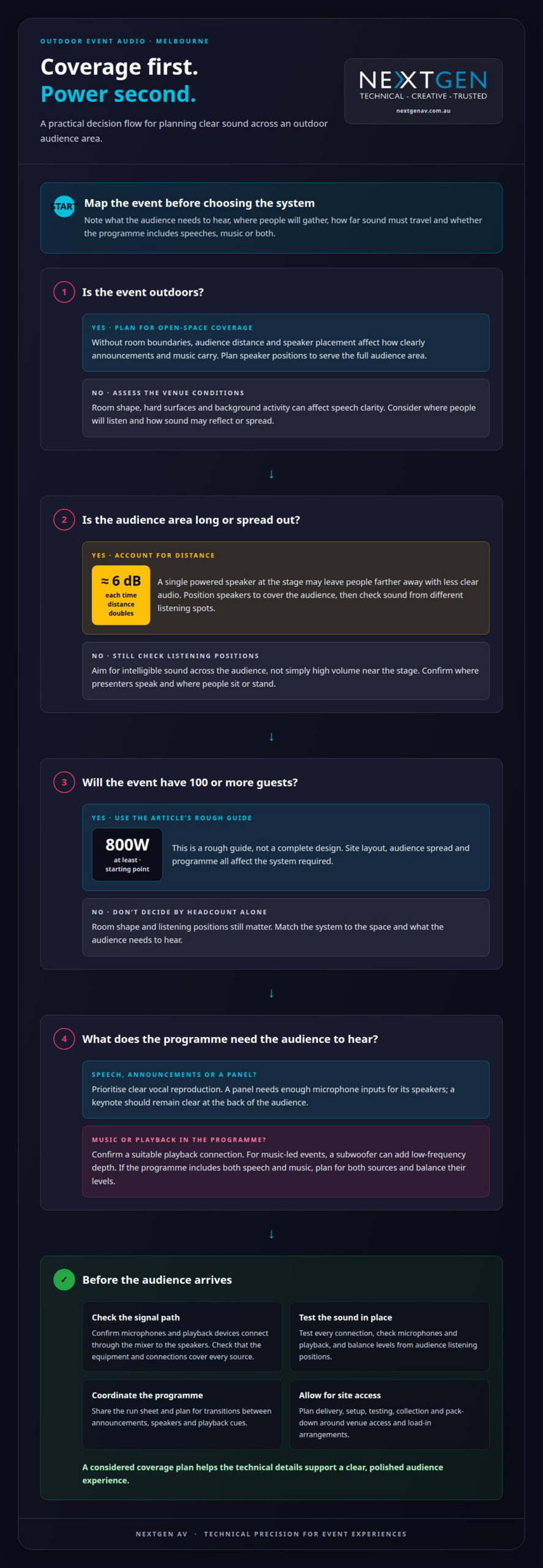
Outdoor sound needs a coverage plan, not simply a louder speaker. Without room boundaries, audience distance and speaker placement determine how clearly announcements and music carry across the event space.
Distance matters. Sound level drops about 6 dB each time the distance from a speaker doubles. For a long outdoor audience area, one powered speaker at the stage may leave people farther away with less clear audio. A production plan should place speakers to serve the full audience area, then test coverage from different listening positions.
As a rough guide, outdoor events with 100 or more guests may need a sound system of at least 800W. Treat that as a starting point: the site layout, audience spread and programme affect the system design. Speeches may call for a microphone channel and clear voice reproduction, while music-led events may need a different balance and speaker configuration.
Powered speakers need an audio signal and suitable power access. Before setup, the production team plans speaker positions, cable routes and power requirements against the venue layout. A wireless microphone gives a presenter room to move, while a mixer lets the operator manage microphone and playback channels separately.
Outdoor venues also call for practical planning around the schedule and site conditions. Position equipment away from audience routes, manage cables safely and complete a sound check before guests arrive. A ceremony followed by speeches, for example, needs clear coverage in both the ceremony area and the later speaking position. Plan outdoor audio around the site and audience, then test the complete system in position.
NextGen AV: Professional Audio Systems
NextGen AV combines professional audio planning with technical delivery, helping your event’s sound support the experience from the first announcement to the final cue. This is particularly useful when a programme includes speeches, music, presentations or multiple audience areas.
Planning starts with the event format, venue layout and run sheet. NextGen AV uses these details to plan speaker positions, microphone requirements, playback connections and sound checks. For a corporate presentation, that means coordinating presenter microphones and presentation audio; for a reception, the system can support clear speeches alongside music.
Professional Audio Systems are central to the plan. NextGen AV’s technical team coordinates the equipment and connections, then manages setup and on-site audio operation to keep each cue aligned with the programme. This involves more than supplying speakers: preparation and technical direction help the production run as a connected whole.
For events that need a broader visual environment, LED Video Walls can support presentations and event content, while Lighting Design and Equipment helps shape the atmosphere. Staging and Rigging can bring the presentation or performance area together. Each element is planned around the venue and event requirements, rather than treated as an isolated hire item.
For an outdoor activation, conference or product launch, professional coordination is useful when technical elements need to work in sequence. NextGen AV manages the production details behind the scenes, so you can focus on the people and purpose of the event.
Contact NextGen AV to discuss professional audio support for your event.
Frequently Asked Questions
How does a sound system hire provider manage booking and pickup?
To plan your event, provide the date, venue, audience size and technical requirements. NextGen AV uses these details to recommend equipment and technician support, then coordinates delivery, setup, testing, operation where required and pack-down. For a Melbourne conference, sharing venue access arrangements and the event schedule helps align equipment arrival with room preparation and rehearsals.
What comes in the package?
Package contents depend on the venue, audience, content and event format. Professional audio provision can involve equipment selection, delivery, installation and testing, with operation and pack-down included where required. A presentation featuring recorded content, for example, needs playback requirements considered alongside spoken audio. The event brief defines the scope, rather than assuming every package contains identical equipment.
How do you choose a PA sound system for an event?
The right system depends on the venue, audience size, programme and technical support required. A clear event brief helps determine the audio setup and service scope. For a Melbourne event, include the programme format and whether you need on-site operation, as these shape the production requirements.
How do small, medium and large sound systems differ?
When comparing system sizes, consider the venue, audience and technical support needed. Labels such as small, medium and large are not enough to determine whether a system suits your event. Discuss the room layout, programme and support requirements with your production team to identify the right setup.
What is included in a sound system hire package in Australia?
A professionally managed package can cover equipment selection, delivery, installation, testing, operation and pack-down, with the scope shaped around the event. A conference may need audio integrated with presentation content, while a product launch may require coordination with other technical elements. The venue and event format determine how these components work together.
How are delivery, setup and pack-down managed for sound equipment hire?
Delivery, setup and pack-down requirements depend on the venue, equipment, schedule and level of technical support. The production plan should reflect the event scope, including installation, testing and any on-site operation. For a Melbourne event, include venue access details and the run sheet in your brief to help plan logistics and coordinate technical work with the programme.
A marquee can look immaculate and still leave guests straining to hear. Clear audio depends on more than placing speakers around the space: the system needs to suit the marquee’s layout, audience and event programme. That’s why marquee event sound system hire melbourne should start with how sound needs to reach your guests, not simply with a list of equipment.
You may be planning speeches, presentations, entertainment or a mix of all three, and each calls for considered audio design. It’s natural to wonder whether every guest will hear clearly and whether technical details will fall back on your team. With NextGen AV, you have an experienced production partner managing the sound plan and technical delivery, so you can focus on hosting with confidence.
This article explores how marquee size and audience layout shape sound coverage, how audio requirements differ between event formats, and how professional setup and operation support a polished experience. With over 30 years of industry experience, NextGen AV brings Melbourne-based expertise to the planning, helping your speakers be heard and your event flow smoothly.
Key Takeaways
- Shape marquee event sound system hire melbourne around the event programme, audience layout and speaking positions, rather than choosing equipment in isolation.
- Plan coverage by defining the programme, mapping the audience, identifying speaking points and arranging technical support.
- Decide how much technical coordination and on-the-day operation your team needs by considering who will plan, set up and manage the audio.
- Prepare the event date, venue, audience size, running order and marquee layout to give your production team a clear planning brief.
- NextGen AV brings experience from 1200+ successful audio-visual hires and 4.5k+ events delivered to tailored audio planning and event support.
Why Melbourne marquee events need sound planned around the space
A marquee is a temporary event space, so its audio plan needs to respond to the way it will be used. Marquee event sound system hire melbourne means planning professional audio equipment alongside the production support needed to set it up and operate it for that space. The right approach starts with the audience, programme and event layout, not a generic list of speakers and microphones.
In a marquee production, sound systems carry each moment to the audience, from the first welcome and key message to presentations and entertainment. Their role is to support clear communication and a smooth event flow. A sound reinforcement system combines audio equipment to deliver sound to an audience. How it is planned for a marquee depends on where guests sit, stand and move.
What makes marquee audio a distinct planning task?
Marquee dimensions alone don’t tell the whole story. Guests may be seated at tables, gathered near a presentation area or moving between indoor and outdoor spaces. The position of the stage or speaking point, the shape of the audience area and the marquee’s openings all help inform a sound plan suited to the event, rather than a one-size-fits-all setup.
Different moments call for different audio priorities. Speeches depend on intelligible voices; presentations need spoken content to remain clear as attention shifts between presenter and screen; entertainment may require a different balance and programme flow. Planning around those uses helps keep guests engaged without assuming one fixed equipment arrangement will suit every marquee.
Which event details shape the sound brief?
Start with the essentials: event type, expected audience size, venue and programme. Then note the marquee layout, seating plan and where speakers or performers will be positioned. A speech-led corporate event in Melbourne may need to support formal addresses and presentations, while a community gathering or outdoor celebration may move between announcements, music and other activities.
Include the running order and any changes in format. Knowing when a presenter takes the stage, when guests move, and whether entertainment follows a speech helps technical planning account for transitions as well as individual moments. Share relevant venue information too, so the production team can shape the sound plan around the actual event environment.
A useful brief brings these details together:
- Event type and audience size
- Venue and marquee layout
- Seating, stage and speaking positions
- Programme, running order and entertainment requirements
With that context, a Melbourne production team can recommend a tailored approach and coordinate setup and operation around your event. You gain a sound plan guided by how the marquee will work on the day, helping speakers address the room and guests stay connected to the programme.
How to plan marquee sound coverage for your Melbourne event
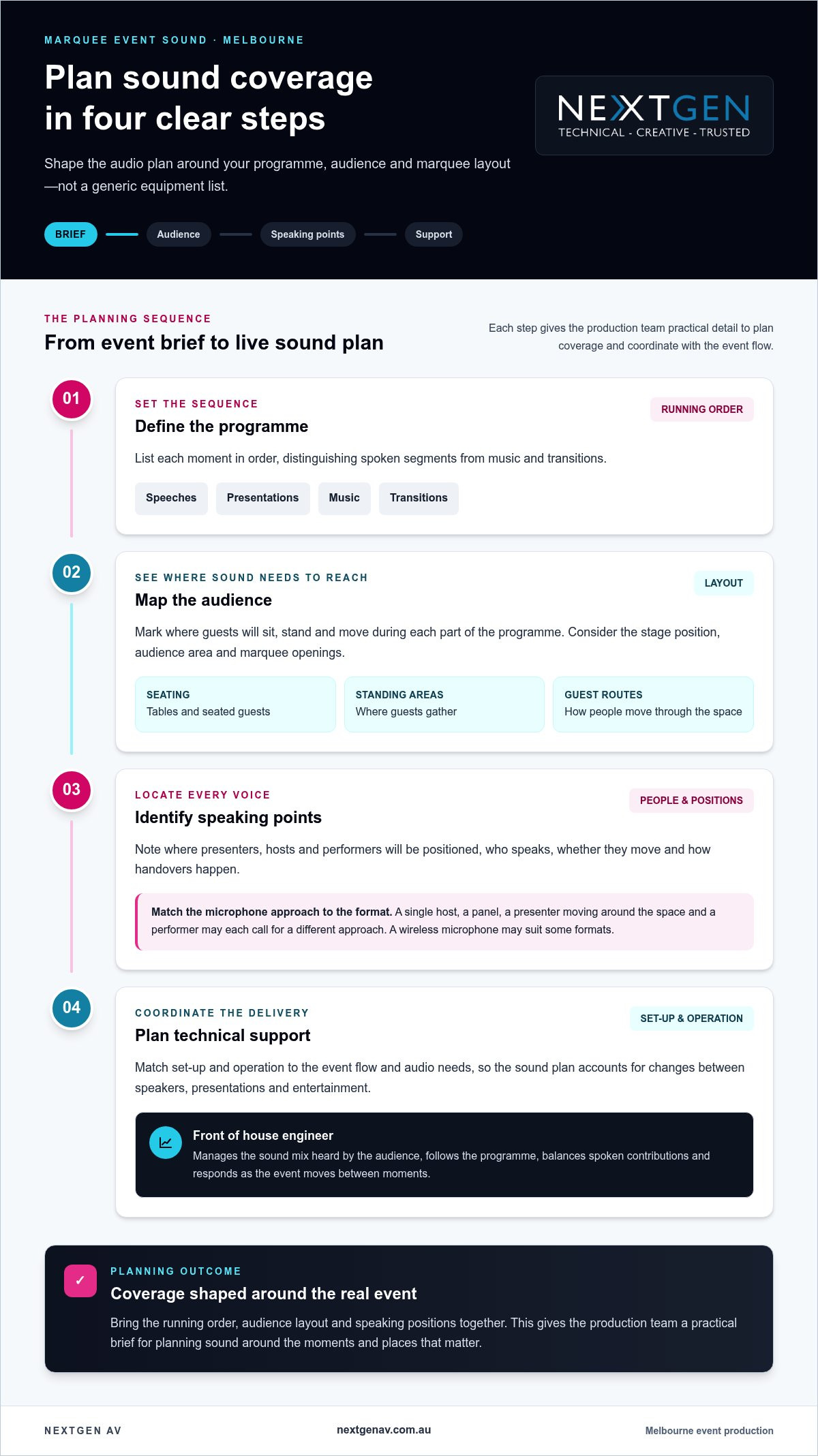
Turn the event brief into a sound plan in a clear sequence: define the programme, map the audience, identify speaking points, then plan technical support. This gives the production team practical information to shape audience coverage and coordinate operation around the running order, rather than making assumptions from a generic equipment list.
A tailored marquee audio plan brings the venue layout, event format and audience experience together, so each moment can be heard from the places guests will actually be.
- Define the programme. List speeches, presentations, music and transitions in running order.
- Map the audience. Mark seating, standing areas and routes guests will use.
- Identify speaking points. Note where presenters, hosts and performers will be positioned.
- Plan technical support. Match setup and operation to the event flow and audio needs.
Map the audience and programme
Start with the running order, distinguishing spoken segments from music and transitions. Then map where guests will be during each part of the programme and where presenters will address them from. Seating, stage position and audience movement all inform the proposed coverage, helping the technical team plan for the moments and locations that matter.
For example, a Melbourne corporate event might begin with guests seated for welcome remarks, move into a presentation, then open into a standing networking period. The audience and speaking positions change, so the sound plan should account for those shifts. Share the layout and running order together; viewed as one brief, they give the team a more useful picture than either detail on its own.
Plan microphones and sound operation
Microphone planning follows the presenter format. A single host addressing the room has different needs from a panel, a presenter moving around the space or a performer sharing the programme. Identify who speaks, whether people move, and how handovers happen. A wireless microphone may suit some formats, while a fixed speaking position may call for another approach.
On the day, a front of house engineer manages the sound mix heard by the audience. They can follow the programme, balance spoken contributions and respond to changes as the event moves between speakers, presentations and entertainment. This live attention helps the audio remain aligned with the moment, rather than leaving the organiser to manage technical adjustments while also hosting.
For marquee event sound system hire melbourne, share the event schedule, audience map and presenter details as one coordinated brief. NextGen AV uses these details to shape a recommended setup, with technical support aligned to your event’s format. Learn more about NextGen AV’s event production and how it can support your audio plan.
Equipment hire or managed sound production: what suits a marquee event?
The right support model depends on who will take responsibility for audio planning and delivery. An organiser may manage the technical work with their own team, arrange support for setup, or have a production team coordinate the wider event requirements. Compare the organiser’s role, technical coordination and on-the-day operation before deciding how much support your marquee programme needs.
| Support model | Organiser responsibilities | Technical coordination | On-the-day operation |
|---|---|---|---|
| Organiser-managed audio | Plan the audio requirements and arrange the setup and operation. | Managed by the organiser or their own technical team. | Handled by the organiser or an appointed operator. |
| Supported setup | Provide event details and coordinate with the production team. | Setup is supported, with responsibilities agreed for the event. | The organiser may retain responsibility for operating the audio. |
| Full event production | Share the brief, programme and venue information with the production team. | Audio planning is coordinated with the wider event requirements. | Setup, operation and support are managed by the production team. |
This comparison isn’t a ranking. A straightforward programme and an experienced in-house operator may suit one approach, while a changing run sheet or several presenters may call for more hands-on coordination. The key is to decide who will translate the event brief into a working sound plan, oversee setup and respond to the programme as it unfolds.
When might organiser-managed audio fit?
An organiser-managed approach may suit a team with the technical capability and time to plan, set up and operate the audio. The system still needs to be selected for the event brief and marquee layout, including audience positions and speaking points. Having equipment available doesn’t, by itself, determine how clearly each guest will hear.
When does managed production add value?
Managed production can reduce the number of technical details resting with the organiser by bringing setup, operation and support together. For presentations, programme changes or transitions between speakers and entertainment, a front of house engineer can manage the audience-facing mix, while technical direction helps coordinate audio requirements with the event plan.
Consider the pace of your programme. A single address may call for a different level of coordination from a marquee event with a host, presentations, panel contributions and entertainment. With marquee event sound system hire melbourne, the service model should reflect the work required behind the scenes as well as what guests experience. NextGen AV provides professional audio systems and event production support, with setup and operation shaped around the brief.
For more detail on planning event audio, read this guide to professional sound system hire.
What to prepare before arranging marquee sound system hire
A clear planning brief gives your production team a strong starting point. For marquee event sound system hire melbourne, share the event essentials alongside information that shows how the space will be used. Early technical planning helps align audio with the programme, venue and any staging or wider AV elements, reducing last-minute guesswork as plans develop.
Build a useful event brief
Begin with the purpose of the event, who will attend and the key moments guests need to hear. Then gather practical details about the date, venue and marquee arrangement. If you have a site plan or layout, include it, even if it is an early version. Mark the presentation position and note where guests will be seated, standing or moving during the programme.
Use this checklist to prepare a useful handover:
- Event date, venue name and relevant venue information
- Expected audience size and event type
- Running order, including speeches, presentations, entertainment and transitions
- Marquee layout, seating plan and presentation position
- Any planned screens, lighting or staging that may affect the production layout
These details help the team understand the event as a complete experience, not just an audio request. If the programme changes, update the brief so technical planning can account for new speakers, revised timings or an added presentation. You don’t need to specify equipment; a precise description of the event and space is the useful starting point.
Coordinate sound with the wider event
Sound may need to be planned alongside other production elements when presenters use screens, when staging defines the speaking area, or when lighting forms part of the audience experience. Coordinating these elements early helps the team consider how each part fits the event plan and avoid treating audio as a separate task. For broader planning across production elements, explore full-service event production.
If your marquee programme includes a defined stage or coordinated lighting, bring those requirements into the same conversation as audio. NextGen AV’s stage and lighting hire in Melbourne can be relevant when the event scope calls for those elements to be planned together.
A well-prepared brief gives the production team a clear view of your priorities, while leaving technical decisions in experienced hands. Find out more about NextGen AV’s event production services and how they bring your event requirements together.
How NextGen AV supports marquee event sound system hire in Melbourne
With marquee event sound system hire melbourne, the production partner’s role is to turn your event information into a practical audio plan, then manage the technical work behind the scenes. NextGen AV is Melbourne-based and provides tailored sound systems, setup, operation and support, so your team has a clear point of coordination from the initial brief through to event delivery.
The process is designed to move from your event needs to clear recommendations. Share the venue, audience and event format, and the team can shape its advice around the purpose of the occasion, whether you’re planning speeches, presentations or entertainment.
From event details to clear advice
NextGen AV follows three steps to guide the planning handover:
- We review your event details – Tell us your date, venue, audience size and event type.
- We recommend the right setup – From PA hire to screens, lighting, staging and full AV production.
- We come back with clear advice – You’ll receive practical recommendations and a fast quote from our Melbourne team.
These steps give the team the context to align the proposed setup with your event format and production needs. A quote usually takes 1-2 days to prepare dependant on the event. Sharing a clear brief helps the recommendations respond to the real requirements of your marquee event.
Put your event in capable hands
NextGen AV brings practical production experience to the planning, setup and operation of event audio. The team has delivered 1200+ successful audio-visual hires and 4.5k+ events delivered, backed by 85+ years of combined AV technical expertise. That experience supports a considered approach to the technical details, while keeping the focus on the people who need to hear and engage with the programme.
NextGen AV has also received the “Top Rated Service 2026” certification from Trustindex. For organisers, working with an experienced production partner means the technical plan is being shaped and managed by a team focused on the event’s requirements, rather than leaving coordination as another task for the host.
Share your date, venue, audience size and event type to help NextGen AV guide the next planning steps for your marquee production. Plan your event with NextGen AV and put experienced technical support behind the audience experience.
Set the tone for a confident event
Great marquee audio is felt in the way an event unfolds: speakers can deliver their message, transitions feel considered, and guests can stay present without technical distractions competing for attention. With marquee event sound system hire melbourne, the next step is to decide what you want guests to hear and experience, then give your production team the context to shape the technical delivery around that intention.
Think beyond the first announcement. A well-planned sound experience supports the character of the whole occasion, from a focused corporate presentation to a warm community gathering. When technical direction is aligned with the event’s purpose, you can stay engaged with your guests and give the programme the attention it deserves.
As you shape the brief, consider the atmosphere you want to establish from the moment guests arrive. Is the priority a calm welcome, an energetic opening or a sense of occasion? Making that creative intention clear helps connect the production decisions to the feeling you want people to take away.
NextGen AV partners with organisers to shape and manage event audio, with production support tailored to the brief. Plan your marquee event sound with NextGen AV and take the next step towards an event that sounds as considered as it looks.
Frequently Asked Questions
Is a sound system necessary for a small marquee event?
It depends on what guests need to hear and where the event takes place. A small gathering with a toast or welcome address may still benefit from amplification if guests are spread across the marquee or there’s background activity. For a quiet gathering with no speeches or planned music, the audio brief may be minimal. Note the key moments and presenter positions to guide the decision.
Can one sound system support both speeches and background music?
The audio plan can account for both, provided the brief explains how each will be used. Speech needs to remain clear, while background music contributes to the atmosphere. For example, note whether music plays as guests arrive, pauses for a welcome, then returns during a break. Include who will manage playback and any planned transitions so sound operation fits the event flow.
How do I prepare presenters for using event microphones?
Give presenters a clear run sheet and explain how the microphone will be introduced and passed between speakers. If possible, allow a moment during preparation for each presenter to become comfortable speaking into it and hearing their voice through the event audio. Let speakers know who will cue them and where to stand. These steps can help presentations feel composed and keep handovers orderly.
What happens if the event programme changes on the day?
Tell the technical team as soon as a change is made, especially if it affects who is speaking, playback or the order of presentations. Designate one event contact to communicate updates, rather than sending competing instructions from several people. For example, if a presenter is replaced, pass on the change before their segment begins so the audio operation can follow the revised running order.
Can marquee sound support a live band as well as speeches?
How far in advance should I organise marquee sound system hire?
Start planning once you have the event date, venue and broad programme, so audio can be considered alongside the wider event arrangements. The planning window will depend on the event. For marquee event sound system hire melbourne, keep a current version of your event brief and update it as details develop. This helps recommendations reflect the latest programme and venue information.
